Compiled by Don McNeil, Shakopee Heritage Society
From the 1885 Shakopee Courier
Oct. 21, 1885 – A skin of beauty is a joy forever. Dr. T. Felix Gouraud’s Oriental cream or magical beautifier. Removes tan, pimples, freckles, moth-patches, rash and skin diseases and every blemish on beauty and defies detection. It has stood the test of thirty years and is so harmless we taste it to be sure the presentation is properly made. Accept no counterfeit.
Sept. 23, 1885 – Any lady not satisfied with Hennings improved soft elastic section corset, after wearing it for six weeks, can have the price paid there and refunded by returning it to Berens & Nachtsheim, Shakopee.
Sept. 30, 1885 – Vinegar Bitters is the great Blood purifier and life giving principle; a gentle Purgative and Tonic; a perfect Renovator and Invigorator of the system.
Aug. 12, 1885 – The Presbyterian softball school will have a picnic Thursday in Pond’s grove, east of town, with ice-cream, swings, lawn play, and a good time for the young people generally. Parents and other friends of the children are cordially invited to come with full baskets.
Aug. 12, 1885 – Itch, Prairie Mange, and Scratches of every kind cured in 30 minutes by Woolfords’ Sanitary Lotion. Sold by F. J. Lord, Druggist Shakopee.
Oct. 21, 1885 – Underwear of camel hair, woolen and cotton at B. Beisang’s in the John Reis Building.
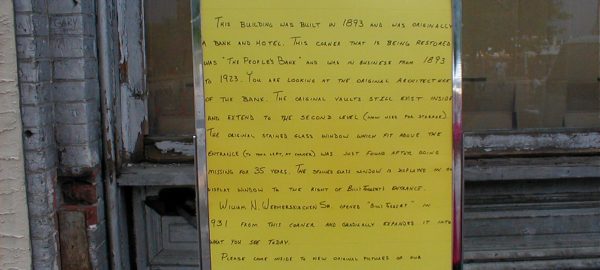
Sept. 23, 1885 – The First National Bank of Shakopee, capital $100,000. Transacts a general banking business. Special attention given to collections. The interest of customers closely guarded and every facility compatible with principles of sound banking freely extended. Issue its own drafts on England, Ireland, Germany and all parts of Europe. Officer: Honorable H. B. Strait, President.
Sept. 2, 1885 – Fire in stoves in mid-August be speak of a cold climate. In July it was up in the nineties, and in August was down in the forties. What are we coming to?
Oct. 7, 1885 – Dropsy treated free. Dr. H. H. Green, a specialist for eleven years past, has treated Dropsy and its complications with the most wonderful success. Removes all symptoms of dropsy in eight to twenty days.
Aug. 12, 1885 – Our ministers and church members don’t take kindly to the Argus youth’s plan of “allowing gentlemen to bring their cigars and morning papers with them and smoke and read through the hour of service.”
Oct. 21, 1885 – Old soldiers! Comrades! Purchase a set of Grant’s personal memoirs and when you read them it will seem like going back and living over old times. Mr. O. H. O’Neil of the Union School will continue to canvass of Shakopee for the “Personal Memoirs of U. S. Grant,” having been duly appointed as agent for this city.
Sept. 9, 1885 – D. P. Jenkins, of roller rink fame, now of Aitkin, was here Saturday night at the rink, which was opened to the public as a commencement of the fall season.
Sept. 23, 1885 – The Shakopee Courier and the weekly Pioneer Press both one year for only $2.25.
Oct. 7, 1885 – A Big Offer. To introduce them, we will give away 1,000 self operating washing machines. It you want one send us your name and P. O. at once. The National Co. 25 Dey St., N. Y.
Aug. 22, 1885 – Population of Minnesota cities and towns. Minneapolis 129,200, Belle Plaine 813, Chaska 1,725, Jordan 1,200, Shakopee 1,834.
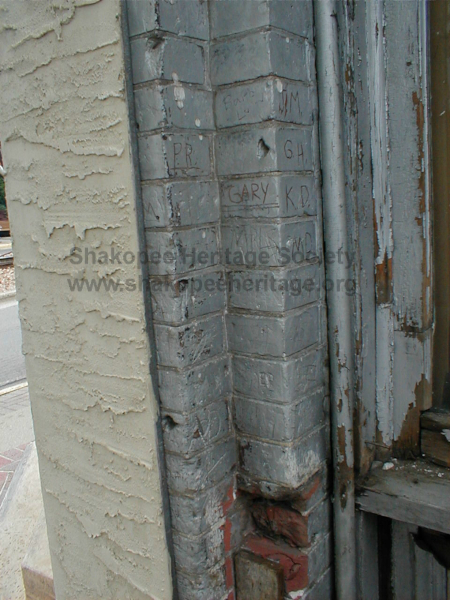
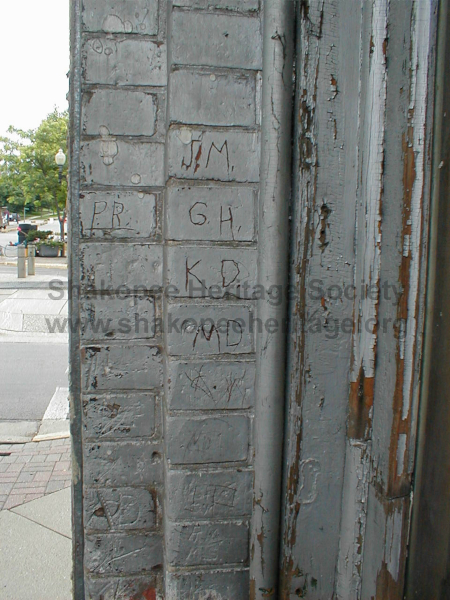
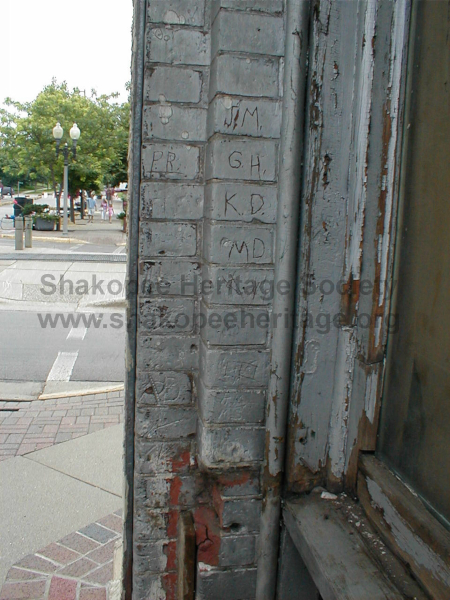
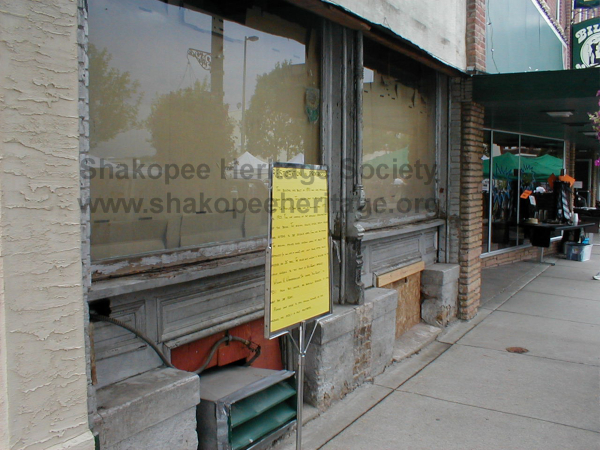
Oct. 21, 1885 – There is the tearing away of the National Bank concrete front, to be replaced by brick.
Sept. 9, 1885 – Mrs. Mary Fielding, daughter of Mrs. Campbell of Spring Lake, who went home to her mother’s three weeks ago sick, from Farmington, is still pretty bad.
Sept. 2, 1885 – The old dilapidated sidewalk from Hinds’ corner to Lord’s on First street has been torn up and sensible gravel is to take its place, thus relieving the town from a chance prosecution for damage and benefiting the citizen traveling daily to and fro.
Oct. 7, 1885 – Over 300 teams crossed the bridge last Monday besides a large amount of stock, thus showing the value of the bridge to Shakopee.
Aug. 22, 1885 – To guard against runaways in town, tie your horses, and thus save dangerous results.
Sept. 2, 1885 – Robert B. Condon left here yesterday for St. Mary’s College in Kansas, where he proposes to remain to the end of the classical course. He’s attending the leading Jesuit College in the west. We wish him success and hope to see him back here at the first vacation. He is a very promising young man and deserves to succeed.
Sept. 9, 1885 – Eggs from hens not in company with cocks will keep twice as long as will eggs from hens not separated from the males.
Oct. 7, 1885 – Wanted, an active man or woman to sell our goods. Salary $75 per month and expenses. Expenses in advance. Canvassing outfit free. Particulars free. Standard Silverware Co., Boston Mass.
Aug. 22, 1885 – Miss Nellie Jackman went to Minneapolis Monday to join a party of friends who will spend a couple of weeks at White Bear Lake. We all wish you a merry time, Miss Nellie.
Oct. 14, 1885 – Give your order for a set of General Grant’s book and furnish your family with good, wholesome reading for the winter. It comes in two volumes and the price is in reach of every one.
Sept. 2, 1885 – The Pioneer Press Co. will exhibit prominently, at the coming State Fair, samples of the very attractive premiums which they are offering to subscribers to their weekly.
The sewing machine, which is offered with the weekly for $15.00, will attract much attention. The Organ and sets of Band Instruments are great inducements for clubs.
Oct. 7, 1885 – Rev. Mr. Paige of the Presbyterian Church left Shakopee for his home in Minneapolis on Tuesday, not to return. He is a very pleasant and friendly gentleman at all times.
Aug. 12, 1885 – In Shakopee the bells tolled in the afternoon Saturday during Grant’s funeral. The undertaker’s bill for Grant’s funeral was $50,000.
Oct. 14, 1885 – In connection with our furniture we have a complete Undertaking room where we carry in stock all kinds of fine burial cases and caskets price as low as the lowest! 1 Street, Shakopee.
Sept. 2, 1885 – Dr. McNamara’s Medical Rooms, Est. 1861, for the radical cure of Nervous and Several Diseases. Lost Manhood or vital weakness completely restored. Kidney diseases, gonorrhea, syphilis, etc. Call on or address the doctor 508 Broadway, Milwaukee, Wisc.
Aug. 12, 1885 – The Hyers sisters had a big and “roaring” house last night. Tonite they play “Out of Bondage.”
Oct. 14, 1885 – John Berens & Co., successors to Berens & Gellenbeck. They are dealers in general merchandise consisting of dry goods, clothing, groceries, hats and caps, boots and shoes, crockery and glassware. “We have the largest stock and lowest prices.”
Oct. 21, 1885 – There must have been some young boys in the war of 1812, if it true, as Massachusetts paper tells, that Benjamin C. Cheever, who has just died at Saugus, at the age of 82, was a pensioner of that war. As war was declared in June 1812, and peace early in 1815, he could have been only 9 years old when the war began, and hardly 12 when it ended.
From the Scott County Argus, Shakopee and Jordan, MN
Feb. 12, 1885 – Julius A. Coller, Editor. The Franco Chinese war is still raging. A labor bill has been introduced in the German Reichstag.
-The Indiana State treasury is empty.
-Reinsderf and Kueschler, the anarchists who attempted to cause death of the Kaiser at Niederwald, were beheaded at Halle last Saturday.
Feb. 12, 1885 – New Harness shop, Joseph Glatzel, proprietor. First St. Shakopee, Minn. Single and double harness. Either light or heavy. Manufactured to order and at reasonable rates. A full stock of blankets, saddles, whips, harness oil and all kinds of saddles and hardware.
Feb. 12, 1885 – New goods. We have just received a large and fine lot of Gents’ cashmeres and a large lot of clothing. Call and examine Goods and Prices. Berens & Nachtsheim.
Feb. 12, 1885 – Julius A. Coller, Editor. The difference between a Publisher and an Editor is: A publisher has the money and an editor the brains. But the difference between an assumed editor and a real editor is still greater.
Feb. 12, 1885 – Scott County Argus, Published Thursday at Shakopee and Jordan, Minn., by George Hinds, terms – two dollars a year. Julius A. Coller, Editor. Official paper of Shakopee City and Scott County.
Feb. 12, 1885 – “Your father is entirely bald now, isn’t he?” said a man to the son of a millionaire. “Yes,” replied the youth. “I am the only heir he has left.”
Feb. 19, 1885 – City Brick Yards. Herman Schroeder, Prop’r – Having lately put in a new and complete set of machinery, we are able to produce the very best quality of brick. Our brick are of a very cherry red color and are fit for any kind of use. All orders supplied promptly and samples will be sent free of expense to any part of the country.
Feb. 19, 1885 – Julius A. Coller, Editor. The U.S. Grant retirement bill was lost in the House.
Feb. 19, 1885 – If Minneapolis and St. Paul keep on extending their limits it will not be long before they will swallow up Shakopee.
Feb. 19, 1885 – George Hinds, Publisher Shakopee, Minnesota. An insurance company in New Hampshire has decided to resist payment on a policy of $5,000 on a house that was blown up by dynamite in Stratford, N. H. contending that the policy does not cover such a case.
Feb. 19, 1885 – Miss Matilda Chase, who was recently burned to death at Annapolis, Md., dreamed a few days before her death of the terrible fate waiting her. She was so much agitated that she at once sent for her lawyers to draw up her will. The arguments of her relatives against the truthfulness of dreams induced her to change her mind, and a few days later the dream was literally fulfilled. Having made no will her property valued at $100,000 went to her only sister.
Feb. 26, 1885 – Theodore Mertz, Boots and Shoe maker in Doctor C. F. Cook’s office on Lewis street. All work guaranteed. Repairing promptly and at fair prices. Custom work a specialty.
Feb. 26, 1885 – East Shakopee (Frank Juergens’ old stand) John Legel, proprietor. Am prepared to do all kinds of work in the blacksmith line. Horse shoeing and plow repairing a specialty. Give me a call.
Feb. 26, 1885 – Itching piles symptoms – moisture, intense itching, most at night. Swayne’s ointment sure cure. It is equally efficacious in casing all such as pimples, blotches, rash, tetter, itch, and salt rheum, no matter how obstinate or long standing. Box by mail, 50 cents. Sold by druggists.
Feb. 26, 1885 – Rupture, Dr. J. A. Sherman is now at his office. St. Louis, Mo. Treating rupture. Will be there during February. Book with likeness of cases, before and after cure, ten cents. Principal office 251 Broadway, N. Y., where he will be after this month.
Feb. 26, 1885 – Hagan’s Magnolia balm is a secret aid to beauty. Many a lady owes her freshness to it, who would rather not tell, and you can’t tell.
Feb. 26, 1885 – Occidental Hotel, First street. First class in every particular. Terms $2.00 per day.
Feb. 26, 1885 – Merchant’s Hotel, Second street, John J. Ring proprietor. First class accommodations. Terms reasonable. Good stabling.
Feb. 26, 1885 – H. H. Strunk and Son, First street. Dealer in drugs, medicines, paints, oils, varnishes, wall paper, books and stationery. Full line of Homeopathic medicines. Exclusive agents for the Minnesota Linseed Oil Co.
Feb. 26, 1885 – H. O. Smith, M.D., physician and surgeon. All cases of surgery or general practice in city or country attended promptly. Office over McMaldin’s store. Residence on First St. opposite Occidental Hotel. Office hours – 10 to 12 am: 2 to 4 pm; 7 to 8 pm.
Feb. 26, 1885 – J. G. Newell, dentist. Office over Lord’s Drug store where he will be found the first half of each month. All operations quickly performed.
Feb. 26, 1885 – Sample Room and Restaurant, John Mertz proprietor. First street. Choice wine, liquors and cigars and fresh beer at all times.
March 5, 1885 – Julius A. Coller, Editor. Dogs have been made personal property. – Belle Plaine, Shakopee and Jordan had their charters amended. – The Pioneer Press advocates the use of the guillotine instead of the rope for condemned criminals. – The first journal of the Jordan Independent reached our office last week. It is a bright journal, full of news and presents a fine appearance. We wish it success.
March 5, 1885 – Dairymen and farmers should use only the “Arm and Hammer” brand for cleaning and keeping milk pans sweet and clean. It is best for all household purposes. Hog diseases. – The “Arm and Hammer” brand soda and saleratus is used with great success for the prevention and cure of hog cholera and other diseases. Mix with the animals’ food.
March 5, 1885 – Parson’s Purgative Pills, make new rich blood. Positively cure sick- headache, and all Liver and Bowel complaints, Malaria, Blood poison, and Skin Diseases (one pill a dose). For female complaints these pills have no equal. “I find them a valuable Cathartic and Liver Pill. – Dr. T. M. Palmer.”
March 5, 1885 – “Home News.” Last Tuesday was Longfellow’s night at the Debating Club. – The fire cistern in the First Ward is still empty. – Tramps give Shakopee a wide berth. – Judge Mac Donald is busy grinding out decisions. – James McHale, Esq., has been appointed Referee to take testimony in the Giles divorce case, on the application for temporary alimony.
March 5, 1885 – Tuesday morning at quarter to one o’clock the mill whistle sounded the fire alarm. The fire was found to be in John Ketterer’s house. The house caught fire from the stove pipe, igniting the wood work in the second story. The department turned out promptly and arrested the progress of the flames. The damage to the house is fully covered by insurance.
March 5, 1885 – Lovell all clamp roller skates. We challenge the world to produce its equal. Price, $6.00, nickel plated and polished. Send 6 cents in stamps for large illustrated catalogue of roller skates, guns, rifles, revolvers, air rifles, police goods, etc. J. P. Lovell’s Sons, Boston, Mass.
March 5, 1885 – Consumption. I have a position remedy for the consumption disease: by its use thousands of cases of the worst kind and of long standing have been cured. Indeed, so strong in my faith, in its efficacy that I will send two bottles free together with a valuable treatise on this disease to any sufferer. Give express and P. O. address. Dr. T. A. Slocum, 181 Pearl St., N. Y.
March 5, 1885 – Wanted ladies and gentlemen in city or country to take light work at their own home. $3 to $4 a day easily made. Work sent by mail. No canvassing. We have good demand for our work, and furnish steady employment. Address with stamp. Crown Mfg. Co., 290 Race St., Cin’ti, N. Y.
March 5, 1885 – Fits Spasm and convulsions. Cured by Epilepsy Nervine. Package by mail, $2. Send for free sample and treatise on Epilepsy to W. R. Penick, St. Joseph, Mo.
March 5, 1885 – A judge in Utah recently decided that in that territory wives have no rights in court. The men may dispose of their property as they please.
March 5, 1885 – An invention by two Canadians, by which telephoning and telegraphing can be carried on simultaneously on the same wire, has been successfully tested.
March 5, 1885 – Miss Marie Van Hatten, aged twenty-one, drowned herself in a cistern because of unrequited affection.
March 12, 1885 – “Olden Times” – The formula by which Mishler’s Herb Bitters is compounded is over two hundred years old, and of German origin. The entire range of proprietary medicines cannot produce a preparation that enjoys so high a reputation in the community where it is made.
March 12, 1885 – No Army; no Navy; how well this Republic is protected. Little Chili could come up and give us a severe threshing, and lay New York in ruins, and this country could do aught to defend itself.
March 12, 1885 – Some our enterprising young men will petition the Council to allow them to form a “salvage corps,” the same to be under the control of the heads of the Fire Department; and to be a part of the dept. This is a good idea. A good salvage corps is indispensable in a well regulated dept. It is in fact the most important branch of the whole dept. Let the Council, by all means, grant the petition.
March 12, 1885 – “Home News” The Probate Court is full of business. – Our firemen will form a relief organization. – Weilland’s Hotel has two boarders. – Shakopee has quite a number of pensioners. – Charles Bornarth, Esq., has a screw propelling skiff, which he will test as soon as the river opens.
March 12, 1885 – Firemen’s pictures taken in uniform, cabinet size, $4.00 per dozen for 60 days from date, March 9th. Please give me a call and secure the opportunity.
March 12, 1885 – Married March 6th, by Rev. Jas. A. Page, at the home of the bride in Shakopee. The Argus extends a hearty congratulation to the happy pair and wishes the schoolmates a happy and prosperous life.
March 12, 1885 – About sixty Indians arrived Wednesday and are holding a pow-wow in the old City Hall.
March 19, 1885 – Look here! Take Notice! – You that want photos can get one dozen (every picture warranted first class) for the small sum of $1.50. Remember the price and place. Palmer’s Photo Rooms.
March 19, 1885 – Robert Banner announces that he has declined all offers to exhibit their horse Maud S. during the coming season. She will not be allowed to trot for money.
March 19, 1885 – Mrs. Frank Leslie says she is too busy to get married.
March 19 1885 – The United States Senate consists of 76 members: the House of Representative of 325. Each of them receives $5,000 a year. It costs money to sustain dignity, but it must be sustained.
March 19, 1885 – Ambrose Young, Charles Latham and Frank Freeman, all colored, charged with being implicated in a murder, were taken from the officers at Union City, Tenn., on the 12th by a mob and hanged.
March 19, 1885 – The Negroes in Buncombe County, N.C. are said to be holding weekly meetings to consider the question of migrating to Liberia. Quite a number of influential colored citizens are leading the movement.
March 19, 1885 – St. Jacobs Oil, trade mark. The great German remedy for Pain cures Rheumatism, Nemalgia, Backache, Head ache, Toothache, Sprains, Bruises and other pains and aches. Fifty cents at druggist and dealers.
March 19, 1885 – Take warning in time. Impure blood, indigestion, and weak kidneys affect a large portion of the human family. Thousands suffer in silence from the effect of these disorders until death relieves them from their suffering. Take warning in time. Rid yourself of every symptom of weakness and declining health by beginning at once the use of Dr. Guysoth’s Yellow Dock and Sarsaparilla.
March 19, 1885 – Our city was full of Indians last Thursday and Friday. They kept coming from every direction until about four hundred aborigines were among us. They were duty enrolled and then departed. The $10,000 to be appropriated among them will be divided after a full examination of the enrollment has been made.
March 19, 1885 – The Fire Department must raise about $500 in order to pay for the expenses of holding the State convention in this city. The ladies are determined to meet this expense without soliciting aid from the city or its citizens and our people should help them as much as possible by making their celebration and dances a success.
March 19, 1885 – Julius A. Coller, Editor. Editorial Notes. General Grant is sinking rapidly. – The United States is ordering its war vessels to Guatemala. – Saturday is Minnesota Day at the New Orleans exposition. – Dr. Burchard has retired from the ministry on a pension of $500 per annum.
March 26, 1885 – St. Paul and Minneapolis are going to have the elevated railroad, and the fare between the two cities will be ten cents. Truly, the Twin Cities are growing at a marvelous rate.
March 26, 1885 – Ayer’s Hair Vigor. For restoring grey hair to its natural vitality and color. It is a most agreeable dressing, which is at once harmless and effectual, for preserving the hair. It restores, with the gloss and freshness of youth, faded or gray, light, and red hair, to a rich brown, or deep black, as may be desired. By its use thin hair is thickened, and baldness often though not always cured.
March 26, 1885 – Shakopee Bakery. J. Nachtsheim proprietor. All kinds of bread and biscuits daily baked. Rye bread and ginger snaps a specialty. Cakes of all kinds, made to order. Orders delivered to any part of the city.
March 26, 1885 – George Hinds, Publisher. Mr. Manning is the only member of the President’s Cabinet who is not a lawyer.
March 26, 1885 – “Home News.” Retired Rev. Bishop Ireland will visit Shakopee April 25. It is to be hoped that he can be induced to deliver a lecture. – Saturday was the first day of spring according to the almanac. Almanacs do not control Minnesota weather, however. – Mathias Berens, Jr., will soon leave for Chicago to purchase spring stock.
March 26, 1885 –
– Shakopee is a good wood market; with the mill, wagon factory, Ries’ pop works, two breweries, two lime kilns and two brick yards, using wood in large quantities, wood will always command a good price in Shakopee.
– We understand that Mr. Jenkins will remove his skating rink to Lake Minnetonka soon.
– Under the new laws Shakopee will have the satisfaction of getting a new depot.
– Quite a number of our citizens are becoming enthusiasts in the poultry business.
– Probate Judge Meyer went to Jordan Monday to examine John Mathews. He was adjudged insane and taken to the asylum.
– Herman Schroeder sold a car load of brick to a Northfield party Tuesday.
– A delegation of Indians with “Big Eagle” as chief arrived yesterday morning.
– The public examination of teachers for the spring of 1885, will be held Monday and Tuesday April 6th and 7th.
March 26, 1885 – “Fun and Fancy.”
– Mississippi has 1182 miles of railroad.
– Ill gotten gains – doctor’s fees.
– Take care of your habits and your health will take care of itself.
– There is no one to sit up for the President when he stays out nights.
– What is the difference between a barber and a mother? One has razors to shave, and the other has shavers to raise.
April 2, 1885 – Arnica Toilet Soap. Delightfully perfumed, highly medicated. Absolutely pure. Keeps the skin from chapping and imparts to it life and a healthy glow. Unrivaled for cleaning the scalp and eradicating dandruff. The most perfect toilet soap in the world. Price, 25 cents.
April 2, 1885 – Arnica Tooth Soap. Is without question the most perfect article ever produced, as it not only cleanses the teeth thoroughly, but the combination with Arnica preserves and hardens the gums. It gives to the breath a sweet, delicate odor. Price, 25 cents a box.
April 2, 1885 – Make Hens Lay. It is a well known fact that most of the horses and cattle powder sold in this country is worthless; that Sheridan’s Condition Powder is absolutely pure and very valuable. Nothing on earth will make hens lay like Sheridan’s Condition Powder. Dose, one teaspoonful to each pint food. Sold everywhere or sent by mail for 25 cents in stamps. We furnish it in 2 ½ lb. cans, price $1. I. S. Johnson and Co., Boston, Mass.
June 30, 1885 – Big Bear has been captured and bands of Indians are surrendering their arms. This brings to an end the Indian troubles in the Northwest.
July 16, 1885 – The Shakopee roller rink has proven a continuous losing investment for the proprietor and it is doubtful if the patronage will warrant its being kept open at all in the future.

 John Heinen, 1938
 Newspaper Photo: Heinen’s
 John and Anna Heinen, Heinen Confectionery, 1920s
 John Heinen, Father Savs, Susan Hentges, 1920s
 John and Anna Heinen on Right, 1915, Heinen’s Confectionery