All posts by Wes Reinke

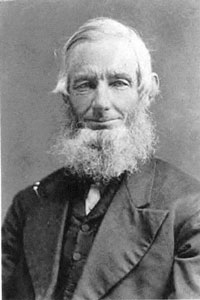
Hazen P. Mooers

Aug. 3, 1789-April 3, 1857
In Tiŋta-otoŋwe and Prairieville 1846-1849
By David R. Schleper

In 1818, Mar-pi-ya-ro-to-win II married Hazen P. Mooers, an American who was sent to Minnesota to work with the American Fur Company in 1816.

Hazen was born near Plattsburgh, New York on Aug. 3, 1789, the son of Moses Hazen Mooers and Jemima Jackson. He was the fifth of 13 children. He lived and worked on their farm until he joined Aitken’s Volunteers, which repulsed an attack of the British. He received a rifle as a testimonial of his work.[1] He then headed to Prairie du Chien.

In Prairie du Chien, Hazen was employed by James Aird, a Scotchman. When Hazen was about 23, he married Mar-pi-ya-ro-to-win II (Grey Cloud Woman).

Hazen was a large and athletic man, courageous and even tempered. He was a trader who made much profit to the American Fur Company where they conducted a trading post at Big Stone Lake for 15 years. He would make annual trips to Prairie du Chien, carrying his gathering of furs bought, and getting a supply of goods to trade with the Dakota. In 1829 Hazen came down from Lake Traverse with one hundred and twenty-six packs of furs, with a value of twelve thousand dollars![2] In 1835, he established a post at Little Rock, five miles below Fort Ridgely.[3]

After years of traveling throughout the state to various trading posts, in approximately 1838, the family moved to Spirit Wood Island, which is now called Grey Cloud Island. Grey Cloud Island, about five miles long and one to two miles wide, is situated in the south end of Washington County, Minnesota, between St. Paul and Hastings.[4] Historical accounts surmise the move was made in order for Mar-pi-ya-ro-to-win II (Grey Cloud Woman) to be closer to relatives in a large Black Dog Village, directly across the river, while Hazen could establish a trade center. Thanks to the strong influence of his wife, he was able to traffic with three bands of the Dakota Indians.

In the fall of 1846, Hazen and Mar-pi-ya-ro-to-win II moved to Tiŋta-otoŋwe and lived there among the tipi tanka (or bark lodges) and a few tioti or two until the spring of 1849. The house was built in the fall of 1846, and located just as you arrived on Highway 101 into downtown Shakopee. It was located on the right side as you head west, close to the duck pond. The location is also located about 10 rods, or 55 feet, north of Reverend Samuel W. Pond and Cordelia Eggleston Pond’s house (which would be built the next year). Hazen was appointed an Indian farmer, which provided him land there to farm.

Hazen and Mar-pi-ya-ro-to-win II moved out in the spring of 1849. (Hazen’s son, Kahoton, continued to live in Tiŋta-otoŋwe, and was an Indian farmer for the government until the spring of 1853.) Mar-pi-ya-ro-to-win II, known as Grey Cloud Woman, died on July 20, 1849 at Black Dog Village, a village of her Dakota relatives.

Hazen and his son, Kahoton John Mooers, decided to move north in 1853. Hazen secured a contract for erecting the first government buildings at the Lower Sioux Agency.

Hazen later married Ellen Stafford (1815-1893) in November 1853 at the Lower Sioux Agency. Hazen and Ellen Mooers had one child named Ellen Mooers, who was born March 10, 1855 at the Lower Sioux Agency and has been reported as the first white child to be born in Redwood County. Once Hazen completed his work, he retired to a small farm home in the valley just below Fort Ridgely.

Hazen died April 3, 1857 at the age of 68 years old and was buried at the local cemetery.[5] He was one of the first white people who lived in the area later called Shakopee.

[1] From Collections of the Minnesota Historical Society, Volume XV, 1915, pg. 372.

[2] Collections of the Minnesota Historical Society, Volume 2, pg. 119 at archive.org/stream/collections02minnuoft#page/119/mode/1up

[3] “Historical notes of Grey Cloud Island and its vicinity” archive.org/stream/historicalnoteso00caserich/historicalnoteso00caserich_djvu.txt

[4] Collections of the Minnesota Historical Society, Volume XV, pg. 371.

[5] Learning About the U.S. – Dakota War at midwestweekends.com/plan_a_trip/history_heritage/frontier_history/dakota_war_1862_minnesota.html

Mar-pi-ya-ro-to-win II (Grey Cloud Woman) | Margaret Aird Anderson Mooers

1793-July 20, 1849
In Tiŋta-otoŋwe and Prairieville 1846-1849
by David R. Schleper

Mar-pi-ya-ro-to-win II was born in 1793 at Prairie du Chien on the Mississippi River. Her father was James Aird, a prominent fur trader. James was a Scotchman, born in Ayrshire, and was a cousin of Robert Burns, the poet. He came to America in 1783, landing at Quebec and then heading to Wabasha’s village as a trader in the employ of the Hudson Bay Company.[1] Mar-pi-ya-ro-to-win II’s mother, also known as Mar-pi-ya-ro-to-win I, which means Grey Cloud Woman, was a member of the Dakota tribe. She was born at her father’s village where the city of Winona now stands.

Mar-pi-ya-ro-to-win II was of noble lineage. She was the daughter of Chief Wabasha I and sister of Wabasha II, both powerful Dakota chieftains. Mar-pi-ya-ro-to-win II’s grandfather was Chief Wah-pa-ha-shaw (Red Cap) who was born in 1720 and died in 1806.[2] Because of her unique family position, Mar-pi-ya-ro-to-win II became a major facilitator in trading between tribal members and white traders, even at a very young age.[3] Mar-pi-ya-ro-to-win II was “a beautiful and attractive half-breed girl, not without schooling, and it is not surprising that she should have found favor among the few white men employed about the trading post.”[4]

In 1818, Mar-pi-ya-ro-to-win II married her second husband, Hazen P. Mooers, an American who was sent to Minnesota to work with the American Fur Company in 1816. He was born near Plattsburgh, New York on Aug. 3, 1789, the son of Moses Hazen Mooers and Jemima Jackson.

After years of traveling throughout the state to various trading posts, in approximately 1838, the family moved to Spirit Wood Island, which is now called Grey Cloud Island. Grey Cloud Island, about five miles long and one to two miles wide, is situated in the south end of Washington County, Minnesota, between St. Paul and Hastings.[5] Historical accounts surmise the move was made in order for Mar-pi-ya-ro-to-win II to be closer to relatives in a large Black Dog Village, directly across the river, while Hazen could establish a trade center. Thanks to the strong influence of his wife, he was able to traffic with three bands of the Dakota Indians.

In the fall of 1846, Hazen and Mar-pi-ya-ro-to-win II moved to Tiŋta-otoŋwe and lived there among the tipi tanka (or bark lodges) and a few tioti or two until the spring of 1849. The house was built in the fall of 1846, and located just as you arrived on Highway 101 into downtown Shakopee. It was located on the right side as you head west, close to the duck pond. The location is also located about 10 rods, or 55 feet, north of Reverend Samuel W. Pond and Cordelia Eggleston Pond’s house (which would be built the next year). The family moved here because Hazen was appointed as an Indian farmer, and this also provided land to farm.

Hazen and Mar-pi-ya-ro-to-win II moved out in the spring of 1849.

Mar-pi-ya-ro-to-win II, known as Grey Cloud Woman, and also known as Margaret Aird Anderson Mooers died on July 20, 1849, appropriately enough, at Black Dog Village, a village of her Dakota relatives. Family traditions state that she was buried near the village and the burial site of her mother in what is now Eagan, Minnesota.

There is no picture of Mar-pi-ya-ro-to-win II, although she was described in a historical memoir as “by no means inattractive.” Perhaps the most interesting and most telling bit of research to describe the prominence of Mar-pi-ya-ro-to-win II was a story told in 1858 by Thomas Anderson Robertson, a grandson of Grey Cloud Woman.

Thomas and his father had accompanied a treaty agent who tried to bully some Yankton tribal members into a deal they did not want to make. The Yankton men showed their displeasure by taking the group’s horses. Thomas had the task of trying to get them back. After giving the men each a knife and some tobacco, Thomas shared with them his lineage including the name of his grandmother, Mar-pi-ya-ro-to-win II.

They knew her right away and said, “she had fed many of them the winter of the great famine when so many of them starved to death getting back from their winter hunt.” With that, the horses were immediately returned to Thomas and his party.[6]

Even with the limited amount of specific data regarding her life, it is apparent that Mar-pi-ya-ro-to-win II was an important part of local heritage, and a highly regarded citizen in the early history of Tiŋta-otoŋwe, on the land later called Shakopee.

[1] Collections of the Minnesota Historical Society, Volume XV, page 371.

[2] From Find A Grave Memorial #83017978 by James and Sharon Cissell, Jan. 5, 2012.

[3] Grey Cloud Elementary School, Cottage Grove, Minnesota at gces.sowashco.org/about-us/grey-cloud-namesake

[4] From Find a Grave Memorial # 82925771 by James and Sharon Cissell.

[5] Collections of the Minnesota Historical Society, Volume XV, page 371.

[6] Information about Grey Cloud Woman at gces.sowashco.org/about-us/grey-cloud-namesake.

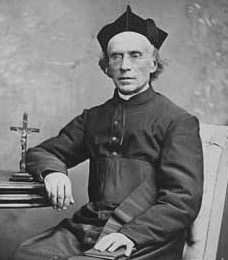
Father Augustin Ravoux

Jan. 11, 1815-Jan. 17, 1906
In Prairie des Français (Later Shakopee) in 1844

by David R. Schleper

Father Augustin Ravoux

Fr. Augustin Ravoux was born on January 11, 1815, in Auvergne, France.[1] He was one of seven seminarians recruited to America. Fr. Ravoux faced many difficulties. There were no developed roads, and he nearly drowned in the Mississippi on a trip to Dubuque, and nearly died of thirst crossing the prairies to Ft. Pierre. He was ordained in Dubuque, Iowa in January 1840.[2]

He was assigned to St. Gabriel’s in Prairie du Chien, but in September of 1841, Fr. Ravoux was asked to visit various outposts in the northern part of the diocese in Minnesota and Dakota Territories to see if a mission for the Indians might be established.[3]

Fr. Ravoux, a subdeacon, and others, went up the Mississippi and reached its juncture with the Rivière Saint-Pierre (St. Peter’s River). He found Catholic families living in Mendota, at that time in Iowa Territory, just across the valley from Fort Snelling, which was in Wisconsin Territory.[4]

Fr. Ravoux quickly realized he would have little success in converting the Dakota Indians unless he could converse directly with him. Luckily, Jean-Baptiste Faribault, his wife, Elizabeth Pelagie Airse (who was half Dakota) and their two sons, Oliver and David, encouraged him. They spoke fluent English and Dakota, as well as French. During the winter of 1842 and early 1843, Fr. Ravoux joined Jean-Baptiste, Elizabeth, Oliver, and David at Little Prairie, now Chaska, Minnesota.

According to Ravoux, he spent the winter of 1842-1843 with Faribaults at “La Petite Prairie” where they had a trading post occupied by their families and a few others. A prolific and influential French Canadian trader who had an established trading post in Little Prairie (present-day Chaska), was an ardent proselytizer and invited Ravoux to his post to continue his linguistic studies. They were very cordial to Fr. Ravoux, and David began to teach him the Dakota language. The Minnesota Handbook by Parker (1857) spoke of Oliver Faribault’s “extensive” trading house at Chaska, settled “primarily by Canadians, most of whom left with him” sometime before Holmes’s arrival in 1851.[5]

No maps show the post, and fur trade records consulted refer vaguely to posts “at” Little Rapids, which may or may not have included Little Prairie (Chaska). When the speculators bought up Thomas A. Holmes’s claims in Chaska, they found the site already cleared, with evidence of prior occupation and cultivation. Strawberries and asparagus were abundant; there were “indications of a garden and quite extensive buildings having once existed near the bend of the river.” Later excavations on the sites turned up artifacts, including gun parts and iron tools, suggesting a prior European occupation, possibly of late eighteenth century vintage.[6]

This would probably be the Little Rapids trading post established by Jean-Baptiste Faribault of the Machilimackinac Fur Company and the Northwest Fur Company, which was visited by fur traders, Dakota Indians, and Christian missionaries over the next 45 years. The Wahpeton Village, ca. 1800-1851, was above the rapids, and the Lewis and Clark map of 1806 showed a “Sioux” village on the west bank of the Rivière Saint-Pierre (St. Peter’s River), near Carver.[7] The Minnesota Democrat in 1852 noted in passing that Chaska “is an old but abandoned Sioux town site.”

Thomas A. Holmes’s 1851 license allowed him to establish a trading post near there. The site would be well-suited to native settlement because its access to the river and position on the Can ki-yu-te O-can-Ka and the tinta (or the big woods and the prairie transitional zone). The Faribault Trading Post in Chaska probably would be somewhere inside the existing levee.

Fr. Ravoux said that he was amazed how easily he mastered the Dakota language, and that it was so much harder when he had learned Latin and Greek. With Jean-Baptiste Faribault and the family helping, Fr. Ravoux started learning the language. He translated and published a little devotional work, Katolik Wocekiye Wowapi Kin, or The Path to the House of God.[8] The book was translated from French to Dakota by Alexander Faribault and his brothers Oliver and David.[9]

Jean-Baptiste urged the priest to establish a permanent Roman Catholic mission at the site.[10] Details about the short-lived mission are scanty. Fr. Ravoux built a small log cabin and named the parish St. Francis Xavier.[11] The mission was almost certainly located near the Faribault compound at Little Prairie. It is more likely that he stayed with the Faribaults, rather than in the nearby Wahpeton village. The Wahpeton village was located between Chaska and present-day Carver.[12] The dimensions of the chapel were 15 x 30 feet.[13] Presumably, it was of log construction, similar or identical to the Faribault Trading Post. It was probably built in the style of la maison en pièce sur piècela, or a cabin but of hewn logs, laid horizontally.

The chapel was located for a very short time in Little Rapids. Then, when Oliver Faribault and Wakan Yanke moved to Prairie des Français (French Prairie), also known as Tiŋta-otoŋwe, Fr. Ravoux also moved the chapel there. It was probably located close to the Faribault Trading Post, near the Springs later called Faribault Springs. The Dakota Indians saw the European immigration as a threat, and so the Dakota threatened to burn the chapel down within the year.[14] As a result, the chapel was sold to the German Catholics in Wabashah in 1844.[15] Ravoux departed in the spring of 1844, never to return.

The chapel was placed on a raft and floated down the Rivière Saint-Pierre, and was set up on the point where Main Street was terminated in Wabashaw in 1844.[16] (It was called Wabashaw until 1868, where mapmakers and publishers abandoned the letter “w” in the name.) This was the first building for Catholic religious purposes ever erected in Wabashaw. It was used for this purpose for several years, but then went into disuse as a church edifice, probably because of the result of the irregularity of religious services there. The log building was then used for secular purposes. The first newspaper printed in Wabashaw was printed in this building. Later, a school was taught in this place. Finally, the log chapel succumbed to civilization, and today, traces of the old church are obliterated.

Fr. Ravoux described his life as a frontier priest with rich understatement: “Though ever pleased with the mission entrusted to my care by Divine Providence, the path I had to walk in was not always strewn with flowers.”[17]

Fr. Augustin Ravoux died on January 17, 1906.[18]

[1] Coffin, Cindy K. “Fr. Augustin Ravoux (1815-1906).” Find a Grave, 11 Feb. 2011, www.findagrave.com/memorial/65691836.

[2] Luban, Marianne. Lucien Galtier-Pioneer Priest. Pacific Moon Publications, 2nd ed., 2011.

[3] “Augustin Ravoux.” Wikipedia, 18 Feb. 2018, en.wikipedia.org/wiki/Augustin_Ravoux.

[4] Scanlan, Dr. P.R.; Arr. Father U. Killacky. Centennial History of St. Gabriel’s Parish: Prairie du Chien, Wisconsin. Crawford County Press, 1936.

[5] Parker, Nathan Howe. The Minnesota Handbook for 1856-1857, 1857.

[6] Neill, Edward Duffield. History of the Minnesota Valley: Including the Explorers and Pioneers of Minnesota. North Star Publishing Company, 1892.

[7] Spector, Janet D. What This Awl Means: Feminist Archaeology at a Wahpeton Dakota Village. St. Paul: Minnesota Historical Society Press, 1993.

[8] Katolik Wocekiye. Brown & Saenger, 1890. Retrieved from the Library of Congress, lccn.loc.gov/06010756.

[9] Ravoux, Augustin. The Labors of Mgr. A. Ravoux Among the Sioux or Dakota Indians: From the Fall of the Year 1841 to the Spring of 1844. Pioneer Press Company, 1897.

[10] Barac, LaVonne E. Chaska: A Minnesota River City. Chaska Bicentennial Committee, 1976.

[11] Luban, Marianne. Lucien Galtier-Pioneer Priest. Pacific Moon Publications, 2nd ed., 2011.

[12] Holcombe, R. I. Compendium of History and Biography of Carver and Hennepin Counties, Minnesota. H. Taylor & Company, 1914.

[13] Coller, Julius A., II. The Shakopee Story. North Star Pictures, Inc., 1960, p. 13.

[14] Coller, Julius A., II. The Shakopee Story. North Star Pictures, Inc., 1960, p. 13.

[15] Holcombe, R. I. Compendium of History and Biography of Carver and Hennepin Counties, Minnesota. H. Taylor & Company, 1914.

[16] St. Felix Church History. uploads.weconnect.com/mce/dc543d2abbb092d676b4e412354e0d2e0d7bf91b/St.%20Felix%20Church%20History.pdf

[17] Luban, Marianne. Lucien Galtier-Pioneer Priest. Pacific Moon Publications, 2nd ed., 2011.

[18] Coffin, Cindy K. “Fr. Augustin Ravoux (1815-1906).” Find a Grave, 11 Feb. 2011, www.findagrave.com/memorial/65691836.

Revised May 10, 2018.

Sarah-Iréne Faribault

Daughter of Oliver Faribault and Wakan Yanke
1847-May 23, 1924
Compiled by David R. Schleper

Sarah-Iréne Faribault was one of the four girls who grew up at the Faribault Cabin and Trading Post on the Prairie des Français (French Prairie) on the Rivière Saint-Pierre (St. Peter’s River). She was the seventh of nine children of Oliver Faribault and Wakan Yanke, or the Woman Who Sits at the High Place, and was born in 1847. The area later became part of the east part of Shakopee, Minnesota, near Faribault Springs.

Sarah remembered growing up at the Faribault Trading Post. “My father, Oliver Faribault, built a house which was his home and trading post near ‘Little Six’ or Shakopee’s village in 1844.[1] It was a fine point for a trading post, as three Indian villages were near; Good Roads, Black Dog’s and Shakopee’s.[2] He was a very successful trader. I can well remember the great packs of furs.”[3]

“We used to play all around the country near. I could shoot an arrow as well as a boy. The hunting was fine.”[4]

“We used often to go to the sacred stone of the Indians and I have often seen the Sioux[5] warriors around it. It was on the prairie below town. There was room for one to lie down by it and the rest would dance or sit in council around it. They always went to it before going into battle.”

“They left gifts which the white people stole. I can remember taking some little thing from it myself. I passed a party of Indians with it in my hand.” Sarah remembered that one Dakota woman saw what Sarah had, and she became very angry. “She made me take it back. She seemed to feel as we would if our church had been violated.”[6]

“One morning in the summer of ’58 we heard firing on the river.[7] Most of the Sioux[8] had gone to get their annuities but a few who were late were camped near Murphy’s.[9] These had been attacked by a large band of the Chippewa.[10] The fighting went on for hours, but the Chippewa were repulsed. That was the last battle between the Sioux and the Chippewa near here.”[11]

According to Sarah, “Little Crow was often at our house and was much loved by us children. He used to bring us candy and maple sugar.”[12] Little Crow or Thaóyate Dúta (ca. 1810 – July 3, 1863) was a chief of the Mdewakanton Dakota people. His given name translates as “His Red Nation,” but he was known as Little Crow because of his grandfather’s name, Čhetáŋ Wakhúwa Máni, (literally, “Hawk That Chases/Hunts Walking”) which was mistranslated by the whites to Little Crow.[13] Thaóyate Dúta would stop on his way from St. Paul and usually camped with his attendants on the vacant prairie opposite the Faribault Trading Post in the area later called Shakopee. By 1840, Oliver was closely allied with the Dakota Chief Ŝakpe II, and maintained kinship ties with other Dakota families as well. According to Sarah, “My father (Oliver Faribault) was fond of him too, and said he was always honest.”

Sarah understand how the Dakota Indians feel, not just because she was part Dakota, but also because she lived around the 600 people at Tiŋta-otoŋwe. “The Indians did not understand the white man’s ways. When the white man had a big storehouse full of goods belonging to the Indians and the Indian was cold and hungry, he could not see why he could not have what was there, belonging to him, if it would keep him warm and feed him. He could not see why he should wait until the government told him it was time for him to eat and be warm, when the time they had told him before was long past. It was the deferred payments that caused the outbreak, I have often heard from the Indians.”[14]

“I have often seen Indians buried on platforms elevated about eight feet on slender poles. They used to put offerings in the trees to the Great Spirit and to keep the evil spirits away. I remember that one of these looked like a gaily colored umbrella at a distance. I never dared go near.”[15]

Sarah never married. She lived with the family, and then resided at the E.L. Welch family, first in Henderson, and then in St. Paul for almost 22 years. She also had a long association with the D.L. How household as a trusted, faithful friend and nurse.[16] She died in 1924 at age 74. She was interred in the How family lot in Valley Cemetery in eastern Shakopee.[17]

[1] The village is Tiŋta-otoŋwe, translated to prairie village. Ŝakpe II (ca. 1794-1862) and Ŝakpedan or Little Six (1811-1865) were head men there.

[2] The village of Good Roads was near the mouth of the Nine Mile Creek was Titaŋka Taŋnina, the village of Penichon. It was also called the old village, and it was probably the first village of the Dakota on the river, according to Mni Sota Makoce: The Land of the Dakota by Gwen Westerman and Bruce White, Minnesota Historical Society, page 126. The chief was Tacaŋku Waste, or His Good Road. The village of Black Dog’s was called Ohanska, Long Avenue Village or Black Dog’s village. Village chiefs included Waŋbdí Tháŋka (Wa-kin-yan-tan-ka) or Big Eagle, Sunka Sapa (Black Dog), and Maza Hota (Gray Iron) according to the Dakota Presence in the River Valley, 2002, by Shakopee Mdewakanton Sioux Community.  Shakopee’s village is Tiŋta-otoŋwe, with chiefs Ŝakpe II and Ŝakpedan.

[3] Morris, Lucy Leavenworth Wilder, editor (1914). Miss Sara Faribault in Old Rail Fence Corners: The A.B.C.’s of Minnesota History (Second Edition). Austin, MN: F.H. McCulloch Printing, p. 233.

[4] Morris, Lucy Leavenworth Wilder, editor (1914). Miss Sara Faribault in Old Rail Fence Corners: The A.B.C.’s of Minnesota History (Second Edition). Austin, MN: F.H. McCulloch Printing, p. 233.

[5] The people are Eastern Dakota Mdewakaŋtoŋwan, pronounced Mid-ah-wah-kah-ton, meaning “The Spirit Lake People” band.

[6] Morris, Lucy Leavenworth Wilder, editor (1914). Miss Sara Faribault in Old Rail Fence Corners: The A.B.C.’s of Minnesota History (Second Edition). Austin, MN: F.H. McCulloch Printing, p. 233.

[7] In May 27, 1858, between 150 and 200 Ojibwe warriors entered the Minnesota River valley near Shakopee hoping to ambush a nearby group of Dakota. Ojibwe warriors fired gunshots and kill a Dakota man fishing in the river around 5:00 am, starting the Battle of Shakopee, which was on the north side of the river in Chanhassen. It lasted for five hours, until the Ojibwe retreated and moved north toward Lake Minnetonka. From Reicher, Matt. “Battle of Shakopee, 1858.” MNopedia, Minnesota Historical Society. http://www.mnopedia.org/event/battle-shakopee-1858 (accessed Aug. 2, 2017).

[8] The correct name of Sioux is the Mdewakantonwan (Bdewékhaŋthuŋwaŋ Spirit Lake Village of the Eastern Dakota who lived in Tiŋta-otoŋwe.

[9] In 1853 Murphy settled in Eagle Creek Township just east of early Shakopee, where he built a large two-story house and hotel. It became a mecca for travelers, with good food, drink, merry dancing. Richard G Murphy had the exclusive right for 15 years to operate a ferry across the Minnesota at a point known as Murphy’s Ferry in 1853. Murphy unfailingly collected his fare in mid-steam, even during the Battle of Shakopee, which was fought less than a hundred yards from his home.

[10] The correct name of the Chippewa is the Ojibwe, an Anishinaabeg group of indigenous peoples in North America. They live in Canada and the United States. The Ojibwe people traditionally have spoken the Ojibwe language, a branch of the Algonquian language family.

[11] Morris, Lucy Leavenworth Wilder, editor (1914). “Miss Sara Faribault” in Old Rail Fence Corners: The A.B.C.’s of Minnesota History (Second Edition). Austin, MN: F.H. McCulloch Printing, p. 233.

[12] Morris, Lucy Leavenworth Wilder, editor (1914). “Miss Sara Faribault” in Old Rail Fence Corners: The A.B.C.’s of Minnesota History (Second Edition). Austin, MN: F.H. McCulloch Printing, p. 233.

[13] https://en.wikipedia.org/wiki/Little_Crow

[14] Morris, Lucy Leavenworth Wilder, editor (1914). “Miss Sara Faribault” in Old Rail Fence Corners: The A.B.C.’s of Minnesota History (Second Edition). Austin, MN: F.H. McCulloch Printing, p. 233.

[15] Morris, Lucy Leavenworth Wilder, editor (1914). “Miss Sara Faribault” in Old Rail Fence Corners: The A.B.C.’s of Minnesota History (Second Edition). Austin, MN: F.H. McCulloch Printing, p. 233.

[16] David Lennox How (1835-1893) was involved in several projects in Shakopee, including setting up a drug store, and a mill in Jordan, Chaska, and Shakopee. He married Mary Sherrard in 1862. They had one child, Jennie. This information from The Shakopee Story by Julius Coller II, 1960.

[17] Billion Graves site at https://billiongraves.com/grave/Sarah-Faribault/1526925

Oliver Faribault

May 15, 1815 – Oct. 4, 1850
In Prairie des Français (later called Shakopee) 1839-1850
Compiled and Written by David R. Schleper

Oliver Faribault was born at Prairie du Chien, now in Wisconsin, on May 15, 1815.[1] His father was Jean-Baptiste Faribault, a well-known French-Canadian fur trader with the Northwest and American Fur Companies. His mother was Elizabeth Pelagie Kinzie Haines. (Her name is spelled differently in various documents.) Pelagie was the daughter of a French voyageur and Mdewakanton mother, so Oliver was at least ¼ Dakota.

Oliver’s older siblings were Alexander and Lucie-Anne. His younger siblings were David-Frederick (David), Emilie (Emily), Marie-Louise (Mary Louise), Philippe (Philip) and Frederick-Daniel (Daniel). Among them, only Philip didn’t grow up to adulthood.[2]

In 1804-1805, not far upstream on the Rivière Saint-Pierre (Minnesota River) from present day Carver, the Little Rapids trading post was established. It was first operated by Jean-Baptiste Faribault of the Machilimackinac Fur Company and the Northwest Fur Company and visited by fur traders, Dakota Indians, and Christian missionaries over the next 45 years. The early map indicated that this Indian village was associated with Dakota leader Mazomani.[3]

Jean-Baptiste lived among the Wahpeton community for a few months each year with his Dakota wife, Pelagie. The villagers brought their tanned furs, and their maple sugar to the Trading Post. Faribault would give them glass beads, silver ornaments, tin kettles, iron knives, awl tips, axes, hatchets, and hoes for their summer work. Faribault was there for many years, and he probably enjoyed amicable relations with the community. According to Janet D. Spector, “Faribault probably strengthened his connection to Little Rapids by his marriage to Pelagie Hanse, the twenty-two-year-old widow of a former superintendent of Indian affairs and the mixed-heritage daughter of trader Francois Kinzie.”[4] She and Faribault had several children, including Oliver, and through her, Jean-Baptiste would acquire knowledge about Dakota language and culture, further enhancing his role as cultural middleman at Little Rapids. Oliver spent time at Little Rapids trading post learning the procedures of the fur trade.

In 1819, the Faribault family settled on Pike Island near a new fort, Fort Snelling, at the mouth of the Rivière Saint-Pierre. They were invited to do this by Colonel Henry Leavenworth, who knew that Jean-Baptiste understood the Dakota who lived in the area and could help develop the fur trade in Minnesota. The Dakota were also more likely to trust people who were related to members of their tribe. The family built a log house and farmed. Oliver and his siblings also helped their father with his fur trade business.

In 1826, the family moved off the island and built a home on the river bank in what was to become Mendota, Minnesota and traded with the Dakota.

Although Oliver was friends with the Dakota, and was part Dakota, pioneer life on the frontier was dangerous. When he was only 14 years old, Oliver had to defend his father’s life when Jean-Baptiste was attacked by a Dakota:

“On one occasion for a trivial matter an Indian plunged a knife into [Jean-Baptiste] Faribault’s back, but his vigorous constitution and temperate habits carried him through. The Indian, however, was summarily shot by one of Faribault’s son, Oliver, a boy of fourteen.”[5]

Jean-Baptiste also purchased a female slave, even though slavery had been outlawed in the region for well over a decade by the Missouri Compromise of early 1800s. That slave had a child, Joseph Godfrey, who was enslaved, and who ended up in Shakopee, as a slave to Oliver and Wakan Yanke. Joseph Godfrey escaped from the Faribault Trading Post around 1848.[6]

Working for the American Fur Company, Oliver was busy doing almost every job that could be done on the new frontier. He was a trader, a clerk for the Fur Company, and, along with his brothers, earned money as whiskey smugglers in the 1830s. Fur traders could do this well because they always traveled from one place to another.

Oliver married Wakan Yanke, or Harriet Menary, in a civil or Indian ceremony in 1837. Wakan Yanke was a close relative of Chief Ŝakpe II.

Oliver was at Prairie des Français on a semi-permanent basis starting in 1839, as he was appointed government farmer to the Dakota Indians at Tiŋta-otoŋwe, according to Taliaferro Journal, June 11, 1839.[7] This was probably the year that Tiŋta-otoŋwe moved from the north to the south side of the Watpá Mnísota, also called the Rivière Saint-Pierre. His personal history, his occupations as a farmer and trader, and his dwelling location were not part of the history of the Minnesota valley area. According to a report, he had nine oxen, four cows, three horses, one bull, one cart, one wagon, two yokes, and bows, two single plows and two double plows.[8]

According to Rev. Samuel Pond, the assigned farmers for many of the villages were not very good, and were soon replaced. This might be the case for Oliver. “The first farmer for the Shakopee band got along several years without doing anything for the Indians except that now and then he gave a present to the chief. He used their wagons and carts for his own business, and let their cattle starve to death, and some of the other farmers did not do much better.”[9]

By 1842, Oliver was back at Little Prairie.[10]

On Feb. 11, 1844, Oliver married Wakan Yanke at the St. Francois Xavier Sioux Mission, located at Little Prairie on the St. Pierre River.[11]

In 1844 Oliver moved to Prairie des Français with Wakan Yanke, or Woman Who Sits at the High Place.[12] They lived among the large circle of Wakan Yanke’s Dakota relatives. The Faribault trading post and cabin was surrounded by tipi and tipi tanka, or lodges. Oliver and Wakan Yanke had nine children, and in Prairie des Français (Tiŋta-otoŋwe), the four daughters who lived there included Josephine, Pelagie (Eliza), Sarah-Irene, and Henriette Luce (Harriet).[13]

Pelagie Eliza Faribault Manaige remembers her father conducting a trading post for a few years, and building a warehouse in which he stored furs purchased from the Dakotas. She only faintly remembered her father, as he died in the fall of 1850 of quinsy, when Eliza was 4 ½ years old. Eliza remembered the gaudy trinkets that were available to the Dakota Indians.[14]

Faribault had a horse and a cow. The horse and cow lived in a small cow shed just south of the log cabin in Prairie des Français. Father Augustin Ravoux, who for a short time built a chapel near the Springs, refers to borrowing Oliver’s horse. And Rev. Samuel W. Pond once hid his own cow. That caused Faribault’s cow to be killed by a Dakota Indian. Family oral tradition also tells of storing furs in the shed, and of a mixed-blood employee of Faribault’s who guarded the furs kept there.[15]

When Oliver lived in the Faribault Trading Post in 1844, it was in the last decade of the fur trade in the Minnesota Valley before the onslaught of settlers who irrevocably changed the history of the area forever. Rather than being a primitive fur trader in buckskins, beads, and feathers, Oliver was a gentleman who wore silk and sateen sometimes, and a man who provided for his family with the best that was available to him in the 1840s.[16]

Ledgers by Henry Sibley at the Mendota trading headquarters show Oliver’s purchases of food, fabric, clothing, as well as agricultural pursuits, lumber purchases, furnishings for his home, repair done by the fur company’s blacksmith, purchases for his hired men and for Joseph Godfrey, who was enslaved.[17]

Oliver Faribault died Oct. 4, 1850.[18] He contracted quinsy while digging out Faribault Springs. Quinsy is an abscess between the back of the tonsil and the wall of the throat. Quinsy is now rare because most people get effective treatment for tonsillitis early enough to prevent it, but in 1850 quinsy often led to death.

Oliver is buried at Calvary Cemetery, in Faribault, Rice County, Minnesota.[19]

[1] Find A Grave Memorial #49026654 on Oliver Faribault by Cindy K. Coffin, March 2, 2010.

[2] Interview of Patricia Jeanine Menaige Cates by David R. Schleper (2016) in Prior Lake, MN.

[3] Spector, Janet D. (1993). What This Awl Means: Feminist Archaeology at a Wahpeton Dakota Village.  St. Paul: Minnesota Historical Society Press.

[4] Spector, Janet D. (1993). What This Awl Means: Feminist Archaeology at a Wahpeton Dakota Village.  St. Paul: Minnesota Historical Society Press.

[5] Curtiss-Wedge, Franklyn (1910). History of Rice and Steele Counties, Minnesota. Chicago, IL: H.C. Cooper, Jr. & Company, p. 84.

[6] Bachmann, Walt (2013). Northern Slave, Black Dakota: The Life and Times of Joseph Godfrey. Bloomington, MN: Pond-Dakota Press.

[7] Williams, Richard (2000). Oliver Faribault and Early Settlement at Faribault Springs. HSP Journal: The Journal of La Compagnie des Hivernants de la Rivière Saint-Pierre, p. 11.

[8] Williams, Richard (2000). Oliver Faribault and Early Settlement at Faribault Springs. HSP Journal: The Journal of La Compagnie des Hivernants de la Rivière Saint-Pierre, p. 12.

[9] Pond, Samuel William Jr., 1893). Two Volunteer Missionaries Among the Dakotas: Or The Story Of The Labors Of Samuel W. And Gideon H. Pond. Boston: Congregational Sunday-School and Publishing Society.

[10] Williams, Richard (2000). Oliver Faribault and Early Settlement at Faribault Springs. HSP Journal: The Journal of La Compagnie des Hivernants de la Rivière Saint-Pierre, p. 12.

[11] Find A Grave Memorial # 49026654 on Oliver Faribault by Cindy K. Coffin, March 2, 2010.

[12] Hinds, William (1891). A Sketch of Shakopee, Minnesota: Historical and Industrial. Shakopee, MN and Reprinted by the Shakopee Heritage Society, pp. 9-10.

[13] Interview of Patricia Jeanine Menaige Cates by David R. Schleper (2016) in Prior Lake, MN.

[14] Winter, Marian B. (2003). A Visit with a Great-Granddaughter of Oliver Faribault. La Compagnie des Hivernants de la Rivière Saint-Pierre (HSP) Journal. From a working scrapbook 3061B in 1930s, and in the Sibley House Museum and the Minnesota Historical Society collections.

[15] Minnesota History Quarterly, Fall 2015. 64:7

[16] Williams, Richard (2000). An Analysis of the Purchases of Oliver Faribault, 1842-1846. HSP Journal: The Journal of La Compagnie des Hivernants de la Rivière Saint-Pierre, p. 5-8.

[17] Williams, Richard (2000). An Analysis of the Purchases of Oliver Faribault, 1842-1846. HSP Journal: The Journal of La Compagnie des Hivernants de la Rivière Saint-Pierre, p. 5-8.

[18] The Shakopee Argus, Nov. 11, 1880, p. 4, col. 1, obituary.

[19] Find A Grave Memorial # 49026654 on Oliver Faribault by Cindy K. Coffin, March 2, 2010.

Wakan Yanke (Woman Who Sits at the High Place) (ca. 1817-Nov. 7, 1880)

In Prairie des Français on the Rivière Saint-Pierre 1844-1880
by David R. Schleper

Wakan Yanke, or the Woman Who Sits at the High Place, was born in the Minnesota Valley area around 1817 among the large circle of her Dakota relatives. According to some researchers, Wakan Yanke was the daughter of Colonel Menary, a soldier at Fort Snelling, Minnesota, and a “Sioux Indian girl.” Wakan Yanke was a close relative of Chief Ŝakpe II.

According to Patricia Jeanine Arnold Cates, the great great granddaughter of Wakan Yanke, her relative might be a full Dakota Indian.

Wakan Yanke grew up as a Mdewakaŋtoŋwaŋ, or an Eastern Dakota member of the Spirit Lake People. She lived along the Watpá Mnísota (or Minnesota River) Valley. Wakan Yanke played with others, helped her family, and sometimes went hunting or fishing. She played with dolls and toys, and she sometimes played Ta-ka-psi-ca-pi, meaning “ball game” and now called lacrosse.

Wakan Yanke, wore long deerskin or elk skin dresses and moccasins on her feet. She also wore buffalo-hide robes in bad weather. Over time, Wakan Yanke learned how to sew clothing using material from the fort.

Dakota women, like Wakan Yanke, were in charge of the home. Besides cooking and cleaning, she helped build her family’s house and dragged the heavy posts with her whenever the tribe moved. Later, when she was married, Wakan Yanke became in charge of the log cabin built in Tiŋta-otoŋwe near the springs at Prairie des Français on the Rivière Saint-Pierre. Houses belonged to the women in the Dakota tribes. Wakan Yanke also took part in storytelling, artwork and music, and traditional medicine.

In 1837, she married Oliver Faribault in a civil/Indian ceremony.

Many traders and voyageurs, like Oliver, married into American Indian communities and utilized kinship networks, often trading exclusively within their particular community. “As a result, large communities of individuals of diverse heritage developed, often called ‘mixed-bloods’ or Métis during the period, and many of these individuals maintained ties to both the fur trade and American Indian communities.” Oliver was at least ¼ Dakota, and Wakan Yanke was either full Dakota or half Dakota.

As part of the settlement in an 1837 treaty, each Mdewakanton Dakota village was to receive an assigned farmer to teach them the benefits and techniques of “modern agriculture.” Oliver was assigned to Tiŋta-otoŋwe in the spring of 1839. Wakan Yanke probably stayed at Little Rapids.

Lawrence Taliaferro was a United States Army officer and an Indian agent at Fort Snelling. In Taliaferro Journal, June 11, 1839, he wrote:

“Under terms of the treaty of 1837, each Mdewakanton village was to receive an assigned farmer to teach them modern farming. Oliver’s close relationship with Ŝakpedan, also known as Little Six, led to his being assigned to that position in the spring of 1839.”

In Taliaferro Journal, June 17, 1839, and Aug. 13, 1839:

“Taliaferro recorded that Oliver had nine oxen, four cows, three horses, one bull, one cart, one wagon, two yokes, and bows, two single plows and two double plows.”

It was during this period that Tiŋta-otoŋwe moved from the left bank to the right bank of the Minnesota River. Exact year of the village removal has not been determined.

On Feb. 11, 1844, Oliver married Wakan Yanke, also called Henriette Menegre or Menary, in a religious ceremony (after the 1837 civil/Indian ceremony) at the St. Francois Xavier Sioux Mission, located at Little Prairie on the Rivière Saint-Pierre (St. Peter’s River.) Wakan Yanke spoke Dakota and French, and a bit of English.

Together, they had nine children:

  • Gabriel Olivier Faribault (1838-Dec. 1859)
  • Olivier Emile (born about 1840)
  • Angelique (birthdate unknown)
  • Mary Josephine Jessie (born 1842)
  • Jane Luce (born 1843)
  • Pelagie Eliza (Aug. 27, 1845-Dec. 1, 1937)
  • Sarah-Iréne (born 1847-May 23, 1924)
  • Henriette Luce (born 1848)
  • Lauren Philippe (born 1850)

Gabriel Olivier Faribault, who was born in 1838, probably was with Pelagie’s siblings, as is often done with young Dakota boys, in order to learn the Dakota way of living. He died in December of 1859. Oliver Emile, Angelique, Henriette Luce, and Lauren Philippe all died in infancy or early childhood.

In 1844, Wakan Yanke and Oliver built and established a trading post near three springs, later called Faribault Springs, in the midst of Tiŋta-otoŋwe, a Dakota summer planting village in what was later the east part of Shakopee. The cabin and adjacent warehouse were built on the west side of Faribault Springs, using tamarack logs which were obtained from a swamp nearby.

Oliver Faribault was in his early thirties and Wakan Yanke was about 27 years old when they moved into the area. Mary Josephine Jessie, their daughter, was two years old, and Wakan Yanke was also pregnant with another daughter, Pelagie, who was born in 1845.

Wakan Yanke spent her time as a mother and wife. She took care of Mary Josephine Jessie and Pelagie Eliza, along with Sarah-Iréne and Henriette Luce. Her last child, Lauren Phillippe, died in infancy in 1850. According to purchases in 1845-1846, the log cabin included a cook stove, and from 1842-1845 kitchen utensils included a pitcher, a coffee pot, a wrought iron tea kettle, four tin pans, three tin dishes, a set of blue cups and saucers, a dozen plates, six blue plates, four blue bowls, and a broom.

Oliver died on Oct. 12, 1850, after contracting quinsy while digging out Faribault Springs. Quinsy is an abscess between the back of the tonsil and the wall of the throat. Quinsy is now rare because most people get effective treatment for tonsillitis early enough to prevent it, but in 1850 quinsy often led to death.

The girls were still very young when their father died. Their mother, Wakan-Yanke (Harriet), remained in the home and raised the four girls, Josephine, Pelagie, Sarah, and Harriet. Wakan Yanke preempted a quarter of the land in 1856, but gradually was forced to sell small parcels of it.

Wakan Yanke, also known as Harriet Menegre/Menary Faribault, died of typhoid fever on Nov. 7, 1880. According to the Shakopee Argus, she had been unwell for weeks, but during the past ten days she was apparently improving.

The obituary noted the following:

“Mrs. Harriet Faribault died at her residence in East Shakopee, Monday last. She had been unwell for weeks, but during the past ten days was apparently improving. Except to old settlers she was unknown, of late years never leaving her residence. She was a full-blooded Sioux, but married David Faribault, a Frenchman. He died at Shakopee in 1853. Since then she has lived just at the outside of the city with her daughters. She was probably born at or near this place before visited by white man.”

A few notes about the obituary include that Wakan Yanke was full-blooded Dakota (which is probably true). She did not marry David Faribault, but Oliver Faribault, who was a brother of David. Oliver (and David) were ¼ Dakota, and were also French Canadians who were born in Prairie du Chien, now in Wisconsin. Oliver died Oct. 12, 1850 (not 1853). And the Faribault Post was inside the limits of Shakopee, on the east side just west of Memorial Park.

Eventually, the logs of the original house built by Oliver and Wakan Yanke were covered with wood frame siding. The house was lived in by the Faribault family until the 1949 and was moved to Murphy’s Landing in 1969. Now a historic site, the house is used to interpret the fur trading era at The Landing in Shakopee.

Cordelia Eggleston Pond

Compiled and written by David R. Schleper, 2020

It was the beginning of November 1847. Cordelia Eggleston Pond, along with her husband, Samuel W. Pond and their children, Jennette, age five, Rebecca, age three, and baby Elnathan, just a month old, arrived at Tínṫa Otuŋwe, which Samuel called Prairieville.

They moved into the mission house, which had been built on a gently rising ground, about a half mile south of the Rivière Saint-Pierre (St. Peter’s River) over the last few months. According to Samuel Pond, Jr., the mission house was “about half a mile south of the Minnesota River.”

What was Cordelia Eggleston Pond thinking as she looked at the Faribault Trading Post, the Dakota village of 600 people, and the mission house, right in the middle of it all? There were no white families except for Hazen P. Mooers and for the missionaries who lived 14 miles away at Oak Grove. Around her were 600 men, women, and children of the Eastern Dakota Mdewakaŋtoŋwaŋ, or the Spirit Lake People. As a missionary, Cordelia focused on caring for her children, keeping house, and feeding the family, along with ministering to the Dakota.

Cordelia Eggleston was born Nov. 22, 1815, in the small community of Stafford, just outside of Batavia, New York. Cordelia’s father, Esquire Ebenezer Eggleston, died eight weeks earlier. Her mother was Anna Kingsley Eggleston, who was left a widow with eight children. When Cordelia left home in 1837, she unlikely saw her mother again, as she died in 1843.

Cordelia’s older sister, Julia, married Rev. Jedediah Stevens, and eventually their mission station was at Lake Harriet Mission. Cordelia decided to join them there.

According to Samuel Pond, Jr., “…a sister of Mrs. Stevens, Miss Cordelia Eggleston, then a young lady of twenty-two, had joined the Lake Harriet Mission in the capacity of teacher. She was a great favorite with her sister, Mrs. Stevens, who had long and diligently laid her plan to have her younger sister associated with her at her work in the Indian country, and was much elated with her success.”

“The lady commended herself to all by her amiable character, modest demeanor, and personal attractions….

“During the spring and summer following Mr. Pond’s return to Bde Maka Ska, he saw much of this young teacher and the acquaintance resulted in a marriage engagement after a brief courtship in the beautiful groves bordering the lovely lake,” said Samuel Pond Jr.

On Nov. 22, 1838, Samuel W. Pond married Cordelia Eggleston near the Mission Boarding School near Bde Maka Ska. It was attended by anyone of importance in the territory, including U.S. Army doctor John Emerson, owner of Dred Scott (who was living at Fort Snelling), political, civil, and military, and groomsman, Henry H. Sibley, and Rev. J.D. Stevens, whose wife was a sister of the bride.

In 1847 the family moved to Prairieville. Cordelia and Samuel had four children, Jennette, Rebecca, Elnathan, and Samuel Jr. According to Samuel, “… though we have endeavored to have as little property exposed as possible we are obliged to be continually on the watch. My wife had been only a mile from home in three years, and when the Indians are here, I seldom go out of sight of the house unless I am obliged to do so.”

According to Samuel, “…the young mother (Cordelia), never very strong, gradually failed in health from that time. The oldest girl, Jennette, now eight years of age, was a great comfort and help to her mother, whom she was said to resemble closely in both character and person. She was morbidly conscientious and must have been rather precocious, since she had finished reading the Bible through by course before she was six years of age.”

In the fall of 1851, Samuel obtained from the Board a year’s leave of absence and prepared to visit New England. The journey was a fatiguing one, as much of it was by stage. In Connecticut, kind friends “took charge of the four children, for their mother was rapidly failing, and by the first of February it was evident that the end was near.”

The dying mother, Cordelia, expressed a desire to see all her children once more, knowing that it would be the last time in this world. “To the older ones she gave words of counsel which were carefully heeded and diligently followed. Jennette Clarissa never forgot her mother’s parting words. Mr. Edward Pond went over the icy hill and brought Elnathan Judson from his aunt Jennette’s, to receive his mother’s last kiss and listen to her dying words. She told him to be a good boy and love God. To the youngest, she said, ‘Poor boy! He will not remember his mother!’ and kissed him farewell.”

Before the dawn of the sixth day, Cordelia passed away at the age of 36 years, fourteen of them spent in continuous service of the Dakotas. The tombstone of Cordelia Eggleston Pond is at the Old Judea Cemetery, Washington, Litchfield County, Connecticut.

Samuel, widowed at age 43, was left with four young children. He remarried an old school friend, Rebecca Susan Smith, in Connecticut about two months after Cordelia’s death. They returned to the mission in Shakopee, where Rebecca, Samuel’s second wife, died on July 9, 1891. Samuel joined her in death on Dec. 12, 1891, at the age of 83.

PDF Brochure

Rev. Samuel William Pond

April 10, 1808 – Dec. 12, 1891
In Prairieville/Sha K’Pay/Shakopee 1847-1909
by David R. Schleper

Rev. Samuel W. Pond, Jr.

Samuel Pond and his brother, Gideon, arrived in 1834 in the area later called Minnesota. He was a missionary, language translator, agricultural instructor, carpenter, farmer, and ongoing advocate for fair treatment of American Indians.

As Samuel got off the steamboat, he asked someone how to say, “What is this?” in Dakota.[1] As he wrote this down, he walked over to a Dakota and asked, “Ka taku he,” pointing to a horse that was near the steamboat landing.[2] (This would sound like “gay-dah-koo-hey.”)

“Hé šúŋkawakȟaŋ héčha,” the man responded.

And Samuel Pond quickly wrote down the word for horse, šúŋkawakȟaŋ. And Samuel continued, doing this for years, eventually creating the Pond-Dakota alphabet, which is still used today.

Shortly after, Samuel and his brother began teaching Euro-American farming to Dakota people near Bde Maka Ska (Be-DAY Mah-Kah Ska) in present-day Minneapolis.[3] The brothers continued to work on the Dakota dictionary. Samuel noted, “The language was a game I went to hunt, and I was as eager in the pursuit of that as the Indians were in pursuit of the deer.”

After a brief engagement, Samuel W. Pond married Cordelia Eggleston on Nov. 22, 1838.

In 1847, after accepting the invitation from Ŝakpe II to locate in Tiŋta-otoŋwe, Rev. Samuel W. Pond began preparing for the building on the mission house. Materials were purchased at Point Douglas in Wisconsin. The timbers were framed and the materials were prepared at Fort Snelling, and then, as the ice melted, the timbers were loaded on a barge and brought up the St. Peter’s (Minnesota) River to the location at Tiŋta-otoŋwe, which Samuel W. Pond called Prairieville.

The Mission House was built in the middle of Ŝakpe II’s village of Tiŋta-otoŋwe, where approximately 600 Dakota lived in tipi tanka (or bark lodges). It was a busy place, and Pond decided to surround the Mission House and front garden with a fence of tall stakes to prevent the Dakota from claiming a portion of the crops that Pond’s family planted.

In November of 1847, after working on the Mission House during the spring and summer, Samuel, Cordelia, and their three children moved into their new home. Jeanette was five years old; Rebecca was three, and baby Elnathan was scarcely a month old when they moved in. (Samuel, Jr. was born a few years later.) Elnathan remembered in 1925, “There were no white children excepting my brother, my two sisters, and myself….I recall that white men were a rare sight, and our childish eyes grew round with wonder when we saw one!”

Samuel W. Pond described the site: “The mission house at Shakopee was pleasantly located on gently rising ground, about half a mile south of the Minnesota River. At a distance of twenty rods or so to the West was the house of Oliver Faribault. Between these two dwellings was a ravine through which ran a never failing spring of clear cold water…” Tiŋta-otoŋwe, the village of the Dakotas, was south of the mission house and was nearby. The Mission House was “…sufficiently commodious, carefully and comfortable built, although inexpensive in all its appointments. The walls were carefully filled with moistened clay, making them probably bullet-proof and rendering the house very warm.”

Samuel and his brother Gideon both resigned from the Dakota Mission after the Treaties of 1851 removed all of the Dakota people to the Upper and Lower Sioux Agency reservations in western Minnesota.

Samuel became the founding pastor of the first Presbyterian Church in the rapidly growing city of Shakopee, Minnesota. He served as pastor for thirteen years. Samuel died on Dec. 12, 1891, at the age of 83.

The wood frame Pond Mission House was razed in 1907. The foundation is still there, across the road from Memorial Park in East Shakopee. A historic marker tells about the Mission House and Reverend Samuel W. Pond.

[1] This is an imaginary response, based on the true story of Samuel W. Pond in Pond, Samuel William (1893). Two volunteer missionaries among the Dakotas: or, The story of the labors of Samuel W. and Gideon H. Pond. Boston, MA: Congregational Sunday-School and Publishing Society.

[2] The he is a question mark. The Dakota do not have periods and marks like in English. So any time someone ends a sentence in he, the person are either being asked a question or someone is be asking a question.

[3] Bde Maka Ska (Be-DAY Mah-Kah Ska) used to be called Lake Calhoun, after John C. Calhoun, a proponent of slavery. He was infamously known for calling slavery “a positive good.” The name of the lake was changed back to the Dakota name of Bde Maka Ska in 2017.

Related Articles

Remember When: July 2017

1892 Shakopee Courier

July 7, 1892

There are now nearly forty pupils in regular attendance at the Commercial School now being taught in the Opera House by L. Asire. The interest taken is manifested by the uniform prompt attendance, the hour for opening usually finds every members in his or her seat. There are many young men who wanted to attend this school, but to do so it meant they would have to deprive themselves of some prospective amusement, later on in life they will realize that frivolous entertainments have not added any thing valuable to their preparations for life’s battle. The young people coming along at this time, can not be too well prepared to meet competition and every advantage should be taken to make it as easy as possible.

The Jackson town mill will be in operation and ready for business in a few weeks again.

Livery busses were in demand today to take parties to the Minnesota Stove Co. Fishing Club resort at Prior Lake; this day being with them “Ladies’ day.”

Dr. Sabin of Minneapolis is now here for professional business, to take Dr. John B. Dunn’s place who will leave on his contemplated trip. Dr. Dunn will be missed as one of our well known citizens who has been among us many years.

July 14, 1892

Dr. Smith residence begins to show out now that the paint is being put on. S. Pope is the painter.

Reis Bros. lately sold to Charley Scott of Bloomington the celebrated Ring horse, for which Mr. Scott has since been offered a big price in Minneapolis.

The Lutheran College Fizzle.—Such is a matter of fact, the result of the many and arduous efforts of the citizens of Shakopee, regardless of religious tendencies, for several years past, in their worthy endeavors to have established in our city a college. When first broached here it was told us that our chief and really only competitor would be the prairie town of Wells in Southern Minnesota, and with that place only to contend with, our people subscribed all that was required, several thousand dollars and some land. Since then it was made known to us that it would be necessary to raise more money, and this second appeal was met. Now then, as a finality, we are informed that Stillwater and St. Paul are the cities that we had to buck against, not Wells, and that it would be necessary to make up another thousand or about $5,000 in all besides the land. So a meeting was called on last Saturday night by the Industrial Union at the City Hall, and the matter considered. Some $400 was subscribed then, and committee appointed to work up Belle Plaine Lutherans and Shakopee people in general on Sunday. This was done, Messrs Schroeder, and John Hilgers raising $500 in Belle Plaine, and some $150 was obtained here. Telegrams were sent to the meeting of the synod at once that Shakopee was prepared to meet the still further requirements. To shorten this article, Alderman John Hilgers received the following dispatch last evening from Prof. Wm. Schmidt; “After a hard fight, St. Paul won.” Comments are unnecessary.

July 21, 1892

On swinging the bridge for the boat coming up Monday evening, the turning rod broke, causing ropes to be used. This is expensive.

Willie Crist caught a 9 ½ pound pickerel last Friday in Pond’s creek, while playing with a hook and line that Curt Manaige had thrown down. Just one cast by Willie caught the whopper.

P. H. Slocum of Eagle Creek says Tuesday’s storm laid corn over pretty bad.

The New Shakopee Cornet Band will give a grand Excursion on Sunday July 31st. The Band will do its best to make this Excursion a pleasant one. Everybody turn out and have a good time.

July 28, 1892

Telephone communication is about to be established between Shakopee and twin cities by way of Hopkins. They are putting the poles along the route.

Geo. Schoell sold the Merchants Hotel with furniture last week to Cornelius Casey of Assumption, for $2,100 spot cash. Mr. Schoell remains in possession until Sept. 1 next as Mr. Casey has a harvest to secure first before moving here. Mr. Schoell contemplates moving to St. Paul which his many friends here will be sorry to hear as well as the many commercial travelers who always did like to stop with “Old George” as he was commonly termed by the traveling men.

1892 Scott County Argus

July 7, 1892

Wm. Pinger has moved his saloon into the building recently occupied by John Mertz, who has retired from the business.

G. L. Nye came in from the stove works encampment yesterday and announced without a wince that the campers had already slain 336 fish. Do you believe it?

On Tuesday evening Lins Bros’ spirited team took a lively run up First street. Florentine Lins, who was holding the ribbons at the time, was thrown out of the wagon and received painful though not serious injuries about the head and face. The team was stopped near Apgar street with a broken harness and a rather dilapidated wagon attached.

July 14, 1892

The excursion steamer Geo. Hayes gives an excursion down the river Tuesday from Carver and Chaska and on Wednesday will repeat the trip for the benefit of the people of this place. This steamer is the regular excursion steamer of the St. Paul port and is one of the neatest and cleanest on the river. All who make the trip are sure to be pleased with its equipments and the general management of the day’s outing.

Burglars entered the store of John Reis last Monday night by means of a window in the rear of the building. The bad men had evidently no use for anything in his line as nothing of value has so far been missed.

July 21, 1892

John Gordon had the end of his thumb bitten off by his trotting stallion “Bomb” on Tuesday morning last.

It is with some little pride and gratification that Shakopee views the rapid completion of telephone connection between this place and Minneapolis. The poles for this end of the line are at the Omaha depot and but for the delay caused by the recent wet weather would now be in place. A double line will be put in between this point and Hopkins and direct communication with the Central Office in Minneapolis secured, thus enabling one to converse with any town in the state where the system has been put in. All the new improvements will be added or used and the agent gives assurance that a whisper at this point can be heard in Minneapolis some twenty miles away. If this should prove approximately true the line will certainly be a success in all particulars. Much credit is due to the energy of C. Jos. Strunk to whose efforts we are indebted for the materialization of the scheme at this time. Telephonic communication with Minneapolis will give us an advantage over surrounding towns which cannot be overestimated.

The Jacob Ries building on First street has been repainted and is consequently much improved in appearance.

The steamer Atlanta will arrive here Sunday noon and in the afternoon and evening will make excursions up the river to neighboring points. The Atlanta is one of the swiftest running boats on the upper Mississippi.

Dr. H. O. Smith’s new house is now bedecked with a coat of paints of very pleasing hues put on by the hand of S. Pope. The result serves to make the residence handsome in design, still more attractive and the doctor is to be congratulated on possessing one of the most beautiful homes in the city.

Theo. Weiland has moved his feed store from its recent location in Pat’k Condon’s building to the two rear rooms of his own building, vacated by the Courier. He will fit up an office in the west corner of the office now occupied by Mr. Stevens and as most of his orders are filled at the mill he expects to find his new quarters quite commodious.

July 28, 1892

“Lightning never strikes twice in the same place, it don’t need to” is often quoted, but Tuesdays storm disproved the statement. One poor cottonwood tree near Mrs. Lord’s residence was split in two in the morning and again struck by a bolt in the afternoon. A cottonwood is a bad place for a camp.

The doors of the Methodist church were thrown open last Sunday for the first time in several months, and the Rev. Mr. Shepherd conducted services both morning and evening. A Sunday school was organized after the morning service and the hour of meeting set for twelve o’clock. Prayer meetings will be held on Wednesday evenings at the church. Mr. Shepherd’s manner shows him to be thoroughly imbued with the spirit of his work and as the field is wide his efforts in the town will undoubtedly prove productive of much good.

1917: Shakopee Tribune

July 6, 1917

A small blaze on the roof of the elevator west of the depot called out the fire department last Saturday afternoon. A spark from a passing locomotive was the cause of the blaze which was distinguished in a few minutes with the aid of chemicals.

July 13, 1917

Anyone wishing to enter the Garden Contest must register at the Mayor’s office before July 15. No one but those registered will be considered.

The gasoline filling station of Walter Schoch has been moved from Lewis street to his new location on First street.

The new telephone directories for the Shakopee telephone company are out. Patrons wishing one may call at the telephone company’s office.

That new wheat tank at the mill is some building, all right. A busy gang of carpenters will have it ready for the new crop, if hammer and saw and muscle can do it.

The Charles Kuhns, Frank and Ed Huber families joined a party of 200 automobilists in a picnic at Pierson’s Lake last Sunday. The outing is an annual event given by Theodore Hunziker, the Chaska agent for the Hudson and Dodge cars.

July 20, 1917

Work on a large new elevator which is being erected at the mill is about completed, the painters being busy at present. The building is nearly 100 feet high and has a capacity of 60,000 bushels. The elevator will be in readiness as soon as the machinery arrives and is installed, the shipment being somewhat delayed.

Small Improvement Mighty Fine. Joe Koeper is mentally kicking himself over the back track of 35 years milk route, or to be accurate, at the rate of twenty miles a day, over a period of 12,775 days, a distance of 255,500 miles which he has travelled as Shakopee’s milkman with the regularity of the progress of the eternal stars, (that’s Joe, you know) because he didn’t put in a little improvement in his wagon which he is now proudly showing, consisting of a ten gallon milk-can, with a faucet from its bottom, leading out thru the tailboard, and so designed that he can, without opening the covered wagon, to let in the heat and dust, and heaving up a big can to pour from its brim, just lift a lever and, pshaw, how easy, out comes a pint, quarter gallon, of the best milk that flows in the Minnesota Valley. When the big can gets low, it is refilled from the load of five-gallon cans, and so on, undsoveiter. All that Joe wants to know is, why in sam hill he didn’t think of it sooner, and save all that backache.

July 27, 1917

The John Thole family moved into their new home on Third street last Friday.

Mayor Lenertz’s prize garden contest is interesting a lot of people who have been delving in the soil to help win the war. The committee from the city council is busily at work inspecting the gardens, and the $35 which the mayor offers from his private purse for the winners will soon be distributed. Watch these columns for further news of the contest.

The new fire proof warehouse and shipping house erected by the Jacob Ries Bottling Works, south of the office is about completed and in the hands of the painters. The new building replaces the one destroyed by fire several months ago.

1917: Scott County Argus

July 6, 1917

Mudcura sanitarium has erected a new 160 ft. flag pole and on Independence Day raised a handsome 7×10 ft. flag which can be seen for a long distance as one approaches the institution.

At a meeting of the Scott County Agricultural Society Tuesday evening it was decided to let the contract for the immediate construction of a commodious horse barn 34 x 90 feet on the fair grounds.

John Thole has about completed his new residence in East Shakopee and will have it in readiness to move in next week.

W. F. Schoch delivered Fords this week to Peter O’Loughlin and Mrs. James Riley of Eagle Creek.

Sneak thieves gained entrance to Henry Mergens’ tinshop thru the basement window in the rear Friday night and obtained between seven and nine dollars from the cash drawer. No clue to the identity of the thieves has been discovered.

Eagle Creek. Wm. Carpenter is making extensive improvements on the George Stemmer farm where he is building a poultry house, hog house and cattle barn. Mr. Carpenter expects to make the farm his future home.

Spontaneous combustion is said to be the cause of a fire which started in a pile of grass at the rear of James O’Rourke’s barn just at noon on the Fourth and which scorched the barn but did little damage before the flames were extinguished by the fire department.

July 13, 1917

The Shakopee Produce Co. is now manufacturing about 600 pounds of cheese daily and on Tuesday shipped a ton to Swift & Co. of South St. Paul. The Shakopee cheese is a high grade product and is meeting with a great demand.

Supt. E. E. Howard who was elected to the superintendency of the local schools from Glenville may not be able to accept the position. Mr. Howard enlisted in the officers reserve and is now in training with the artillery at Fort Sumter. If he receives a commission the board will be compelled to look for another superintendent while Mr. Howard, in all probability, will be in active service with the United States troops “somewhere in France.”

July 20, 1917

Shakopee Tribune Bought By Suel Bros. On Tuesday of this week a deal was closed whereby John L. and A. J. Suel, owners and proprietors of the New Prague Times and Lonsdale Times became the possessors of the Shakopee Tribune, having purchased the printing plant and subscription list from C. G. Bowdish…

Mr. and Mrs. Wm. Mertz, Matt Mergens and Misses Julia Mertz and Anna Mergens comprised a fishing party at Sprank’s resort Tuesday and returned with a catch of 99 sunfish, crappies and bass.

Peter Huth has improved his barber shop by installing two new white enamel chairs of very neat appearance.

Arthur Hamilton this week purchased the old Sawatzky home in East Shakopee, the consideration being $1100. He will not take possession until late this fall.

July 27, 1917

On account of being unable to stand work in the creamery because of his health Ed Kaup, on Monday, sold his share in the Shakopee Produce Co. to his brother Clarence who will be associated with Mr. Hauer in the business.

Chas. Hartmann was the recipient of a fine gift last week in the form of two crates of luscious black and red cherries grown in the famous orchard district of North Yakima, Wash., where a large number of former Scott county residents are located The fruit was sent by Mr. Hartmann’s brother, Albert Hartmann, and sister, Mrs. Matt Voelker, and was of unexcelled quality and size as the editor can testify after having enjoyed a generous sample of both kinds.

1942 Shakopee Argus-Tribune

July 2, 1942

Dedication of Flags At St. John’s Church

A flag of the United States of America and a Christian flag will be dedicated Sunday, July 5, in St. John’s Lutheran church, at the nine o’clock English service.

English services will be conducted hereafter, at nine o’clock every Sunday morning, and German services will be at ten o’clock every Sunday on and after July 26.

July 9, 1942

150 Men Now Employed at Page and Hill Plant. More than 150 men are now employed at the Page and Hill plant here and more are to be added as the production rate increased from day to day, officials disclosed Monday…

Shakopee Singer Scores Hit at Minneapolis Park. Clem Crawford, one of Shakopee’s talented singers, scored a hit in Minneapolis, Thursday night, when he sang the solo, “God Bless America” at the Folwell park community sing…


Air Defense To Be Topic Here

To impress upon the residents of Scott county the great necessity of complete civilian cooperation in the national and state program for defense against air-raid, a meeting of immediate importance is to be held in the court house here, at eight o’clock Friday night.

W. B. Schroeder, county director of the airplane spotting service has called the session, and Mrs. W. F. Duffy, county director of women’s services, has notified all precinct Victory Aide leaders urging them to personally attend the meeting and bring all Victory Aide members in their particular precincts.

Two guest speakers, Lieut. Helen Messenger, and Lieut. Esther Schlekau, members of the Minnesota State Guard will address the meeting on the general topic of “Minnesota prepares to defend itself against air-raids.”…

July 16, 1942

Arnold Stordahl Heads Shakopee NYA Project. Effective July 1, Arnold Stordahl, former superintendent of the NYA Project Center at Glenwood, became project manager of the Shakopee NYA center. Axel Reed, who succeeded Captain J. A. Whelan as superintendent of the Shakopee project is now resident director here…

Defense Meeting Interests Many. More than one hundred persons attended the air defense meeting held at the court house here last Friday night. W. B. Schroeder, director of the Airplane Spotting Service in Scott county, assisted by Mrs. W. F. Duffy, director of women’s services for the county, presided over the meeting…

Miss Joyce Tieben has accepted a position as waitress in the Main Lunch room.

July 23, 1942

Distillery Gets Federal Permit. Good news to Shakopee people, and to the firm which for many long months has sought to get the former Northwestern Distillery plant here in operation, was the disclosure this week that the Northwest Commercial Alcohol Corporation has been granted its federal permit…

Milwaukee Road, Truck Line Enter Contract. In compliance with the provisions of Office of Defense Transportation, Order No. 1, it was announced by Ibar M. Spellacy, president of Murphy Motor Freight Lines Inc., that a contract has been negotiated between the Chicago, Milwaukee, St. Paul and Pacific Railway company and the Murphy Motor Freight Lines, Inc., providing for the handling of Milwaukee freight between the Twin Cities and Hastings, Red Wing, Lake City, Wabasha, Winona, Northfield, Faribault, Lakeville, Shakopee, Chaska, Hopkins, and intermediate points…

July 30, 1942

Shakopee To Have Navy Booster Day Program Next Monday Night. Through the promotion efforts of Mayor J. J. Cavanaugh, Shakopee has been included as one of the cities of Minnesota to be afforded what is known and designated as a U. S. Navy Booster. This booster demonstration consists of a simple but nevertheless impressive ceremony of taking in and enlisting by solemn declaration of our otherwise qualified boys who have expressed a desire of becoming part and parcel of Uncle Sam’s navy. The purpose is to disclose to the fathers and mothers of the boys—and to others as well—the advantages and opportunities offered by the navy and what is to be expected of all who join its ranks. This branch of the service is open to any who can qualify…


Plant Superintendent Dies of Heart Attack

A distinct loss to the Page and Hill company here came with the sudden death Saturday morning of E. A. Forciea, superintendent and production foreman of the new Shakopee plant…

He was at work here Saturday morning when stricken with a heart attack from which he failed to rally…


Fire Department Is Host To Convention Helpers at Supper

To show its genuine appreciation to the men, women, children and organizations who contributed to the success of the State Firemen’s convention held here in June, the Shakopee Fire Department was host at a barbecue supper and plan at the Old Log Theatre at Excelsior, Tuesday evening.

More than 140 Shakopee people, including the school band, Boy Scouts, scout troop committeemen and their wives, typists who worked in the registration room, the firemen and their wives and families, were guests at the affair…

1967 Shakopee Valley News

July 6, 1967

Nearing completion last week was the new $3,960 outdoor shelter in Memorial Park at the east edge of Shakopee…

Construction on the new addition to St. Francis Hospital in Shakopee continues at a good pace. Last week, attracting the “sidewalk superintendents” ever present at the site, was the use of the huge crane to install this large underground tank.

July 13, 1967

To Host State Meet. Shakopee is to host the State Womens’ Fast-Pitch Softball tournament on Saturday and Sunday, July 29 and 30, with games at Huber Park and at the Fourth Avenue Field…


Firm To Study Three Sites For Proposed Bridge

The Scott County Board of Commissioners has engaged the Toltz, King, Duvall, Anderson and Associates, Inc. to conduct a study for the selection of a site for the proposed bridge to span the Minnesota River in Scott County.

The engineering firm from Minneapolis is to study three proposed sites for the highway: Trunk Highway 13 to Hennepin County Road 55; Scott County Road 25 to Hennepin County 18, and Scott County 31 to Hennepin County 34…

July 20, 1967

First to make way for the City of Shakopee Improvement Program to provide for central business district off-street parking facilities were two residences at the northwest corner of Fuller and Second Avenue, just opposite the former St. Paul House site, razed Tuesday of this week, July 18. The brick structure…is known as the Kelzer duplex, and to have existed prior to 1865. It was the former home of the late H. H. Strunk, who established Strunk’s Pharmacy in Shakopee. The adjacent frame residence to the east and on the corner, also removed, known as the former residence of Theresa Lebens, who resided there from 1895 to 1959, was also the former home of the late Senator Julius Coller, his brother, August, and their mother. Returning to Shakopee, after her husband died in 1875 in St. Louis Missouri, the late Mrs. Coller and her sons took residence here, the sons actually erecting the home which they occupied for 20 years. Next scheduled to be razed with this expected to be done the first of next week is the building formerly occupied by Shakopee Floral, just south and across the alley from the KSMM building of Lewis Street. At the special council meeting Tuesday night of this week, Aldermen in accordance with Chapter 393 of the 1965 Statutes of the State of Minnesota, known as the Dilapidated Buildings Act, approved resolutions seeking removal of the Stephens building, the former TV shop, just to the south of the former Shakopee post office location on Fuller Street, and the former Cities Service station at the northwest corner of Holmes and First.


Pet Fair, Special Playground Event, To Be July 28

Shakopee area youth are to have an opportunity to exhibit their pets at the playground “Pet Fair” at Hiawatha Park on Friday, July 28, between the hours of 9:30 a.m. and 12 noon.

There will be judging of animals in different categories: largest, smallest, best groomed, most colorful, most hair, most unusual, homeliest, funniest, prettiest and longest.

Any type of pet is welcome with lots of variety anticipated…


Nolting Family To Host First AFS Student From Argentina

Notified last week that they could host Shakopee’s first American Field Service Foreign Exchange student in their home, were the H. R. Noltings, 926 East Eighth. Mr. Nolting is chairman of the Shakopee Public School District No. 720 Board of Education…

Coming to Shakopee and expected to arrive by bus from New York City (all AFS Exchange students travel by bus after arriving in this country) will be Maria Cristina Dobias.

July 27, 1967

Skogmo Dept. Store Opens Today. Harold Case’s Skogmo Department Store, accommodated by the just completed remodeling of the former Case Clothing and Shakopee Theatre locations on East First, will open doors at 9 a.m. today (Thursday), July 27. Store hours are to continue until 9 p.m.…

Retiring After 31 Years As Rahr Manager Here. Wilbur Mohrbacher of Shakopee retires this week after 31 years of continuous service as office manager of Rahr Malting Company…

1992 Shakopee Valley News

July 2, 1992

American Language 101

Students at Shakopee High School will be offered a new language class next fall, but if you go strictly by geography, it’s not really foreign.

Through a grant of nearly $40,000 from the state Department of Education, a course in the Dakota Indian language and culture will start in September, with 24 students signed up for the first trimester…


Council approves floor plan for new city hall

The Shakopee City Council has adopted a floor plan for the new city hall in the remodeled Marquette Bank building, which city offices will move into late this summer.

The council on June 23 chose a plan that will keep most city offices and the city council chambers on the first floor of the building.

Dennis Kraft, Shakopee city administrator, said offices for the city planner, administrator, engineer and others will be located along the north wall of the building on the first floor. The city clerk’s office will be located along the west wall on the first floor, and the south wall will house the offices of the city recreation department.

The City Council chambers will be glass walled and located to the south side of the building on first floor. The chambers will seat up to 65 people and have built-in cable television production facilities.

The lower level of the building will house the Scott County joint-prosecution offices, a community room where groups such as seniors can meet, a lounge and lunchroom, rest rooms, and conference rooms.

The second floor of the building will include the offices of finance director, accounting, legal secretary, and the city attorney…

July 9, 1992

Hospital to seek partner. To compete with the growing number of Twin Cities medical centers that have consolidated their healthcare services, St. Francis Regional Medical Center in Shakopee has decided to seek a merger with a healthcare organization or hospital before constructing a new medical campus…

Scenes from Shakopee. Marquette Bank unveiled a charcoal mural created by Minnesota artist Steve DeLaitsch at its new bank building on Marschall Road on Friday. Marquette commissioned the art work to grace the lobby of the bank, where it will be permanently displayed. The scene depicts 22 Shakopee landmarks, including the Minnesota River and local neighborhoods. As part of a grand opening celebration, bank officials are inviting the public to identify the landmarks depicted in the work. DeLaitsch studied at the American Academy of Art in Chicago. He specializes in watercolor and oil painting. His work is included in many corporate collections.

Shakopee man named to state corrections post. Richard T. Mulcrone of Shakopee has been named deputy commissioner of corrections for community services at the Minnesota Department of Corrections…

A stamp of approval. Roman Schesso…recently received a gold pin and letter of appreciation for serving 30 years with the Shakopee Post Office Postmaster Bob Donahue made the presentation. Schesso began his career as a mail carrier in 1962, then moved indoors as a clerk at the second window in the post office. “Roman has been a real asset to this office,” said Donahue.

July 16, 1992

City Council to meet with hockey groups to discuss ice arena. The Shakopee City Council has agreed to meet with members of local hockey organizations at their Aug. 4 meeting to discuss ways in which they and the city can work together to build a new community ice arena where the once-again deflated Valley Ice Arena “bubble” lays damaged…

July 23, 1992

Aglialoro still interested in buying track

A New Jersey businessman who attempted to buy Canterbury Downs two years ago is apparently still interested in purchasing the ailing Shakopee race track.

John Aglialoro brought hope to Minnesota horsemen two years ago when he attempted to buy the track from former owners Brooks Fields, Brooks Hauser, Scottland Inc. and Santa Anita Racing Corp…


Getting to know you

The Shakopee Police Department is encouraging community residents to take part in National Night Out on Tuesday, Aug. 4.

This is the ninth year of the program nationally, but the first time Shakopee will take part, according to Police Chief Tom Steininger…

July 30, 1992

Remodeling contract for schools approved

The Shakopee School Board has awarded the contract for fire-code modifications of district buildings to Morcon Construction Inc. of Golden Valley for a total of $154,509…

Major renovations will include the installation of student lockers; replacement of coat racks at Pearson and Sweeney elementary schools, as well as the installation of sprinklers in the corridors of both schools; and a sprinkler system in the stage area of the high school auditorium…

Remember When: June 2017

1892 Shakopee Courier

June 2, 1892

Frank Heinen left here Monday for New Prague where he will take a position in the bank in that town.

Mr. Simar is now surveying some land for Mr. Hattenberger. He expects to start up to the north in about ten days.

George and Jake Kunsman are doing the painting at the Wampach factory this season which is good enough to tell, and hope they will continue to hold the place as long as they wish to.

John Dunn of Minneapolis is here this week in the interest of the Culver system of hot air heaters and ventilators, which he is putting into Dr. Smith’s new residence, for the Minneapolis agent W. C. T. Hamilton.

Michael Sullivan working at the mill, while endeavoring to remove the belting, got his right arm caught and broken in two places, a serious injury but under the skillful care of Dr. Entrup and Smith in a very neat surgical operation, it is believed that the arm can be saved.

June 9, 1892

Mr. Pope painted Mrs. Thomas’ house this week.

Mrs. Simar spent Sunday in Belle Plaine where Mr. Simar has been doing some surveying.

Mrs. Julia Gantizky practical midwife has moved to Shakopee, beside Mr. Philipp’s on First street.

Mr. E. Kahle will move with his family to St. Paul the middle of July where his only daughter resides.

June 16, 1892

George Edwards of Bloomington drove in with 2,700 weight of wheat via the Stemmer road, last Saturday.

John Dunn of Minneapolis was here Monday and Tuesday finishing the furnace job on Dr. Smith’s building.

The Minnesota Stove Co. of Shakopee are doing all their own nickel plating now, under the Supervision of Mr. Fagin. A speciman in shape of a large shell was shown us, Mr. Nye assuring us it was 5-times better than they can do in either St. Paul or Minneapolis.

June 23, 1892

H. J. Gross has been obliged to get his shop re-roofed, too much soaking rain this season.

Prof. L. Asire is in our city for the purpose of opening an evening school in book keeping and writing, as per more extended notice elsewhere.

F. X. Hirscher and Sons new furniture building is going right up under the management of Ring, Shell, and Hermyer.

June 30, 1892

W. F. Witt and Adolph Schmiz are going into partnership with Johnson and Finer to buy the circus balloons, to practice on with their shot guns.

The ladies will be glad to learn that glass jars will be plenty and cheap this year. Quart jars being already advertised at 98 cents a doz.

Last Sunday there was a family reunion at Henry Vierling Sr.’s place in this city. There were 42 children and grandchildren present at the occasion. Good enough Henry!

Going Into Camp.—The employees of the Minnesota Stove Company will go into camp at Prior Lake on July 5th. for the balance of the week. The camp will be located a short distance from Grainwood Park. They will be more than pleased to receive any of their friends who may visit them during their encampment, but Thursday will be set apart for general ladies’ reception day. The camp will comprise a number of tents and will no doubt present an attractive appearance.

1892: Scott County Argus

June 2, 1892

J. W. Squires will arrive from California, Ohio, tomorrow. He will be employed as a moulder in the stove foundry.

Ice cream and strawberries will be served with the supper by the Occidental hotel tomorrow night.

Theo. Weiland has purchased from Gerhard Hilgers the two dwelling houses just north of the court house. The price paid was $1250.

Mat Theis’s little son Frank found a cartridge while at play last Thursday and succeeded in making it explode. One of his fingers was split open, though not seriously, as a result.

Architect Bornarth has just completed a creditable set of plans for W. V. Johnson’s prospective two story and a half frame residence which will be located near the park in upper town.

June 9, 1892

On Monday night about midnight burglars got into Father Duffy’s residence and started to ransack the house. Mrs. Duffy, his mother, and Maggie McGovern, the only occupants of the house at the time ran over to Mayor Weiland’s and roused him to action. Mr. Weiland got the sheriff and they then searched the house but the birds had flown to a more congenial climate than that presented by these two with their shot guns. It was probably the work of some gypsies who camped in the city limits over night.

Rev. Mr. Pullen and family removed this week to their future home in Austin this state.

John Donnersbach has nearly completed a story and a half frame house on his lot on the corner of Sixth and Sommerville streets.

A clothes-line thief has been getting in some nights of labor during the past week. Some benefactor ought to lay for him to seek honester employment with a shot gun and some rock salt judiciously applied.

June 16, 1892

There is some talk of having a few events in the shape of trotting and bicycle races on the coming Fourth at the Driving Park. Good races never fail to interest the public and some very interesting events could be gotten up. Many people are not aware that a bicycle can be run fast enough to crowd a trotting horse but the best record is really about 2.15, which beats almost any Minnesota trotter now in the field. Many horses and wheelman would be drawn in by very modest purses and the races would create a lively interest in the day. The matter deserves favorable consideration.

The work at the mill is about completed although a little more time is required for the boilers. The machinery will be put in motion on Saturday.

F. X. Hirscher is now at work on his new brick furniture store. One of the former buildings was torn down and the other moved back to the rear of the lot. The new structure covers the site of the old ones.

The nickle plating department of the stove foundry was put in operation on Tuesday of this week. Several pieces of their work are on exhibition at John McMullen’s hardware store. The work is superior to that which they have been receiving from St. Paul firms and they expect now to turn out some even more excellent work than they have in the past.

June 23, 1892

Michael Berens moved into his new store last Saturday evening and his present environment looks as bright as a new dollar.

John Gutenberg recently purchased for $400 block 105 in this city and will build a residence there at some future time. This block is just east of the Spearman place and is one of the pleasantest building sites in the town.

The last vestige of that peace disturbing Second street switch was removed last Tuesday and public feeling now runs along in its accustomed channels without a jolt or jar.

The mill is now turning out six hundred barrels of flour every twenty-four hours. This institution is one of the several prosperous industries in this city in which every resident may feel a swelling pride.

June 30, 1892

Charles Heinen is now engaged in learning the tonsorial art in Barber Velz’s shop.

A new lawn tennis court on Mr. H. J. Peck’s lawn is now furnishing excellent exercise to the young people of that vicinity.

The three brilliant hose wagons which were built for the Minneapolis Fire Dept. by the Wampach Mfg. Co. were shipped by road this morning. They look strong and substantial, well suited for their use. One of them tipped the beam at 2750 lbs.

It is reported that a steamboat excursion is to wake the echoes of the answering hills on Sunday next. With a circus, an excursion, and a big celebration piled one upon the other in a single week the salaried young man may well wear a look as depressed as the state of his pocket book while his girl smirks smiles enough for two.

M. Berens has graced the front of his new building with a brand new awning which adds much to its appearance and comfort.

Last Monday evening a duo of ragmuffins one armed with a tin horn and the other with a bagpipe attacked our fair little city. They executed a few selections on the before mentioned instruments of torture and then successfully escaped into outer darkness. Bagpipes skillfully played may perhaps put tears in the eye and the scent of heather in the nose of a Scotchman, but murdered as they were on last Monday evening they serve rather to put blood in the eye and fury into the nostrils of every one who is so unfortunate as to hear them. The authorities should be more careful as to whom they allow to strike tuneful lyre inside the city limits for this remarkable pair certainly proved themselves to be a public nuisance.

1917: Shakopee Tribune

June 1, 1917

Wanted:—Good garage man. Inquire at Schoch’s Garage, Shakopee, Minn.

Ford Owners, Attention! You can get a guaranteed headlight regulator for $2.75. It can be attached in an instant to the socket of the lamp. If not satisfactory, return it. A. L. Hurr.

The 6th and 7th grades of the public school picnicked at the bluffs on Tuesday.

For Sale:—On reasonable terms my residence in East Shakopee. May be had with either 3 or 7 lots. Mrs. Jas. McHale.

The new fire auto made its initial run early last Tuesday morning. A blaze in the woodpile in the rear of the E. B. Ketterer home called them out at 12:30 o’clock. The fire was extinguished by a pail brigade before the department arrived with little damage done.

Shakopee Shoe Repair Shop. Shoe repairing of every description done neatly and quickly. We carry a good line of boys’ and men’s shoes in stock. Fred Wessel, Prop.

June 8, 1917

Lee Schaefer arrived here from Stanford, Mont., last Friday and on Monday took charge of the jewelry store he recently purchased from Lorenzo Nachtsheim. We welcome him to our city.

Joseph Hentges sold his saloon business to William Prehal of St. Paul, on Monday. The Hentges family will remain here for the present, Mr. Hentges having not as yet decided on the future.

A new elevator is being erected, in connection with the local mill, recently purchased by Shane Bros. Wilson & Co. of Minneapolis.

June 15, 1917

A deal was closed on Tuesday whereby the Walters Mercantile Co. of Minneapolis bought the D. A. Bookstaff Variety store. The new proprietors took possession at once, have added a fine line of new stock and will have a grand opening tomorrow Saturday June 16. The name has been changed to “The Golden Rule” and the outlook is very bright for a prosperous future. Mr. Bookstaff will leave for his home in Milwaukee on Saturday where he expects to re-enter the business world in the fall. He wishes to thank the people of Shakopee, through these columns, for the excellent patronage afforded him during his stay here.

The First National Bank of this city, to date, has 190 subscribers to the Liberty Loan, a sum of $27,000, paid in full.

I am paying $12.00 for any kind of iron delivered in my yard for the next 45 days. Joe Hontz, Shakopee, Minn.

The Philipp building on First street occupied by John Heinen is being treated to a new coat of paint, Peter Paul wielding the brush.

June 22, 1917

An average of 5000 pounds of milk is being delivered at the local creamery every morning.

The Henry Bludorn family have moved into Mrs. Bludorn’s house, recently vacated by the Seidler family.

The pavilion dance given by the Scott Co. Agr. Ass’n. last Friday evening was a grand success. A large crowd was in attendance, many being here from Cologne, New Market, Jordan, Carver, Chaska and Excelsior. Crescent orchestra of St. Paul furnished the music.

St. Mary’s Catholic church at Marystown, which was destroyed by fire a few months ago will be rebuilt this summer at a cost of $16,000. Contractor Schmidt of St. Paul has charge of the work.

June 29, 1917

Red Cross Organized Here. A chapter of the American Red Cross was formed in this city Tuesday. This chapter has full control and jurisdiction over all Red Cross activities in the country and the township of Chanhassen in Carver county. The following officers were elected. Chairman: Julius A. Coller; Vice Chairman Dr. H. W. Reiter; Secretary L. D. Nye; treasurer John Thiem. The executive Committee to be composed of twenty members has not been appointed and the selection of the trustees has been deferred. A vigorous campaign will be inaugurated for membership.

The P. J. Mahowald family moved in the rooms above the harness shop this week.

Mrs. Mary Abel has returned here from Minneapolis to live and is occupying the upstairs rooms in the Henry Rottgart home.

Jos. Fischer and his crew of helpers are putting a cement floor in the warehouse which is being built by the Jacob Ries Bottling works.

A real estate transfer of the selling of the Jacob Zettel house on Holmes street to Mrs. Dora Timmermann of Louisville township. Mrs. Timmermann will take possession in the fall.

1917: Scott County Argus

June 1, 1917

Road Work Donated. The community spirit that actuated the men of the city and nearby districts to repair the trestle road is again manifest in work now being done on Shakopee avenue. Since Monday a large force of citizens and their teams have been busy graveling that thoroughfare and putting it into first class repair without expense to the city other than the gravel used. The material is furnished by Sherman Turner at ten cents a load, the labor and teaming being donated. The road work done this spring by our public-spirited citizens is of incalculable value to the community at large and has saved the city hundreds of dollars expense. Let the good work go on.

James Dean has rented his farm south of town to Matt Marschall who will take possession next fall.

Mr. and Mrs. John O’Donnell of Cedar Lake have rented the new residence just completed by Herman Boehmer in East Shakopee and expects to move here in ten days. The Argus is pleased to welcome them as residents.

June 8, 1917

Volkert & Jansen’s meat market is undergoing renovation at the hands of the painters this week.

John Thole has bought four lots on east Second street of Wm. Hinds in block twenty-six. The lots are in the square southeast of the octagon house.

Chas. Koeper has sold his farm of 160 acres to his sons Joe and Lawrence, the consideration being $25,000.

Chas. J. Hartmann has bought of Mrs. John Goenen of St. Paul the block of bottom land adjacent to the skating rink on the west, which he will use for pasture. The consideration was $300.

Sneak thieves gained entrance to Flaherty & Lies’ general store thru the basement entrance Saturday night and helped themselves to a small quantity of change in the cash drawer. Nothing else was taken. No clue has yet been discovered as to the identity of the thieves.


School Law To Be Put In Motion

Now that there has been enacted a law providing for the consolidation or rather a law making it easier to bring about consolidation when there are two or more districts in the same village or city when only one maintains a state high school, there is some question as to its scope and application.

Section 1. of the law reads as follows: When an incorporated village or city of the fourth class contains two or more school districts of any kind situated wholly or in part within the corporate limits of such village or city, when only one of such districts maintains a state high school, such districts may be consolidated and form one district.

It appears from the foregoing section that a petition for consolidation may or may not include all of School Dist. No. 3, as well as Districts Nos. 1 and 41, depending entirely of course on the form of the petition presented to the state superintendent. In any event the conditions of the proposed consolidation must warrant the calling of an election before such a step is ordered by the state superintendent.

At a mass meeting called last Monday evening a committee of five was named to circulate a petition and to take such steps as the law requires. As such committee, Alex Schaefer, John (Bach) Ring, J. A. Dean, Herman Schroeder and Will Theide were named.

June 15, 1917

Reis Bros. have bought the Collins place of 102 acres adjoining their farm from S. Lindefield of St. Paul.

Mr. and Mrs. Andrew Lebens have rented John Mertz’s property adjoining his residence and moved in Wednesday.

Mr. and Mrs. Ed Leibold have rented Mrs. Jasper’s house recently vacated by Chas. Plumstead and moved in this week.

Mrs. Fannie Thomas has rented Miss Sarah DeMers’ home and took possession Saturday.

Mr. and Mrs. George Dellwo moved into their comfortable new home at Faribault Spring Saturday and have a most attractive place.

Mr. and Mrs. Henry Bluedorn have moved into the latter’s home formerly occupied by Mrs. Seidler and Mr. Bluedorn’s home has been rented by Mr. and Mrs. Herman Ries.

Shane Bros. and Wilson who recently purchased the L. Christian & Co. mill are tearing down the old elevator and replacing it with a new building 60 feet high. T. E. Ibberson Grain Elevator Construction Co. are doing the work. The milling company are also putting in additional machinery and making improvements in the grounds and the mill is the scene of active operations night and day under the new proprietors.

June 22, 1917

Marystown. A hauling bee was held Monday, about 25 or 30 teams hauling brick from Shakopee depot for the new Catholic church to be built here.

Sheriff C. M. Kopp is driving a new Ford delivered Wednesday.

June 29, 1917

J. A. Ring has purchased of Miss Elizabeth Ries, her property on First street adjoining John McMullen’s store on the west, the building on which was destroyed by fire early last spring. Mr. Ring is negotiating with Contractor J. P. Kreuser in the expectation of rebuilding but definite plans have not yet been decided upon as to the size and kind of a building to be erected.

A transport company of the First Minnesota regiment camped here for dinner Saturday on a practice march from Fort Snelling to Jordan where they remained until Sunday evening. The company comprised sixty men and seventeen four-mule transport wagons.

At a meeting last Thursday the Cadet band boys decided to hold a celebration at Riverside park, July 4th, and are advertising the attractions in this issue of the Argus. Riverside park is an ideal spot in which to spend a day and it is expected that many visitors from out of town will be present to help celebrate our national holiday with the homefolks.

1942: Shakopee Argus-Tribune

June 4, 1942

State Firemen’s Convention Opens in Shakopee Monday. More exciting and entertaining than the memorable street fairs that years ago were the vogue in Shakopee, the annual state firemen’s convention, attracting thousands of congenial visitors to this hospitable city, will be in session here Monday, Tuesday and Wednesday…


Ten Babies in Five Days Record at Hospital Here

Ten babies in five days, four of them born on Friday were reported at St. Francis hospital here this week. In addition to the Friday births two were born Saturday, one Monday and three Tuesday.

Doctors officiating at the arrivals insist that the stormy weather that has prevailed in the area recently is a contributing factor in the “bunching of births.”


Members of New Local Club At Dinner Meeting Monday. The members of the new local club recently organized held a dinner meeting at the St. Paul House Monday evening, at 7 o’clock. Among a number of matters which came before the club was the adoption of a name for the organization. At the session previous a number of names had been submitted. Through a process of elimination all but two of the dozen or more names proposed were eliminated. They were Co-Op and Washta. The members of the club Monday evening, by quite a decided majority voted to adopt Washta as its name…

June 11, 1942

State Firemen Official Victim of Heart Attack. A tragic note in the otherwise jovial mood was injected into the State Firemen’s convention here with sudden death, Tuesday, as the result of a heart attack, of William J. Luedke, 56, White Bear Lake, president of the Minnesota Firemen’s Relief Association…

Mr. and Mrs. Carl Davis have moved into their recently purchased home in St. Louis Park. Mr. Davis has been an instructor at the N.Y.A. camp since last fall, but is now doing similar work in Minneapolis.

Wanted.—Woman to operate established coffee route. Age 25 to 35. Must be free of family responsibilities and able to operate car. Guaranteed salary of $25.50 per week plus commissions on sales and bonus on increase. Car furnished; all expenses paid. Salary during training period. Write JEWEL TEA CO., Inc., E. M. Sandstrom, 635 E. 3rd St. Shakopee for interview stating qualifications in letter.

June 18, 1942

Northrup-King Addition To Plant Being Rushed

With a crew of 15 men on the job Fischer Brothers are rushing to completion the large concrete addition to the Northrup-King and company seed processing plant in West Shakopee.

Footings have all been poured, walls and bins are now taking shape and before many days the project will be well on its way to the finishing phase.


Blacksmith Shop Here Sold To Prior Lake Man

…In a transaction completed late last week Shakopee’s last blacksmith shop passed out of existence. The transfer involved the sale of equipment and stock of the Jaspers shop which had operated in Shakopee for many years.

Victor Schrader, who purchased the merchandise, moved it to Prior Lake where he has a shop. George Jaspers, who since the death of his father several years ago, had operated the business here, is now permanently employed by the International Harvester company in St. Paul…

June 25, 1942

Appointed Chief Guard At Cargill Boat Works. Donald Dunn, Shakopee, has been appointed chief of guards for the ship building division of Cargill, Incorporated at Savage, it was learned this week…

Donald Childs Resigns from Scout Committee. Donald Childs, for nearly 20 years a valued and energetic member of the Shakopee Boy Scout troop committee, resigned that post this week. He is succeeded on the committee by R. C. Schroeder, state highway patrolman…


Page and Hill Plant Starting Operation

The buzz of saws, shapers and other woodworking tools emanating from the Page and Hill plant here is ample proof that that industry is “getting into gear”. It is, as workmen aver, no place for that famous puppet, Charlie McCarthy.

Three carloads of lumber have arrived at the plant and now await transformation into grain storage bins under a federal government contract. Three hundred carloads of lumber, officials say, will be used in completing the order that calls for 3200 granaries.

Applications from men and women seeking employment in the plant are pouring in. More than 20 men were at work Tuesday completing preliminary production work; more will be hired as production is speeded and eventually, it was said, two shifts of 250 each are expected to be engaged.


Merchants To Open War Stamp Drive July 1

Complete cooperation of the Shakopee merchants in the sale of war stamps was announced this week by R. C. Kline, Shakopee chairman.

Under the plan set up throughout the nation food stores will inaugurate their stamp sales effort July 1. On that day from 12 to 12:15 at noon every store will suspend regular business and concentrate on the sales of war stamps.

From July 1 until the effort is no longer necessary, merchants will daily continue their stamp sales work. It will be their job to encourage customers to take war stamps in change for grocery purchases, as well as to urge patrons to make outright purchases of bonds and stamps.

1967: Shakopee Valley News

June 1, 1967

2 Reformatory Escapees’ River Swim Futile After Camper Hideout. Two women who escaped from the Shakopee State Reformatory For Women were captured Monday of this week, May 29, as they were attempting a getaway swim in the Minnesota River, just under and to the east of the Holmes Street bridge near the old pier, within two hours after they were reported missing…

330 Attend First HS Lettermen’s banquet. Three hundred and thirty were in attendance to make the First Annual Shakopee High School Lettermen’s banquet held Tuesday evening of last week, May 23, in the Shakopee Senior High School on Tenth Avenue, under the sponsorship of the Shakopee Boosters, a most successful and outstanding event…


Forming Optimist Club In Shakopee

“Be A Friend Of The Boy” is a slogan of the Optimist International Club, beginning to take shape in the Shakopee area.

Membership is open to all men, interested in aiding and encouraging the development of youth. Meetings are held Monday nights beginning June 5, at the Dugout at 6:30 o’clock. Area men are invited to come in and have a “dutch lunch,” and to learn of the objectives of the Optimist Club.

June 8, 1967

Expansion at Shakopee Ford, 1400 East First, East Edge of Shakopee, is now under way as a newly added body repair shop addition takes shape. Located to the west of the showroom, fronting Highway 101, and adjoining the present garage, the new 83 by 51 foot structure is to be finished to match the existing facility. Body Shop manager Fred Thies, RR 2 Shakopee, points out features of the new facility to Gary Abear of Hastings, Shakopee Ford sales manager. Manager Thies reported that they have been touring new body shops in the area to assure having the latest in equipment for the modern shop that is to include a painting department with spray booth and drying oven. He said that the new body shop is expected to be in operation by the middle of July.

First Archery Tourney For Shakopee Saturday. The Minnesota Valley Archers will sponsor their first tournament this Saturday evening, June 10, at Riverside Park, with scoring to begin at 7:30 p.m., and registration for contestants at 6:30 p.m.…


Opens New Bakery On East First

Charles Goebel this week opened his new Shakopee firm, Chuck’s Pastry Shoppe, in the location on East First, just east of the Holmes Street intersection on the north side, the former location of LaTour’s Shoe Store.

The shoe store is now across the street in the former location of the M. J. Berens & Sons department store…

June 15, 1967

Residence Razed. Razed on Tuesday of this week, June 13, was the brick home, known as the Dow residence, 901 East First, at the northwest corner of Dakota and East First, the crew of Fox and Weiler of Shakopee manning the crane and trucks. The site is to be the location of a new off-sale liquor store, “The Jug,” planned by Ken Santleman, former owner and operator of the A & W Root Beer at the east edge of Shakopee.

Free Movies Begin Friday. Beginning tomorrow evening (Friday), June 16 and each Friday evening thereafter, free movies are to be shown at the Huber Park Rodeo Arena, under the sponsorship of Shakopee merchants…


Will Seek School Site in East Shakopee Area

Decision to sell the present site of 35 acres, located south of Shakopee on O’Dowd’s Lake road and seek a new site of from eight to 10 acres in East Shakopee for a future Elementary school was made at the regular meeting of the Shakopee District No. 720 board of education Monday evening of this week.

Board Chairman Russell Nolting named board members Calvin Brown and James O’Neil to serve with him on a committee to consider the trading or selling of the 35-acre site, gained in the consolidation with Rural Independent School District 722, which had purchased the land at the south edge of Shakopee, and to investigate possible suitable sites in east Shakopee…


To Open Office

Richard P. Klimmek, RR 2, Shakopee, was awarded his Doctor of Veterinary Medicine degree at the University of Minnesota Commencement held last Saturday, June 10 at Memorial stadium.

He now plans to begin practice in Shakopee with his clinic to be located one mile south of Shakopee on the Marystown Road…

June 22, 1967

New Municipal Swimming Pool Assured By Council Action Tues.

The construction of a new municipal swimming pool in Shakopee was assured Tuesday evening when the Shakopee city council accepted the transfer of $60,000 from the Public Utilities Commission to the general fund. This sum together with $48,000 already on hand and dedicated to the pool fund, plus $12,000 due August 1 for the sale of unneeded city real estate assures the cash requirement for the $120,000 recreational project.

The actual construction of the pool will get underway soon and it will be located just south of the Sweeney Elementary school. The pool will be 280 feet by 220 feet and will hold two million gallons of water. It will be a fairly new type of construction with the only concrete being the curb and gutter portion around the perimeter of the pool. The sides will be of clay and the bottom will be sand. It will have a complete filter system which will conform to all state health specifications. Also included in the project will be bathhouse facilities and fencing.


Play Program Keeps Kids Busy

King Arthur’s Puppeteers, Randy Dellow and Sam Rockne will be presenting “Rumpilstillskin” at Hiawatha Park on Tuesday, June 27; Holmes Park on Wednesday, June 28; and Stans Park on Thursday, June 29. The draw bridge will be lowered from King Arthur’s Puppet Castle at 10:00 a.m. All Puppet Shows will be preceded by a fun filled song fest. The puppets for the production are constructed by the Advanced Puppetry Class.

A special treat will be added with the guest appearance of Story Book Characters in life size Puppet form. Anyone interested in joining the Puppetry Program as an assistant or participant is asked to contact leaders at the Park, mornings, or Lorraine Coller at the Recreation Board Office afternoons.

June 29, 1967

Rec. Dept. Schedules Plant Tour. On Friday, July 7, the Shakopee Recreation Department will sponsor a new special event. Youngsters will have a chance to tour the Ford Plant on the Mississippi River in St. Paul. The guided tour will last one hour. The youngsters will be able to see the assembly line and the fascinating process in which cars are put together. They will be under the supervision of playground leaders during the special event…

Local Store Is Big Fish Headquarters. Burshek Hardware, 110 E. 1st Street, last week was named Big Fish Headquarters, in the World’s Largest Fishing Contest sponsored by the St. Paul Dispatch-Pioneer Press newspapers…


Board Inspects New School: Accepts Income Insurance Bid

School board, District No. 720, inspected the new Edward and Grace Sweeney Elementary school in southwest Shakopee Tuesday night and were assured by the contractors that the building will be completed by August 1. Board members expressed satisfaction with the new 16-classroom, $690,000 facility. The new complex is located on Marystown Road just east of 10th Avenue…

The building is designed to accommodate 450 elementary pupils, and includes 12 regular classrooms, three kindergarten rooms and one special education room. Also gymnasium-lunchroom facilities, and a library and offices. It will afford twenty teaching stations including the use of the gymnasium-lunchroom for physical education instruction…


Council Makes Plans For Future Expansions; Survey And Census To Start Soon

In order to be properly prepared for any contingencies that may arise in the future, the Shakopee City Council, in a special session Tuesday night, authorized necessary expenditures for planning for the future growth and expansion of the city.

The council, in discussing the matter, were of the opinion that the time has come where a study should be made as to the feasibility, and desirability of residents, not only of the City of Shakopee, but of Jackson and Eagle Creek Townships as well, whether it may be a logical move for the City of Shakopee at some future date to invite these townships, or portions of them, to join the corporate city…

1992: Shakopee Valley News

June 4, 1992

School bond issue proposed by panel for building needs

Additions to Sweeney and Pearson elementary schools, the development of a science laboratory at the high school, updating instructional technology, and acquisition of land south of the high school for future expansion were some of the recommendations made to the Shakopee School Board by a committee May 26.

The committee, composed of community members as well as district employees, presented a list of eight recommendations. If all the recommendations were accepted at once, it would call for a bond referendum of approximately $10.3 million. The referendum, which would be smaller if only some of the recommendations were immediately accepted, could be held later this year or early 1993, according to the committee and School Board.

The committee’s recommendations, in order of priority:

* Additions to Pearson and Sweeney elementary schools…

* Development of a science laboratory at the high school, to be constructed using two current regular classrooms…

* Upgrading instructional technology throughout the district, at an estimated cost of $500,000…

* The acquisition of 25 to 30 acres of land south of the high school, which is now on 20.7 acres…

* New outdoor activities facilities at the high school…

* An addition of 6,250 square feet for a new indoor activity area at the high school…

* The inclusion of $400,000 in any future building bond issue to address the most severe roof renovation needs, in particular in the south end of the high school…

* The inclusion of $300,000 in any future building bond issue to address accessibility at district facilities, most notably Central Elementary and the high school, where there are no elevators…

June 11, 1992

Stans receives award from NCEA. Maurice Stans of Shakopee a 1921 graduate of St. Mark’s (Shakopee Area Catholic School), was named a distinguished graduate by the National Catholic Educational Association (NCEA). Stans was honored for his work in promoting Catholic education…


Something old, something new

…The Bloomington Ferry Church, located on the grounds of Murphy’s Landing, the historic living museum, has been renamed Murphy’s Landing Christian Church and will be open year-round for Sunday services. The building can seat up to 120 people…

The building was originally a Methodist Episcopal church, built in Shakopee in 1867. Samuel Pond was the first minister for the congregation, but he died before the building was constructed. In the 1890s, the congregation disbanded. But across the river, a church and Sunday school were being organized. In 1899, the Rev. C.H. McCrea took over the Bloomington Ferry group and accepted the Shakopee church, which was moved across the river.

According to information from Murphy’s Landing, “Some say that a church dismantle ‘bee’ was held and the lumber was hauled by team across the river to Bloomington Ferry where it was re-erected. Others say it was pulled on skids by 12 teams of draft horses. We do know moving buildings, as change demanded, was quite common as the towns developed.”

In the 1970s, the congregation of the church disbanded. This time, the building was offered to Murphy’s Landing as a way of providing information about the Protestant history of the area.

In 1972, the church was moved back across the river by barge, attracting worldwide attention…

June 18, 1992

New supplier to save utility $650,000 a year. The Shakopee Public Utilities Commission last week decided to switch wholesale electrical suppliers, from Northern States Power Co. (NSP) to the Minnesota Municipal Power Agency (MMPA), a move expected to save the utility about $8.7 million over the next 13 years…

June 25, 1992

Firm to move out of city building. The Capesius Agency, which leases space in the building that will become the new Shakopee City Hall this fall, plans to move to another location by Oct. 31…


Board approves expanded programs for junior high

Students at Shakopee Junior High School will have an expanded range of co-curricular offerings during the 1992-93 school year, including intramural and coed sports, and activities such as year-round school newspaper, a yearbook, drama club and computer club.

The expanded program, which is budgeted at $35,000, was approved by the Shakopee School Board Monday…


Tahpah concession stand project gains approval

Shakopee city councilors last week balked at the prospect of paying an architect an estimated $5,500 to design the remodeling and extension of the concession stand at Tahpah Park. In fact, staff was directed to determine if the city could use a draftsman or find someone willing to volunteer their architectural services for the job.

The council also agreed to provide the Shakopee Jaycees with a short-term loan in its plan to pay for the work…


Downed (again) ‘bubble’ has hockey group worried

The sight of Valley Ice Arena’s canvas ‘bubble’ is nothing new to members of the Shakopee-Prior Lake Youth Hockey Association (SPLYHA) or motorists traveling on 10th Avenue in Shakopee. But unlike last winter, when the facility suffered damage because of heavy snowfalls, the most recent blow could be the most serious yet.

The ‘bubble’ came down around 3:30 p.m. on June 18. Strong winds from the north and northwest, along with heavy rains, were the culprit this time. The sagging canvas cover set off a motion alarm at the nearby home of Dave Kaufenberg, SPLYHA’s vice-president. Kaufenberg said the ‘bubble’s’ aged condition allowed rapid drops in the pressure which keeps the facility inflated…

Inspection of Valley Ice Arena’s canvas cover revealed not only a tear on the west side of the structure, near where the rink’s Zamboni machine is stored, but a more serious rip on the north side. It’s that damage to the north side, Kaufenberg said, that presents the greatest concern to SPLYHA members who have volunteered their time to try and mend the damaged facility.

The rip on the west side is ‘L’ shaped and is between five and six feet in length. But on the north side, a hole approximately 20 feet long, four feet wide, was discovered, Kaufenberg said…

Kaufenberg said the hole on the north side may not be fixable, simply because of its vast size…