By David Schleper
Samuel Pond (1808-1891) and Gideon Pond (1810-1878) were born into a mostly rural United States comprised of 17 states with a population of slightly over 7 million. Young Gideon worked as a carpenter and a farmer, and Samuel as a clothier and teacher. During the “Great Awakening,” one of the 19th century spiritual revivals in America, the brothers heard the call to give their lives to God’s service. Their journey led them to Minnesota in 1834, where they served as missionaries, language translators, agricultural instructors, carpenters, farmers, and ongoing advocates for fair treatment of American Indians.
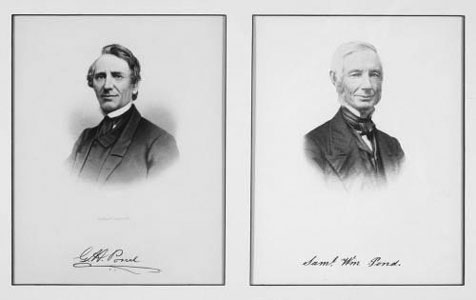
Gideon and Samuel Pond
Gideon and Samuel traveled to Fort Snelling by steamboat. They began teaching Euro-American farming to Dakota people near Lake Calhoun in present-day Minneapolis.
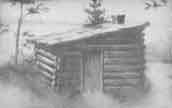
The cabin built by Gideon and Samuel Pond near Lake Calhoun
They also created the “Pond-Dakota” alphabet, which is still used today.
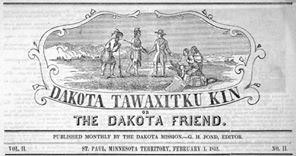
Cordelia Eggleston was born November 22, 1815, in the small community of Stafford, just outside of Batavia, New York. Her father, Esquire Ebenezer Eggleston, had died eight weeks earlier, leaving Cordelia’s mother, Anna Kingsley Eggleston, a widow with eight children. The oldest, Harvey, was fourteen and the youngest, Jane, was three years old. Baby Cordelia arrived two months later.
Cordelia left home in 1837. At age 22, she joined the Lake Harriet Mission in the capacity of teacher for the mixed blood Dakota daughters of many of the area’s white government officials and traders. After a brief engagement, Cordelia wed Samuel W. Pond on November 22, 1838.
At the invitation of Chief Sakpe II, Samuel and Cordelia moved ten miles up the Minnesota River to Tiŋta-otoŋwe, where they began a mission and school, the Prairieville Mission, from 1847-1853.
Samuel and Cordelia Pond Mission House in Prairieville, 1847
The Pond Mission House was built in 1847. It was a small palisaded mission of stone within one hundred rods of the village. The mission home stood just east of the Faribault Trading Post. It was a two-story frame building within an eight-foot stockade enclosing the house and half-acre garden.
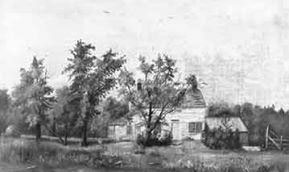
The Pond house in Shakopee, 1880
Troubles and difficulty plagued Samuel over the course of the next several months as he found himself responsible for ordering the delivery of building materials in the form of heavy timbers which he had to haul on the ice to the new site. The lumber of the house was purchased at Point Douglas and brought by oxen to Fort Snelling. A mishap near Grey Cloud Island on the Mississippi nearly cost Samuel his life as the oxen hauling the wood slipped on the ice, fell into the water and nearly drowned, not to mention losing the provisions that they were hauling.
The lumber was brought to Fort Snelling, where the millwork and framing were prepared, and then transported by barge up the Minnesota River to its location in Tiŋta-otoŋwe. By the fall of 1847, Samuel and Cordelia moved into their new mission house at what is today Shakopee, Minnesota. They were 14 miles from Gideon and Sarah Pond at Oak Grove and 50 miles from their nearest non-Dakota neighbors.
The site was described by Samuel: “The mission house at Shakopee was pleasantly located on gently rising ground, about half a mile south of the Minnesota River. At a distance of twenty rods or so to the west was the house of Oliver Faribault. Between these two dwellings was a ravine through which ran a never failing spring of clear cold water…The village was south of the mission house and near by, and was called by the Dakota’s ‘Tintonwan,’ signifying ‘the village on the prairie.’” Mr. Pond named the place Prairieville, by which name it was known until the arrival of white settlers, five years later…
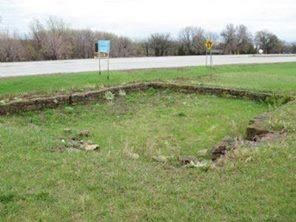
The Pond Mission, which is just across the highway from Memorial Park in Shakopee. This picture is from several years ago, so you can see where the house was built.
“Between the mission house and the Minnesota River lay a beautiful and fertile tract of ‘bottom land’…On one side of the tract ran a clear sparkling stream of water…on the other side by the Minnesota, sweeping in a beautiful curve around its border. This piece of land was cultivated by the Indians and when not covered by water, tadpoles, and fishes, in the months of June and July, was rich with waving corn.”
It was in November that Cordelia and the children moved into their new home at the mission. Jeanette was five years old; Rebecca was three and baby Elnathan was scarcely a month old. The house is described as follows:
“…sufficiently commodious, carefully and comfortably built, although inexpensive in all its appointments. The walls were carefully filled with moistened clay, making them probably bullet-proof and rendering the house very warm.”
Below is the information on the house, which is still there today.
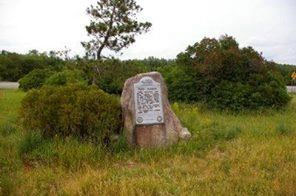
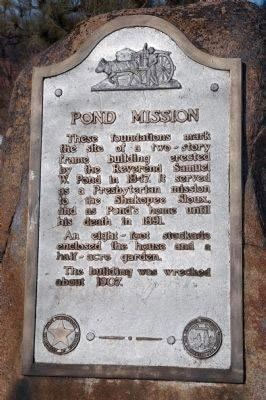
Approximately 600 Dakota lived in Sakpé’s village in the 1840s. Samuel Pond, Sr. described it as a very busy place and felt the need to surround the mission house and front garden with a fence of tall stakes to prevent the Indians from claiming a portion of the crops for themselves.
In the fall of 1851, Samuel obtained from the Board a year’s leave of absence, and prepared to visit New England. The journey was a fatiguing one, as much of it was by stage. Cordelia and the family were visiting relatives in Connecticut when Cordelia passed away at the age of 36 years. She is buried there. Samuel remarried an old school friend, Rebecca Susan Smith, in Connecticut about two months after Cordelia’s death. Samuel and Susan did not have any children. They returned to the mission at Shakopee.
Samuel and his brother Gideon both resigned from the Dakota Mission after the Treaties of 1851 removed all of the Dakota people to the Upper and Lower Sioux Agency reservations in western Minnesota.
Samuel became the founding pastor of the First Presbyterian Church in the rapidly growing city of Shakopee, Minnesota. He served as pastor for 13 years. Susan, Samuel’s second wife, died on July 9, 1891 and Samuel joined her in death on December 12, 1891, at the age of 83.
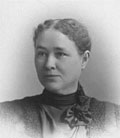
Cordelia’s second child, Rebecca, was the only one of the siblings to have her own children. She married William Dean and raised a son and daughter in Minneapolis.
As for Cordelia and Samuel’s children, Jennette never married and died at the young age of 25 years on April 4, 1867. Rebecca married William Johnston Dean on Christmas Eve, 1867. They had a daughter, Jennette Cordelia Dean, born in 1868 and a son, Arthur Judson Dean, born in 1871. Rebecca, the little girl who was not expected to survive childhood, was 68 years old when she died in Minneapolis. Elnathan married Minnie Markus and died at Shakopee in 1943 at the age of 96. Samuel Pond, Jr. married a widow, Irene Boyden, and was 66 years old when he died in 1916.
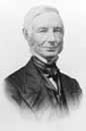
By the time of Samuel’s death in 1891, the United States had matured into a nation of 44 states with a population of 63 million and was an emerging global power. Minnesota, which was organized as a Territory in 1849 and became a state in 1858, grew from a population of approximately 7,000 in 1854 to 1,300,000 in 1890.
(Some information from Two Volunteer Missionaries Among the Dakotas by S.W. Pond, Jr., 1893; Dakota Soul Sisters: Stories of the Women of the Dakota Mission by Lois A. Glewwe; Dakota Life in the Upper Midwest by Samuel W. Pond, 1908.)