All posts by Wes Reinke

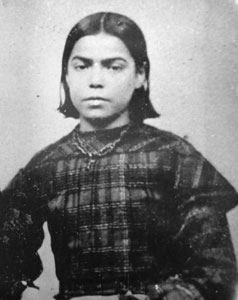
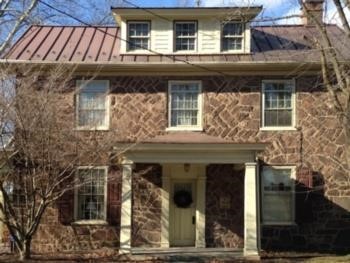
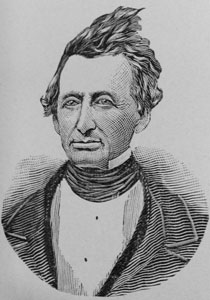
Samuel Hibler and a Bookstore (and More) in Shakopee: 1855

Samuel Hibler, a young man from Pennsylvania, opened a first-class bookstore in the fall of 1855. “Hurrah for Shakopee!” said the Shakopee Independent on Nov. 17, 1855, “Such an establishment is needed in Shakopee, and no man that we know of is better qualified to transact that same business than is Mr. Hibler. May success attend him for his enterprise.”

Samuel Hibler set up a book seller and stationer in just a few days, according to the article.

Though the idea of a bookstore in Shakopee was wonderful then (and wish the same now!), there is more about Samuel Hibler than just the bookstore!

On a cold stormy night in the last days of January 1856, James B. Wakefield, Henry P. Constans, Spier Spencer and Samuel V. Hibler, with several others, whose names are not important to this history, were assembled in a small store by a warm stove in Shakopee. All were poor in purse, but in youth, health and courage, were rich and hopeful.

This was a year ever memorable in Minnesota of inflated prices of land and of wild speculations. Immigrants had been coming into the territory in great numbers. For several years past great improvements had been made and fortunes acquired in a day, by speculators in lands, town-sites and corner lots. The prospects for the year just beginning were very flattering.

The conversation of this small company turned upon these interesting subjects and the project was proposed of striking out somewhere and founding a city. Others were doing this very thing and were rapidly acquiring wealth and why should they not do the same? They agreed to go forth into the wilderness and find a suitable place for a town-site, survey and plat it and settle down as permanent citizens and build a town.

Speculation was not the sole motive of this project. A desire to secure permanent locations, the establishment of business and to contribute their mite, toward the building up and development of the country, as well as the bettering of their financial condition, induced this determination.

The first intention was to go into Freeborn County, but on examining the map of southern Minnesota, the valley of the Blue Earth River fixed the attention of the company. The buffalo and elk hunter, the trapper, the Indian and the explorer, had already told their stories, of the beauty and fertility of the Blue Earth valley. Thomas Holmes had talked in glowing language of the forks of the Blue Earth River as an eligible location for a town.

In fact, a small, rough log cabin, on the north bank of the stream was built by Thomas A. Holmes in 1854 at the two branches of the Blue Earth River in Faribault County. It was very crudely built, quite low and not more than ten by twelve feet in size, and had evidently been built as a mere temporary shelter. He erected this cabin, with the intention of making a claim of the land adjoining, with a view of eventually laying out a town in the vicinity.

This he never did, however, but went so far as to employ two men, whose names are now forgotten, to go upon the land and to occupy this cabin a short time.

This cabin was the first advance made in the building of a human habitation, on the capacity and architectural style of a Dakota tioti. It was the first house erected in the county. But in 1854, Thomas A. Holmes decided to focus more on Shakopee.

And so, in 1856, the group of men from Shakopee decided to go to the head-waters of the Blue Earth River. The winter had been long and cold. It was now the beginning of February and the snow lay twenty inches deep on the level and great drifts were piled in every direction, but what are such difficulties to western energy, bent on great projects?

The company hired one Huffman, with his team and sled, and gathered together a few provisions. They gathered flour, pork, beans, some culinary utensils and a ten gallon keg of a peculiar fluid extract of rye, which latter article had been recommended by solicitous friends, as a valuable medicine in cases of frost-bites, snake-bites, chills, or general prostration. Well-armed with guns, pistols and plenty of ammunition, Samuel and others started for the forks of the Blue Earth, across a trackless region.

The cold was intense, and the roads, where there were any, were blockaded. South of Mankato no roads existed. After a tedious journey, on Feb. 6, 1956, Samuel and his group crossed the lands where Blue Earth City now stands, and proceeded about a mile further south, to the cabin of Moses Sailor, the first settler. The group stayed overnight with Moses Sailor.

Having traveled all day over trackless prairies, plunging through deep snow drifts, sometimes breaking the way for the team, Samuel and the other pioneers were well nigh exhausted and they enjoyed the hearty welcome, the warm fire, the corn bread and bacon of the first settler.

Having fully explained their designs to Moses Sailor, the next morning the pioneers, with Moses in the lead, entered upon the lands where the future city was to be built. Moses, knowing the ground well, pointed out to them in glowing language the beauty and adaptability of the location for a town-site. But few words are necessary with men of business and it was forthwith decided to found the town. They were shown the small log cabin of Thomas A. Holmes, in which they stored their goods and took up their abode for the present.

On the following day Wakefield and Spencer started out with the team, on their return to Shakopee, leaving Constans and Hibler to hold possession of the country.

Henry and Samuel were left alone and went to work to render themselves as comfortable as possible in their cabin. Their usual amusements were chopping wood and carrying it up the steep bank of the river, to their cabin, keeping fire and cooking their victuals. Frequently informal visits would be made to Moses’s, where they would get a warm meal, which visits would be kindly returned by Moses in a day or two, and these courtesies were usually, according to the strict etiquette of the times, rendered mellow and agreeable.

Thus the time passed until about March 7, 1856, when James returned with a pocketful of official commissions and accompanied by another new settler, George B. Kingsley. Spier did not return, but stayed in Shakopee.

During this time of organization of the county, there were not probably more than fifteen white male voters in the county. The pioneers, now four of them, Wakefield, Constans, Hibler, and Kingsley, all living in the small cabin, decided that their quarters were too small and uncomfortable and determined at once to build a larger house.

This they proceeded to do and, after a week or two of hard work and the assistance of the Sailor boys, the result was the Elkhorn, erected on the proposed town-site of Blue Earth City. It was the first house on the town-site. The building was constructed of rough logs and was very roomy, being sixteen by twenty-two feet, one story high, large chimney, puncheon floor, and one civilized window. As soon as completed they removed into this commodious tenement and it became the general rendezvous, and head-quarters of the county for some time.

Spring set in about the middle of March and the snow soon entirely disappeared, but it was still cold. Provisions had run very low and Moses had also exhausted his store. The weather continued cold—the ice in the streams was breaking up—the waters getting high and traveling was impossible. Day after day even weeks passed, but no one came bringing provisions. No one could go after supplies, and starvation was imminent. They were at last reduced to buckwheat slapjacks, the flour being stirred up with water, and as a rarity occasionally seasoned with ground cinnamon bark. This was the only article of food for some weeks, except that on several occasions some wild game—a squirrel or a rabbit—would be shot.

And to add greatly to their miseries, their stock of tobacco became entirely exhausted—not a crumb left. “Oh for one chew! Just one smoke!” was the repeated exclamation. Barks and roots were tried but gave no relief—pockets were worn out with the involuntary search for the weed and in the silent hours of the night weird dreams came to them of jolly plugs of pure Cavendish, great smoking Meerschaums, and Royal Havanas, dancing in the air.

During this trying time, however, an event occurred which threw the company into great excitement—a fine fat raccoon was discovered in a tree top, at a short distance! Here now was something of real importance. It had of course to be taken by some means as they were out of meat. It was one of those great emergencies, where presence of mind, steady nerves, and skill alone triumph. So the mighty hunter Constans, by far the best marks-man in the party and a dead shot, was deputed to bring down the raccoon.

Henry approached the game with that silence, stealth and cunning, known only to the skilled hunter. He took deadly aim with a rest, he fired—the raccoon did not stir. Quickly loading again with great care and circumspection, he shot again but strange to say there were no signs of trouble in that tree top. And now, alas, it was found that the shots were all exhausted. What was to be done?

Henry wore a vest, on which were some round buttons. He pulled out his knife and off came the buttons. This was serious, so the gun was reloaded with the heavy buttons. Henry, concentrating his powers, took another deadly aim—fired and down came the raccoon, and down also came the hunter! The gun killed, or nearly so, at both ends. It had kicked him fair on the nose, knocking him over. His nose was smashed. But they got the raccoon, and they had a great old time eating once again!

Life in Faribault County during this time was not especially attractive and began to hang heavily upon our pioneers. No amusements—but few neighbors, no mails, nothing to do, except the cooking of their meals and carrying in their wood and water. Their stories had all been told a dozen times, invention even was exhausted, no reading matter but that which had been read and re-read until it had become disgustingly stale. A vocal band was organized and much time spent in singing. Quiet games of cards were played, with no other purpose than to kill time, or as was often the fact to determine definitely who should bring in the next bucket of water, or back in the next load of wood. The last days of the month arrived and with it the occurrence of a great and long hoped for event.

Settlers now began to come into various parts of the county rapidly and locate. A number of claims were taken and cabins erected, and as the pleasant month of June arrived, the ground became settled and the great work of surveying the town-site was begun.

Thomas Hood, of Shakopee, a first-class surveyor, was employed and a surveying corps was organized. The surveying and staking out of the city required about a month’s labor, and was completed in the first days of July.

Samuel, the register of deeds of the county and one of the original town proprietors, was holding a section adjoining the town-site of Blue Earth City as a claim. He had erected a small cabin and made some other improvements in the land. The land was very valuable, and since Hibler wasn’t on the claim, Theophius Bowen jumped the claim. He wanted to contest Hibler’s right to own the land on the local land office.

The jumping of claims was in those days very unpopular. Many people lost their lives in this territory because of claim jumping. Law and order was not well established and trespassing often resulted in the strong and bloody hand.

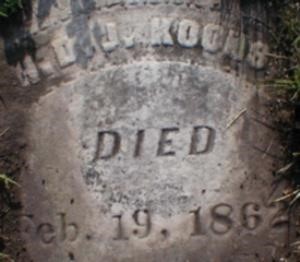
On Oct. 15, 1856, Samuel and several friends proceeded to the house on his claim and ordered Bowen off the premises. A young man, Alfonso Brooks, was in the house at the time with Theophius Bowen. High words followed between Samuel and Theophius, and when they got into a scuttle, Alfonso tried to interfere. Hibler, who had a stout cane in his hand, struck Brooks over the head. Alphonso stooped down to pick up a piece of brick from the small pile in the corner, and as he arose, Samuel struck him again on the head several times.

Alfonso fell and died in about an hour. His skull was broken.

Alfonso was buried in the graveyard at Blue Earth City. He was a young man of good habits, intelligent, of inoffensive character, and not one of the principal parties to the quarrel. He was stricken down in the prime of his life.

Theophius immediately went to Mankato to make a complaint against Samuel and some others, whom he considered implicated. The complaint was made before the justice of the peace, who issued a warrant for the arrest of Hibler and others. Samuel Hibler got an attorney from Shakopee, Thomas J. Galbraith, and James Dow, an attorney from Red Wing. Lewis Branson of Mankato was the prosecuting attorney.

Attorney Thomas J. Galbraith (who would be involved in the U.S.-Dakota Conflict in 1862) moved to discharge the prisoners because they had no jurisdiction over the territory where the offense had been committed.

They were discharged.

Samuel never returned to the county. He went to Shakopee, where he remained for a short time. And then he returned to Pennsylvania, his native state.

Theophius subsequently pre-empted the land in dispute, and later it was laid out as an addition to Blue Earth City.

The current opinion of the time was that the killing of Alfonso was mainly an accident, and that Samuel was not seriously to be blamed under the circumstances.

And so, Shakopee lost a bookstore, Samuel V. Hibler moved back to Pennsylvania, and Alfonso Brooks lost his life.

See what happens when you read?!!!!

(Some information from The History of Faribault County, Minnesota: From Its First Settlement to the Close of the Year 1879 (1896) by Jacob Armel Kiester. Minneapolis: Harrison & Smith; The Bench and Bar of Faribault County by J.A. Kiester at geneaologytrails.com/minn/Faribault/.countyhistory.html; and New Book Store, Shakopee Independent, Nov. 17, 1855.)

A Gunfight at 3 a.m.: 1947

Night Officer Pat Thielen was making his rounds shortly after 3 a.m. in downtown Shakopee in 1947. As he was driving out of the alley next to the telephone company, he heard the tinkle of falling glass. He thought it might be in the rear of Metcalf’s, so he drove down Holmes Street and turned into the alley between the Pure Oil and the Standard Oil gas stations. As he passed the station, Pat saw a figure dart out between the pumps at the Standard Station, and a car parked across the street did a U-turn and picked up the person. Then the car raced east on First Avenue toward Savage.

When Thielen saw the car, he skidded on the ice, and broke a headlight against a telephone pole. Pat started the chase, with the two vehicles driving in excess of 80 miles per hour. They roared past the First Presbyterian Church, which was dedicated on Feb. 25, 1900, and was used until 1967. The church is now the Igelsia del Dios Vivo, Columna y Adoyo de la Verdad, La Luz Del Mundo on 502 First Avenue East. The three bandits, driving a 1941 Buick Road-master, opened fire at Pat, and Pat returned fire, emptying his pistol at the fleeing machine.

The bandits’ bullets struck the police car, one through the center of the right windshield, and one at the edge of the roof, also on the right side. The slugs were .41 caliber weapons. Thielen believed that the burglars were professionals, as the driver kept his machine on the left side to protect himself, while his companions fired, one from each rear window of the car.

When the firing started, the burglars slowed down, and when Thielen fired back, they sped away, rapidly outdistancing the police car. Pat, who was a veteran of the heavy combat in the South Pacific during World War II, noted that if he had a Browning automatic rifle, he could have stopped them. But without it, the bandits escaped.

Thielen was unhurt except for flying glass. He headed back to town and alerted the nearby law enforcement agencies.

A few years later, Don Miles from the State Crime Bureau called Pat and they met at the Carver County Jail. A prisoner was there, and he was being interrogated. The prisoner described how he and his friends had been hired for $500 to come to Shakopee in 1947 to scare a new police officer out of his job. They spent a day watching his routines, and the next night the burglars broke a window in the gas station to get his attention. The prisoner mentioned that Pat had come so fast that they had to get the hell out in a hurry. While firing on the officer’s car and making a bee line out of town, the prisoners and friends got four bullets in the back of their car.

When Don mentioned that Pat was there now, listening, the prisoner said, “Oh, my God, no!” and clammed up. Unfortunately, Pat realized that is was no use pursing it as the statute of limitations had already run out!

(Some information from Robert George Thielen: The Legend of “Pat” Thielen by the Shakopee Heritage Society, 2007, p. 11-13.)

Shakopee’s City Hall

Compiled by David R. Schleper

The first Shakopee City Hall was built at the northeast corner of Lewis and Second streets, across from what is now known as Bill’s Toggery. The plan was drawn by Charles Bornarth (who ended up using the same plan for the Jordan City Hall). It was built in 1883, and Frank Buch was the contractor for the new two-story building.

The city hall was used until September 1957. The City decided to abandon and raze the old city hall, which was a termite terminal, in September 1957. (That area became a parking lot, and is now being renovated for a new downtown parking lot across from Bill’s Toggery.)

Meanwhile, the city hall was moved to the north side of First Avenue. The First National Bank was here for many years, and was the location of a bank robbery that happened in 1929. The City of Shakopee decided to buy the building for $20,000, and the city offices were moved to the first floor on June 15, 1958. This was the second location of the city hall. The City of Shakopee was in this location for 32 years.

In 1968, the original fire bell, which was in the tower of the first city hall, on the northeast corner of Second and Lewis, was decoratively placed for posterity at the front of the city office at the second city hall. The bell, cast in bronze, was sandblasted at Rahr Malting to get a revived look. The bell bared the names of officials of earlier times, cast in relief on the side of the bell: George E. Strait, mayor; David L. How, president of the council; Julius Coller, city recorder, and Jacob S. Kunsman, chief of the fire department. (The bell is now located at Fire House #2 in Shakopee.)

Meanwhile, the First National Bank moved to Holmes Street, on the northeast corner of Holmes Street and Second Avenue. Before this, this location was the location of the first brick house, which was built in 1853 by Mr. Coulton. The location became the house of the Sherrard family, and when David Lennox How married Mary M. Sherrard in 1862, they moved into this house.

Dr. H. P. Fischer remodeled it to become the first hospital in Shakopee, the Shakopee Hospital. From a hospital, it became an apartment, and then the American Legion Club. It was finally razed in 1955 to build the First National Bank building, which opened on Feb. 10, 1958. (This was the fifth place for the bank, which started at the old National Hotel in 1865.)

The First National Bank became Marquette Bank. The building is on 129 Holmes St. S., and became the third city hall. On Feb. 11, 1993, the city hall was occupied. The third city hall was about one block from the second city hall, which was about one block from the first city hall.

And finally, this year, 2017, a new city hall, Shakopee’s fourth city hall, was built on the east side of downtown Shakopee, near the police station. The location is 485 Gorman St. If you need to contact people at City Hall, please call 952-233-9300. The website is http://www.shakopeemn.gov/.

City hall at northeast corner of Second Avenue and Lewis Street
City hall at 129 First Ave. E.
City hall at 129 Holmes St. S.
City hall at 485 Gorman St.

The Bridge over the River: 1880

By David R. Schleper

Lewis Street Swing Bridge

Peter Geyermann was born in Germany on Dec. 13, 1825, son of Henry and Christina Nell Geyermann. He came to America on July 7, 1851, and was located at Milwaukee, Wisconsin, where he worked on a farm for a few weeks. For a short time he worked on the Michigan Central railroad in Indiana, before he began chopping wood in northern Illinois for two years. Peter then purchased a tract of timber land in Illinois along the Chicago & Aurora Railroad. In 1853, he was in the mercantile business in Aurora for two years.

In 1855, Peter moved to Minnesota Territory and took a preemption claim in Carver County. Two years later he sold out and moved to Shakopee, where he was involved in the merchandise business.

In a letter to his brother and sister-in-law, Peter described his life in Shakopee. This letter was translated from German to English in January 1991 by Ernst Wirt, Mitchell, S.D:

Shakopee, Nov 30, 1855

Dear Brother and Sister-in Law,

I wrote to you on August 30, a letter but I never got an answer which surprised me very much.

In our family we have lots of news to report. Our sister Anna Maria got married on the 23rd of July with the blacksmith. He comes from Saxony. His name is Johann Heinz. He is a very ambitious and hard working man. And on the 20th of August, it pains me very much to write that our dear and only brother, Joseph, died. He was such a strong and young brother (just like Michel and Joseph were). Our Joseph was about 10 days sick. He had something called the red Ruhr. He was very happy here in America because he didn’t have to take care of anybody, only himself, and he remembered where his home was. He never had it so good in his whole life. He could eat and drink anything he wanted. It didn’t cost him a penny. I never saw him so happy as in the time I saw him here.

Our sister Anna Marie was not too happy when our other sister, Magdalene left here because her new husband died on the 10th of September of the same sickness like Joseph. On the same day died also Simon Derbach. They all lived with me. You can’t imagine the hardship. It was not only that all those people died, but everybody also sick in the house. I was very depressed and always was thinking that I was the next to go. I wanted to move from here and look for a different place.

So I did. I moved to Shakopee, Minnesota Territory, and I live outside in the country. I bought a claim there. The land belonged to the government and was not yet sold. The law says whoever comes first and homesteads it has a claim to it, but you have to be over 21 years of age. I had to take 160 acres of land and you were supposed to build a house on this land, and supposed to take care of the land. And whoever is doing this first has the first right and claim. For this I paid $300.00 but if I ever wanted to sell it, then I would have to pay $1.25 per acre and I have to announce this 3 months in advance. If I don’t pay it in time then I can sell it to someone else, but I must leave the homestead. This can take the time of 1 or 2 years. The house that exists is in very poor condition in the country and we are in the process of building a new one. Last Wednesday we started.

You are probably surprised to hear that people build houses here in the winter, but here in the country people take tree stems and they make very nice houses (log houses). So if you plan to build a house you have to see that you get all the logs nearby, bring it to the place, and cut them into the measurements as big as the house is supposed to be. Then you go and call on 8 to 10 neighbors and then everything will be put together in one day but the roof. The rest a person has to do himself and that goes better than anybody can imagine. Once you are between 3 and 4 years in America, you become a pretty good builder, and you acquire all the tools that craftsmen need to make a building.

Our land is ½ mile long and ½ mile wide. That is called 160 ruten (rods?) and the house is as wide as 1 rod is. (ed. note: 5.5 yards) Now you can imagine how big the house is. I have approximately 40 acres of wood on my land, approximately 6 acres of meadow and the rest are hedges. But we don’t do it here the same way we did it in (Lehnheck?). Here we take 2 or 3 young oxen and put them into a yoke, and then the land will be worked. One yoke of oxen I own and that cost me $150. Animals are very expensive here. I must say that animals are much more expensive now than when I came to America, because when I came to America, a yoke of oxen I could buy in those days for $60. Here the animals are not quite so expensive as in the old states like in Illinois where I came from.

I am now about 600 miles away NW from Arora (Aurora, Illinois) and it is much colder than there. We had already for 14 days, snow, but this week is exceptionally nice weather and the snow was almost melting away. I hope there is not new snow coming, but we will take it. It would be alright if we got snow so tomorrow morning and Sunday we want to go hunting for deer, while we are waiting to finish the house, because when the house is ready, we won’t have much time. That’s why we want to go and hunt now. And when the Indians don’t come back and take the animals away, there is plenty of deer over here.

What I’m talking about are the natives or the wild people and they don’t do anything else but hunting, but they do not hurt the white people. If it would ever happen, they have to deliver the murderer, or they receive very harsh treatment, and get blamed for that by their own people. The wild man don’t want to work at all. They think work takes something away from their honor. They do not do anything else but hunting and be a warrior, and that is the main reason that America is not so populated as Europe. These wild people have friction among themselves. There are lots of different tribes, and if anybody enters their territory, then they have a war.

We and our sister Magdalena live here on my land. She will get married. Her husband’s name is Hilliarius Schumacher. He comes from a town called Metternich, near Cologne. She is married on the 23rd of October.

Our Margaret is a servant in Shakopee. She gets $2 a week. Our Marie is a servant still in Arora (Aurora). She got the best conditions. She is in good health, and receives good money. Wherever she works, the people don’t let her go. They like her. She’s a very ambitious girl and she is the biggest and heaviest of us all. She could have got married many times before if she liked to. I think she wants to remain there until next spring, and then she will come here with our Anna Marie who still lives in the same house where I live. She would have been gone before but I was expecting some money, and I couldn’t get the money until next spring.

The letter gives a good explanation of Shakopee in 1855.

Peter married Emelia Berreau in Shakopee. They had six children.

Peter and Emelia operated Geyermann’s General Store between First and Second avenues and Lewis Street in downtown Shakopee, which included groceries, dry goods, boots and shoes, hats and caps, dress goods, clothing, and crockery. The store opened in 1857.

A Board of Trade was organized in March 1878, with Peter as president. The editorial of the Shakopee Argus noted that:

“Shakopee is now a metropolitan city. It has twelve street lamps, each with the illuminating power of ten lightning bugs. On a dark night the flickering rays of light are cast fully twenty feet around and on a clear night with a full moon, the city is brilliantly lighted up.”

Peter also became mayor of Shakopee. He was mayor from 1873-1876, and again in 1878. While he was mayor in 1878, Peter was involved in controversy. The town needed a bridge over the Minnesota River. After lots of discussion over several years, the legislature voted in favor of building a bridge in Shakopee. The bridge was to be built on Fuller St.

The mayor owned a store on Lewis St., so he vetoed the resolution for building the bridge on Fuller St. He wanted it on Lewis Street, so that people arriving over the bridge would go directly to his store. Another resolution, putting the bridge on Holmes Street, was also vetoed by the mayor. They tried other sites, including one near Murphy’s Landing, and later the Shakopee Argus editor looked out from the third floor of his building, and saw a huge cottonwood tree across the river. He suggested that they could lasso the tree, and build the river across at that part. Obviously, that did not win, either.

After many more meetings, the mayor won out, and the bridge was built on Lewis St. in 1880.

Many people were upset, though, and the mayor’s store was boycotted by many residents, especially the people in the First Ward, who wanted the Fuller St. site. So effective was the action that Peter and Emelia were forced out of business, and after 24 years in the business, they left the town of Shakopee.

Peter and Emelia moved to the little town of Hersey (now called Brewster) where they started a new general merchandise store. After several years, the family established stores in Pipestone, Worthington, and Storm Lake, Iowa. In the 1920s, Peter and Emelia’s sons opened stores in Huron, Mitchell, Madison, and Brookings, South Dakota. In the 1940s they added stores in Sioux Falls and Rapid City, as well as Beatrice and Hastings, Nebraska. Record books of the old Brewster, Minnesota store noted that a man’s suit cost $9.50, a boy’s boots cost $2.13, eight yards of printed goods cost 66 cents, a gallon of oil was 25 cents, butter was just 20 cents a pound, and Rock and Rye was $1.00 a bottle.

Emelia Berreau Geyermann died in 1907, and Peter Geyermann died in 1911.

Meanwhile, the Lewis Street Swing Bridge in Shakopee was opened for river boat traffic heading further west in 1880.

On July 15, 1896, the boat the Daisy was heading up the Minnesota River when it hit the bridge, knocking over its smoke stacks. It seems that the boat didn’t wait until the Lewis Street Swing Bridge was open before it crashed!

When the Holmes Street Bridge was built in 1927, the Lewis Street Swing Bridge was open for foot traffic. In 1942, with the war effort, the scrap metal was requisitioned by the government, and the Lewis Street Swing Bridge supplied the metal. It was estimated that it contained 100 tons of needed metal for bombs, jeeps, and ships.

And so that is what happened with the Swing Bridge on Lewis St. in downtown Shakopee.

(Some information from The Shakopee Story by Julius A. Coller, II, pages 118-120; Shakopee Scrapbook by Michael C. Huber, Patricia A. Huber, and Joseph C. Huber; Taped Interview of Jack Coller on KSMM Radio, July 1982; and information from Rick Geyermann via email to David R. Schleper.)

Remember When: September 2017

1892 Shakopee Courier

Oct. 6, 1892

Mr. Callum has moved from the Titus house to a house up above the depot.

Mrs. Wm. Pinger has come back to Shakopee to live after living in St. Paul for a few years.

The Receiver of the property of the Russ Jones desk company, has taken possession of the machinery they brought over here.

Mrs. Henschel has opened up her stock of confectionary and fruit, and all the little fellows are going there to get a big lot for their nickel.

Two boys, Henry Cargill and Otto Kochlin are under arrest for burglarizing Marx’s saloon; they cases to be decided this afternoon as to whether they should be held to the grand jury, or discharged.

John Theis’ tomato trees, mentioned by us some weeks ago, not being injured by frost—we didn’t have any—were loaded down with the biggest kind of tomatoes, some of which we received from him lately. They have been noticed in several of the agricultural papers, since the description given in the Courier.

Oct. 13, 1892

The Shakopee Co-operative Barrel Company has employed four new men to help furnish barrels for the Mill Co.

The bridge across the creek to the trestle is now completed.

The Wampach Manufacturing Co. shipped three laundry wagons and five delivery wagons to Minneapolis last week.

Oct. 20, 1892

Casper Scott has lately stocked up with a fine lot of new boots and shoes, for gents and ladies, of the best makes, at rock bottom prices.

A Valuable Machine.—Gregory Hattenberger of Eagle Creek, on Monday last received from Illinois a “combined corn husker and fodder cutter,” something new around here. His sons will have charge of it through the country wherever engaged. It separates the corn from the stalk, throwing the corn into the wagon box on one side, and the fodder cut up, ready to feed on the other side of the machine. Farmers using this combined cutter, can feed the whole of their fodder now, a great saving.

Herman Covnick has taken the place vacated by Wm. Dols as assistant of the Milwaukee office.

Fire broke out on Wednesday afternoon at 3:30 p.m. in the barn of William Heidenreich and extended to those of Peter Radermacher and Peter Mergens on the block between Holmes and Fuller. They were entirely destroyed, a big wind blowing from the west making it a very dangerous conflagration, but owing to the determined action of our fire department the farther spread of the flames was prevented in this locality. But the high wind carried with it big sparks over two blocks east on to August Abel’s stable on Sommerville street, so that we had two fires going at the same time. Abel’s stable was destroyed but Derberger’s, which had also caught from this last fire, was saved. The firemen worked hard, and we may consider it a very lucky event that more valuable buildings and property were not burned, considering the wind. As it was, more or less serious loss was sustained in hay and feed etc. Word was sent to Chaska and St. Paul by Mayor Weiland, but was countermanded soon thereafter.

When the chimney sweep blows his morning horn, it remindeth people that they should have their chimneys cleaned. Great conflagrations may be prevented by so doing.

Oct. 27, 1892

Miss Lottie Farncamp has come to Shakopee to reside. She will occupy her cottage on the hill below O. S. Brown’s place.

Mrs. Titus has rented her house to Joe Bierline.

Flags over city hall, postoffice and bank at half mast on Tuesday account of death of Mrs. Harrison.

The Occidental hotel has enlarged their dining room, putting in a hardwood floor, and otherwise repairing up.

1892: Scott County Argus

Oct. 6, 1892

On Monday August Grosskopp tried to stop the cylinder of a separator with the first finger of his left hand. Dr. Smith trimmed down the rough edges of the finger.

Chas. Smith has moved into the Heidenreich building on Second street.

J. A. Dean has moved in the Juergens house on Second street lately vacated by Paul Fischer.

Oct. 13, 1892

Geo. Huber shot three large geese at one shot in Dean’s lake last Friday, the largest weighing twelve pounds.

Judge Cadwell has rendered a decision in the Russ Jones Desk Co. case against the city in favor of the city. By the decision the city saves the $3,000 bonus which was deposited in the bank, and secure a lead on the building for the $3,000 which had been paid over to the company to purchase the building. So by the transaction the city is a loser of only some machinery, engine and the expense of the suit. The city will probably sue the assignee of the company to recover the machinery and engine which originally belonged to the plant, and was removed from the building to Minneapolis.

Oct. 20, 1892

Joe. Buch is now employed in the mill.

Farm for sale. My farm of seventy acres east of town known as the Mrs. Haas farm. Thomas Pinches.

Oct. 27, 1892

August Abel is building a new brick barn, 19×28, on the street and alley corner, back of his house.

One thing must be insisted on in Shakopee in the future. That no building of any sort, size or description be allowed built of boards within the fire limits, whether covered with sheetiron or not. Build of stone or brick only.

Two gentlemen of the road who gave their names as Thomas Hyland and August Schultz, went through August Abel’s tailor shop last Friday and took a pair of pantaloons. The same day they broke into the Conter House and took several articles of clothing belonging to John Merten. A search warrant was sworn out by Mr. Abel and the parties were found at Ring’s hotel with some of the articles in their possession. They told Police Officer Rose where they had hid the rest, so all lost articles were recovered. They had their hearing before Justice Stevens Monday, and will board with landlord Hilgers until the Grand Jury meets.

1917: Shakopee Tribune

Oct. 5, 1917

Gem Theatre Sold. A deal was closed on Monday whereby Mr. Frank Veigel who has conducted the Gem Theatre the past year sold the same to Mr. W. A. Shelton of Williston, N. D. The new proprietor took possession the same day. We are glad to know that Mr. Veigel and family expect to remain here at least during the winter months.

The Schroeder brickyards are a busy place this time of the year a kiln of 500,000 brick being burned this week.

Oct. 12, 1917

The George Diederich family of Marystown moved on Saturday into the Niedenfuehr house, which Mr. Diederich bought last spring.

The John Sames family moved to their farm in Eagle Creek on Monday. The home they vacated is being occupied by the Carlton family.


The First National Bank has just installed a very unique and valuable feature as a window display.

This consists of a Weekly Map Window Service showing interesting Maps and Illustrations. They advise us that these Maps will show the leading events of whatever part of the world happens to be in the limelight. Just now, of course, the big interest is in Europe; so these Maps will show the battle front in Europe; just where our American boys will be; together with pictures of interest in connection with same.

These Maps will be changed weekly, and will show geographically the progress of armies and other events of world interest. Special attention is going to be given to the showing of the location of our American boys in France.

The Bank decided that after the Maps have had their turn in the window, they will present them to the local high school, making a most valuable educational feature for the school.

Oct. 19, 1917

Dies On Train. The body of an elderly unidentified man was taken from Omaha passenger train No. 3 on Thursday morning. Passengers had heard him moan and upon investigation found he was dead. Coroner Reiter was called and had the body removed to Hirscher’s undertaking parlors. A letter found in one of his pockets was addressed to William A. Brown, the postmark being Evanston, Ill. A card was also found showing that he had money on deposit in a bank at Eagle River, Wis. His destination according to the railroad ticket was Fenton, Ia. Coroner Reiter is awaiting a reply to a telegram sent to Evanston as to the disposal of the body.

For Sale—My modern seven room house on Lewis street. Bath, electric lights, hot water heat, hardwood thruout; fine garage. Small amount of cash will handle. Inquire of L. D. Nye or at the office of the Minnesota Stove Co.

The Fourth Annual Corn Show will be held at the Shakopee High School, Saturday, November 10. Now is the time to start saving your good ears of corn. There are rumors that there will be another carnival that night. We hope it will be as good as the one last year when everyone had the time of their lives.

The mill was shut down the first two days of the week according to the new government ruling, limiting the number of bushels of wheat to be used, weekly.

Willie Gross had the misfortune to fall while playing near the bridge last Saturday and as the result is carrying his left arm in a sling, having suffered a severe fracture.

Mr. Swanson of Casselton, N. D., arrived here on Tuesday and is the new miller at the local mill. His family is expected here soon. They will occupy the Riggs house on First street.

1917: Scott County Argus

Oct. 5, 1917

Michael Hergott, who bought the former Quigley place, moved into town Wednesday.

Miss Isabel Strunk has accepted a position in the mill office and began work there Monday.

Hirscher Bros. have purchased a new Studebaker truck for use in their furniture and undertaking business, and will build a handsome hearse that may be used with the truck as an auto hearse. The firm is known all over the state—and further—for their expert cabinet work and it is safe to say that the hearse, when completed, will be a handsome vehicle and the equal in appearance of any auto hearse owned hereabouts.

New Rye Mill Construction is Now Going Forward. Shane Bros. & Wilson company’s three story rye and meal mill is rapidly assuming proportions. When the structure shall have been completed and the machinery installed Shakopee will have the most modern and up-to-date rye and meal mill in this part of the state. The machinery will be operated by electric power. Score one more for Shakopee’s progress in the manufacturing line.

Oct. 12, 1917

Mrs. A. J. Munro and son Angus left Tuesday to join Mr. Munro in their new home in Cedar Rapids. Shakopee friends are sorry to lose them but wish them every success.

Fred Reimer, residing north of town, has purchased Rudolph Selbig’s residence property and will move to Shakopee next month. Lee Schaefer and family, who will vacate the Reimer residence, will move to the home vacated by A. J. Munro.

Oct. 19, 1917

Fish as Food

The Bureau of Fisheries at Washington is giving a series of demonstrations in the cooking, smoking, drying and salting of fish through this state and have made arrangements for a lecture and demonstration for Shakopee at the High School next Monday afternoon.

All persons interested are asked to be present.

Harry Broekhuizen has rented the Reis building on First street and will move his shoe repairing shop there about the last of this month.

Oct. 26, 1917

County Fuel Administrators Appointed. John Thiem, cashier of the First National Bank, has been appointed by Judge John F. McGee, federal fuel administrator for Minnesota, chairman of a committee of fuel administrators for Scott county. Associated with Mr. Thiem on the committee are J. S. Effertz of Belle Plaine, A. M. Schaefer of Jordan and Michael Schreiner of New Prague…

The L. Schaefer family have moved into the home recently vacated by A. J. Munro.


Shakopee Team Wins First Place

Last Friday a county canning contest was held at the Belle Plaine fair. Miss Baker, of the Extension Division of the State University, conducted the contest, in which Belle Plaine, Jordan, New Prague and Shakopee were each represented by a team. As a team Shakopee won first place, Belle Plaine second, Jordan third and New Prague fourth. Jordan carried off the first and second prizes for the best individual canning exhibit, New Prague taking third place. Money prizes were offered for both team work and individual exhibits. Shakopee was represented by Marguerite Schaefer, Mabel Raatz, Margaret Lies and Lilian Newgard.

The girls of the various teams were not the only ones who receive the benefit of the contest. A large number of ladies profited by the demonstrations, lectures and exhibits so nicely prepared along lines of the use and conservation of food. The educational features of the Belle Plaine fair were certainly well planned and executed, and without a doubt will leave lasting results.

1942: Shakopee Argus-Tribune

Oct. 1, 1942

Official Inspects County Plane Spotting Service

Inspection of the 13 aircraft observation posts in Scott county was completed Tuesday by Lieut. Gobel of the Minnesota State Gerard, state supervisor and organizer of the state’s aircraft spotting service.

Lieut. Gobel was accompanied on his four-day tour by W. B. Schroeder, county director, who set up the county organization. The lieutenant was well satisfied with the county organization and pronounced it a “splendid job…”


Shakopee Air Raid Wardens First Aid Started This Week

Nearly 100 of the men selected as air raid wardens for the City of Shakopee began their qualifying course in first aid at the high school auditorium, Monday night.

The first aid course, which must be successfully passed by all men serving as wardens, is to be given under the leadership of Dr. F. H. Buck, Dr. B. F. Pearson and Ray C. Schroeder…

Oct. 8, 1942

Court House Cardiograph. If two unidentified hunters who borrowed a tractor on the Clarence Marshall farm north of Shakopee Sunday night , knew what nearly happened to them, they wouldn’t try that trick again. It seems, according to the sheriff’s office who was called for assistance Marshall was aroused by the sound of his tractor some distance from his house. Suspecting theft he grabbed his gun and made for the scene. In the meantime Mrs. Marshall called Sheriff Wermerskirchen, although it was out of his territory. He took the old Indian road and there met Mr. Marshall, who advised that everything was OK. Apparently two hunters, whose car had become mired, borrowed the tractor to free the car and then drove away. They were just plain lucky Marshall didn’t see them driving the tractor down the road.


Shak-O-Hi News

Youthful Victory Aides from the high school filled the school buses and were off to husk Mr. Huss’ corn Friday morning. The husking bee was just a little tribute to Mr. Huss’ fine cooperation in helping put the lunch project across. He donated the land for the school garden, plowed it without charge, and donated all the corn that the cooks could can.

Work gangs of happy boys and girls were ready when school opened–boys in overalls, girls in slacks and hair bound up in turbans. Under the supervision of Mr. Metcalf and Mr. Maloney, 18 rows, ¾ of a mile long, were harvested.

While one group worked in the field, those in school remained at their usual task, shelling out an extra grain or two of knowledge. “It is more fun working to help someone than it is to work for money,” was the conclusion of one youth.

Oct. 15, 1942

Shakopee Branch County Defense Council Formed. At a meeting called at the City hall last Saturday evening by Chm. Berg of the County Civilian Defense Council, Shakopee’s defense council was organized by electing Mayor J. J. Cavanuagh, chairman; Miss Elizabeth K. Ries, director of citizen service, and Paul Ries, commander of defense…


Shakopee Has Woman on City Mail Delivery Job

For some months now Shakopee women, like others throughout the nation have been taking their places in the local factories and shops, doing what was always considered a “man’s job.”

Latest addition to the list is a mail-carrier in the person of Dolores Ries, who began her duties in Shakopee Monday morning. Employed as a substitute carrier, Miss Ries is taking the place of John Lynch, who reported for duty in the Naval Reserve Friday…


Watch Your Rifle

Frequent and emphatic complaints about broken windows, shattered light bulbs and slain birds has brought the declaration from R. L. Brown, police chief, that any type of rifle seen in the hands of children within the city limits of Shakopee, will be confiscated.

Chief Brown said his order applied to air rifles and .22’s alike. The list of complaints, he said, is growing daily and he is taking this means of warning rifle-owners that careless use of these guns must stop.


Citizens Favor Scrapping Court House Iron Fence

At a large meeting of representative citizens of Shakopee and vicinity gathered at the public school building Tuesday evening to round out plans for the scrap drive this Thursday afternoon, the question of the advisability of making some disposition of the obsolete and long since antiquated iron fence surrounding the court house yard, incidentally came up on the floor of the meeting.

The consensus of opinion as expressed was that the fence which has done service for more than half a century has long ago outlived its usefulness and should be scrapped. After some brief discussion the meeting by motion went on record as favoring the dismantling of the fence, the County Board to make such disposition of the salvaged material as its members may see fit, was carried by a unanimous vote of those assembled. Of course, there are other sections of the county whose people may be interested in this question, and whose interest should be consulted, but there could be no speculating as to how the group of citizens who voiced their conviction Tuesday evening has felt about the matter.

Oct. 22, 1942

Government Wants 500,000 Standard Typewriters

Due to the fact that typewriter manufacturers have practically converted their factories into defense manufacturing, there are not enough typewriters being made to supply the general needs and the considerable number needed in the army and the navy. Therefore the government is setting up plans for buying used typewriters.

The government wants 500,000 standard machines immediately. But they must be machines which were made after January 1, 1935. They will be bought from civilians at the factory trade-in allowance for such machines as of February 1, 1941.

Dallas F. Capesius has been appointed to handle the typewriter procurement program in Shakopee and vicinity. So that if there should be anyone here who has a typewriter he or she does not need and is willing to dispose of it in the way and manner described, it is suggested that Mr. Capesius be seen about it. His office is located at 120 ½ Shakopee Theatre Bldg., for further particulars.


Albert Czaia Believed Drowned in River Friday

Albert Czaia, for many years a familiar figure in Shakopee, is believed to have drowned in the Minnesota river here Friday afternoon. Searchers working along the river bank north of the Siebenaler ice house in West Shakopee, where Czaia had been fishing, discovered his cane and marks in the mud which indicated he had slipped into the stream.

Firemen dragging the river in the area, had not recovered the body up to Wednesday noon.

The aged man had been a resident of St. Francis home here and had a custom of fishing in the river. When he failed to return to the home early Friday evening, a search was instituted and it was learned he had been last seen on the river bank where his cane was found.

Oct. 29, 1942

Old Bridge To Be Razed for Scrap Metal. What seems to be the death knell for an old Shakopee landmark, which through the years has fostered rich memories of life and living in this Minnesota River town, was sounded at 10 a.m. Monday, October 26, when Deputy United States Marshal Elmer J. Kennedy served, on Mayor J. J. Cavanaugh, a United States Requisition Order claiming the old bridge that spans the Minnesota river at the north end of Lewis street.

Court House Cardiograph. Perhaps spelling “doom” for the iron fence around the court house, came a letter Tuesday morning to County Auditor A. A. Mertz, requesting the board of county commissioners to consider scrapping the rail. The letter pointed out that sentiment in the community apparently favored its removal. It is just a guess, but we’ll bet the commissioners will vote for the removal of the fence. One commissioner said: “If it will hit a Jap or a Nazi I’ll be glad to let the fence go.”

1967: Shakopee Valley News

Oct. 5, 1967

Dedication of the new Shakopee Edward and Grace Sweeney Elementary School, Tenth Avenue and Marystown Road, was held last Sunday, October 1, beginning at 2 p.m., with an open house and tours of the building from 2:45 to 5 p.m…

Evidence of vandalism by shooting was reported this week by Roman Luce whose farm is four miles south of Shakopee on Scott County No. 79 (O’Dowd Lakes Road), just northwest of Marystown. Luce brought in this electric fence charger that had holes, apparently pierced by bullets. He pointed out that “apparently some fun-loving fire-arm bearers had their fun channeled in the wrong direction.” The Scott County Sheriff’s department reported that also this past week was received a complaint of shooting mail boxes on Scott County Road No. 76.

Oct. 12, 1967

600 Tour School. Reported at the regular monthly meeting of the Shakopee Public School District No. 720 Monday evening of this week was that more than 600 attended the Dedication and Open House at the new Sweeney Elementary School on Sunday, October 1.


Break-In At Beverage Firm

Reported to Shakopee police was a break-in some time Wednesday evening of last week, October 4, at Rudy Gmitro Beverage, Inc., 134 South Main.

Entry was gained from the alley side through the basement and then through the warehouse on into the offices of the firm.

Missing were an adding machine and an electric typewriter.


Approval was given the Shakopee Utilities Commission for the letting of bids on the proposed garage and warehouse building, a 200 by 150 foot structure, proposed for the site at Naumkeag and Scott County Road 17.

Sealed bids are to be accepted until 3 p.m. Monday, October 30, by the Utilities Commission at the office in the Shakopee City building…

Pointed out was that the proposed new structure would include a meeting room that could also be used for public gatherings such as the Golden Age club and similar activity.

Oct. 19, 1967

Break-Ins At 3 City Firms Within 4 Days. City of Shakopee had a rash of three break-ins in four days this past week, with some $150 in cash and merchandise taken from Strunk’s Pharmacy on East First, $3,800 in guns from Engel’s Place on East First and an attempt to open the safe at Maus Super-Valu on West First apparently not successful…


87 Free Films Available From Phone Company

Northwestern Bell Telephone Company isn’t in the theater business, but it does have 87 different films available to loan to the public free of charge, W. R. Mahady, Shakopee manager, said this week.

Films cover a variety of subjects, including suggestions on home decorating, national defense, telephone research and development, safety, and, of course, several on good telephone usage, he added…

Oct. 26, 1967

Boy Scout Paper Drive Resumes On November 4

Shakopee Boy Scout Troop No. 218 has received notice that salvage paper can be collected again on a temporary basis.

The Shakopee troop is conducting a city-wide paper drive, to include newspapers only, on Saturday, November 4.

This date would resume the regular first Saturday of the month date the troop has used to collect paper since the 1920’s…


West End River Bridge Span ‘Choice’ Highway Dept. Reports

That the State Highway Department engineers would recommend proceeding with the original location of the new bridge span for the Minnesota River at Shakopee, from the Highway 169-212 wye just northeast of the city to just west of Rahr Malting on West First, was the report given by Highway Department engineers at a meeting Tuesday evening for this week in the Council Chambers of the Shakopee City Building.

This announcement came in a follow-up report by Highway engineers on the comparative cost and engineering studies of the west end location for the bridge span with that of the location at the east edge of Shakopee as sought by city officials, primarily to serve Valley Industrial Park…


Maurice Stans On Nixon Bandwagon

Maurice H. Stans, budget director under former President Dwight Eisenhower, and a member of the 1925 Shakopee High graduating class, for whom Stans Park was recently dedicated and named in his honor, has been named national finance chairman of the Nixon-For-President committee.

Stans made an appearance in Shakopee with former Vice President Nixon during the Eisenhower administration, when Nixon came to Shakopee as guest speaker at a testimonial dinner for Stans on Thursday, September 16, 1965. This event was sponsored by the Shakopee Education Association and the Shakopee Federation of Teachers in recognition of Stans’ assistance in the program for scholarships for post-high school study for Shakopee High graduating seniors.

1992: Shakopee Valley News

Oct. 1, 1992

After moving its restored house from 303 East First Avenue to 437 East Fourth Avenue, Van Horn Home Improvements has moved back to First Avenue. Van Horn Home Improvements has purchased an old house at 339 West First Avenue which will enjoy the same kind of window, door and siding improvements that the old Van Horn location enjoyed. Van Horn Home Improvements will be celebrating the Open House of its new offices at 339 West First Ave. today, tomorrow and Saturday (Oct. 1-3), 9 a.m. to 5 p.m. There will be a 25-percent discount available on Ply-Gem custom-made vinyl-replacement windows and doors. All Ply-Gem’s new styles will be on display. Free refreshments will also be available.

Out with the old, in with the new. Construction of a new Minnesota River bridge in downtown Shakopee continues this fall. Lunda Construction Co. of Black River Falls, Wis., is removing remnants from a previous bridge and will construct concrete piers. The bridge is expected to be completed in November 1993. Bid-letting on the companion downtown mini-bypass project is scheduled Oct. 23. The total project is scheduled for completion in November 1994.


Norwest remodeling, will add drive-up banking service

Remodeling and expansion projects at the Shakopee office of Norwest Bank were celebrated Sept. 15 during a ground-breaking ceremony.

According to Todd Schwartz, consumer bank manager and vice president, a new parking lot and five-lane drive-up banking area are being constructed adjacent to the south side of the bank. The new drive-up area will include a 24-hour automated-teller machine.

The bank’s interior will be remodeled to include a larger reception area and a teller station specifically designed to provide more access to those with disabilities. Also, there will be remodeling to provide separate offices and additional space for bankers to work individually with customers…


SACS’ endowment campaign begins

The Shakopee Area Catholic Schools (SACS) has begun a campaign to establish an education endowment. The endowment committee, chaired by Bert Notermann, is aiming for a $600,000 goal, in hopes that the fund will eventually grow to $1 million.

The endowment was established in March 1991 but the committee chose to hold off on the campaign until the parish center improvements at St. Mark’s were completed…

Oct. 8, 1992

Residents say taxes high but city services good

While Shakopee residents believe that in comparison to other suburban communities their property taxes are on the high side, they also appreciate the city services they get and are willing to pay for them.

And overall, a whopping 87 percent of city residents believe the quality of life in Shakopee is either “good” or “excellent…”

Oct. 15, 1992

Towering heights. Construction of a 265-foot malthouse tower at Rahr Malting Co. in Shakopee was completed this week. The malthouse is the fifth such structure at Rahr, and represents a major expansion by the Minneapolis-based firm. Construction of the tower required continuous pouring of concrete over about 400 hours involving 80 workers and two 12-hour shifts over about three weeks. The entire project is expected to be complete by January 1994.


City Council orders study proposal on Lions Park arena

Shakopee city officials hope they can get some lingering questions answered, once and for all, about a proposal to put a permanent roof over the Lions Park ice arena.

The council voted 5-0 on Oct. 6 to direct staff to prepare a “request for proposals,” for a feasibility study to provide those answers.

Among the topics council members want answers about concern the cost to operate the arena, anticipated revenues, and outlook for ice-rental income…

Oct. 22, 1992

SACS endowment campaign gets under way this week. The campaign to raise $600,000 in endowment funds for the Shakopee Area Catholic School (SACS) officially got under way this Wednesday as members of the advance gifts committee met for an orientation and training meeting. About 250 prospects from St. Mark’s and St. Mary’s in Shakopee, and St. Mary’s of Marystown, will be visited for lead-off gifts…


Hockey team will have a home away from home

The Shakopee Hockey team will hold its practices and games this coming winter season at the Eden Prairie Community Center.

According to Dale Vaughan, Shakopee High School’s director of activities, Shakopee will play all its home games at the Eden Prairie facility. Two of the Indians’ 10 home games will be played Saturday at 2 p.m. The other eight home games will be played weekdays at 4 p.m.…

Oct. 29, 1992

$10.6 million school bond referendum set for Feb. 2

The Shakopee School Board Monday voted unanimously to hold a $10.59 million bond referendum Feb. 2 for the acquisition of land, school expansions and improvements to facilities.

On Saturday, the School Board met in a special work session during which recommendations from facility committee members and Kevin Sullivan of Wold & Associates, the St. Paul architectural firm chosen for the design of the additions to Pearson and Sweeney elementary schools, were reviewed.

The board then came up with a pared-down version of the committee’s wish lists. If the referendum is successful, the district will make the following improvements:

* Expansion and remodeling at Pearson Elementary, estimated to cost $3.8 million…

* Expansion and remodeling at Sweeney Elementary, estimated to cost $4.345 million and be completed by August 1994…

* Land acquisition for expansion of the high school and outdoor facilities would cost an estimated $1.543 million, with a completion date of August 1994…

* Technology improvements throughout the district would cost an estimated $795,000, and be phased-in throughout 1993 and 1994…

* Another district project would include remodeling so that buildings are handicapped-accessible, at an estimated cost of $150,000…


Mishap causes five-day shutdown at Anchor Glass

The Shakopee Fire Department was called to Anchor Glass Container Corp. early Friday after a furnace – which holds 300 tons of molten glass – leaked, spewing 150 tons of the hot liquid to a retaining vat, according to Plant Manager Don Hennen.

The incident resulted in a shutdown until Wednesday…

Pelagie Eliza Faribault Manaige

Aug. 27, 1845 – Dec. 1, 1937
by David R. Schleper

Pelagie Eliza Faribault Menaige

Pelagie Eliza Faribault, daughter of Oliver Faribault and Wakan Yanke (or Woman Who Sits at the High Place), was born at her parents’ log cabin in East Shakopee, the same log cabin which is now at The Landing in Shakopee. Wakan Yanke was pregnant when they built and established the trading post in 1844, and Eliza, as she was called, was born on Aug. 27, 1845, the sixth of nine children.[1]

Eliza grew up with her three sisters, Mary Josephine (Jessie), Jane Luce, and Sarah-Iréne, in the cabin and adjacent warehouse which was built on the west side of what was later called Faribault Springs, using tamarack logs which were obtained from a swamp nearby.[2] Because Oliver was part Dakota, and Wakan Yanke was Dakota, Eliza was also part Dakota. The French and Métis people called this area Prairie des Français (French Prairie), along the Rivière Saint-Pierre.

Eliza remembered about her early life, including the bark huts, called tipi tanka, and ti´pi. She also remembered Chief Ŝakpe II and Ŝakpedan, or Little Six. Her father conducted a trading post in Tiŋta-otoŋwe, in the area now called Shakopee.[3]

She remembered her father conducting a trading post for a few years, and building a warehouse in which he stored furs purchased from the Dakota Indians. She only faintly remembered her father, as he died in the fall of 1850, when Eliza was 4 ½ years old.[4] Eliza remembered the gaudy trinkets that were available to the Dakota Indians.

An Indian trail passed south of the Faribault Trading Post and cabin in Tiŋta-otoŋwe, and Eliza remembered watching the processions of ponies with packs strapped to their backs and long dog trains, each load drawn by four to eight or more dogs. Furs and skins formed the bulk of the freight. Later the ponies and dogs were replaced by six oxen and long trains of two-wheeled Red River carts. Eliza could still remember the ear-piercing squeaks of the poorly lubricated wooden axles that heralded the approach of the trains.

According to Florence Leach, granddaughter of Pelagie Eliza Faribault Manaige, three Dakota Indians who were killed in the Battle of Shakopee in 1858 are buried near the house and close to the orchards near Faribault Trading Post. “The graves are flat, and you cannot see them. Grandfather Faribault buried them and concealed the graves so the Chippewa (Ojibwe) would not find the bodies and scalp them. We were traders and friendly to all Indians.”[5]

An Indian girl was also buried there.[6] According to Florence, “Grandmother said this girl was a very fine horsewoman, and one day she was on horseback and racing across the fields with a group of young men. The girl was in the lead, but she turned in her saddle to see how far ahead she was, and to wave to the men, when her horse stumbled and she was thrown and broke her neck. She died, and they buried her here.”[7]

Florence also recalled that Pelagie, her grandmother, remembered that the girl had bracelets on her wrists. “I know these Indians are buried here because when I was a little girl, my brother and I started to dig into the graves to see if we could find the bracelets. We did not think it was wrong, for we were just little children.”[8]

“Grandmother caught us digging, and she was so worried that she called the priest. He told her not to worry, we had done no harm; but just a few years later we tried it again, and uncovered bones. It scared us because we hadn’t believed anyone was really buried there. Of course, Grandmother found us, covered the hole, and she was frightfully upset; again she called the priest, and he comforted Grandmother. We all went out to the graves, and he said a little prayer.”

“Then the priest told Grandmother he didn’t think those Indians minded our digging for them one bit, as long as we were only trying to find out if they were really there. Now, the priest felt sure our curiosity was satisfied, and we would let them rest in peace.”[9]

Eliza attended school in a little log schoolhouse near their home.[10] When she was 14 years old, she was taken to Québec City, where she attended a school conducted by the Ursuline nuns at Monastère des Ursulines de Québec. It is the oldest institution of learning for women in North America. Eliza remembered, “We traveled from Faribault to Hastings by stage, and took a steamboat to La Crosse. From La Crosse we traveled by train and it was the first time I ever rode on a railroad train. I don’t remember the cities we went through, but I clearly recall our arrival at Québec. It all seemed unreal to me as I had never before been away from the frontier….”[11] Eliza attended school at Monastère des Ursulines de Québec for two terms, and then she returned home.

As a young woman, Eliza was often visited by Charles A. Manaige, whose father, Pierre Manaige, was a native of France, and his mother was part-Winnebago, or Ho-Chunk Indian. On July 30, 1870, Charles married Pelagie in Mankato.[12] They returned to Shakopee, where they spent their lives.

Pelagie and Charles had four children, two sons and two daughters. Isabelle was born in 1871, and married Harvey Randolph Leach in Des Moines, Iowa, and they had nine children. Melvin was born in 1872, and died April 12, 1931. He married and lived in Brooklyn, New York. Eugene Curtis was born 1874, and died of tuberculosis in 1903. Grace was born in 1876, and died at Friendship Manor in November of 1966.[13]

Pelagie died on Dec. 1, 1937. She is buried at the Valley Cemetery in Shakopee, Minnesota.[14]

[1] Find a Grave Memorial of Pelagie Eliza Faribault Manaige # 6783076, created by Cindy K. Coffin, April 03, 2011.

[2] Williams, Richard (2000). Oliver Faribault and Early Settlement at Faribault Springs. La Compagnie des Hivernants de la Rivière Saint-Pierre (HSP) Journal, 5 (3), 11-16.

[3] Winter, Marian B. (2003). A Visit with a Great-Granddaughter of Oliver Faribault. La Compagnie des Hivernants de la Rivière Saint-Pierre (HSP) Journal. From a working scrapbook 3061B in 1930s, and in the Sibley House Museum and the Minnesota Historical Society collections.

[4] Winter, Marian B. (2003). A Visit with a Great-Granddaughter of Oliver Faribault. La Compagnie des Hivernants de la Rivière Saint-Pierre (HSP) Journal. From a working scrapbook 3061B in 1930s, and in the Sibley House Museum and the Minnesota Historical Society collections.

[5] Interview of Patricia Jeanine Manaige Cates by David R. Schleper (2016) in Prior Lake, MN.

[6] Letter to Pat Cates from Ron Wilber related to the Burials on Shakopee Property (1998). Black River Falls, WI: HoChunk Historical Presentation, October 21, 1998.

[7] Winter, Marian B. (2003). A Visit with a Great-Granddaughter of Oliver Faribault. La Compagnie des Hivernants de la Rivière Saint-Pierre (HSP) Journal. From a working scrapbook 3061B in 1930s, and in the Sibley House Museum and the Minnesota Historical Society collections.

[8] Interview of Patricia Jeanine Manaige Cates by David R. Schleper (2016) in Prior Lake, MN.

[9] Winter, Marian B. (2003). A Visit with a Great-Granddaughter of Oliver Faribault. La Compagnie des Hivernants de la Rivière Saint-Pierre (HSP) Journal. From a working scrapbook 3061B in 1930s, and in the Sibley House Museum and the Minnesota Historical Society collections.

[10] Winter, Marian B. (2003). A Visit with a Great-Granddaughter of Oliver Faribault. La Compagnie des Hivernants de la Rivière Saint-Pierre (HSP) Journal. From a working scrapbook 3061B in 1930s, and in the Sibley House Museum and the Minnesota Historical Society collections.

[11] Winter, Marian B. (2003). A Visit with a Great-Granddaughter of Oliver Faribault. La Compagnie des Hivernants de la Rivière Saint-Pierre (HSP) Journal. From a working scrapbook 3061B in 1930s, and in the Sibley House Museum and the Minnesota Historical Society collections.

[12] Interview of Patricia Jeanine Manaige Cates by David R. Schleper (2016) in Prior Lake, MN.

[13] Interview of Patricia Jeanine Manaige Cates by David R. Schleper (2016) in Prior Lake, MN.

[14] Find a Grave Memorial of Pelagie Eliza Faribault Manaige # 6783076, created by Cindy K. Coffin, April 03, 2011.

Related Articles

Joseph Godfrey

ca. 1830 – July 1, 1909
In Prairie des Français ca. 1844-1848
by David R. Schleper

Joseph Godfrey was born to an African American mother, Courtney, and a French Canadian father in the early 1830s in Mendota, across the Rivière Saint-Pierre (St. Peter’s River) from Fort Snelling.

Joseph’s mother, Courtney, was enslaved. She was born into slavery around 1812 in Virginia, and was owned by James Garland until 1820, when he sold her to his brother, U.S. Army Captain John Garland. The captain took Courtney to supposedly free Michigan and Wisconsin, and then in 1826 he moved to Fort Snelling, bringing Courtney, his slave, to the area later called Minnesota. In fact, James Garland actually claimed and received extra compensation from the Army for Courtney. “When soldiers brought their slaves from the South to the Upper Mississippi Valley, the federal government knew it and allowed it. More importantly, the government budgeted for it, using taxpayer dollars to defray the cost involved in keeping slaves at the forts.”[1]

So Joseph Godfrey, by birth and race, was enslaved. He was one of maybe a few African Americans who was born into slavery in Minnesota, and he was the only one who had grown from birth to adulthood in Minnesota as an enslaved person. “In Minnesota, there were never large gangs of farm workers, or auction blocks. There weren’t those trappings of the worst forms of slavery,” Walt Bachman said in 2013. “But there is ample evidence of brutality towards slaves in Minnesota, including a slave who was whipped to death by her Army officer master. Slavery, wherever it was practiced, was a pernicious institution, and Minnesota was no exception.”[2]

James Garland sold Courtney to Alexander and Lucy Faribault Bailly in 1831. Alexander was a prominent fur trader, and was ¼ Ottawa, and Lucy was the sister of Oliver Faribault, and was ¼ Dakota. According to Philander Prescott and his wife, Nahanamenah (Spirit of the Moon), Lucy mistreated other people’s children, including Joseph and a Dakota girl, Angelique Skaya, who were enslaved at their house. “And whilst I am speaking about the whipping business—Mrs. Bailly had a little black child raised in the family and a young Sioux girl. Those two children, I actually believe, would get from 25 to 50 lashes a day and sometimes more, every day almost. I frequently would leave the house to get away from the miserable crying of those children when she was cowhiding them.”[3] Joseph and Angelique were between 3 or 4 years old when this happened.

In the early 1840s, Alexander and Lucy either sold or gave Joseph to Oliver Faribault and Wakan Yanke. “At the trading post countless tasks might have been assigned to a slave: supplies and trade goods that Faribault exchanged for furs would have to be toted and warehoused; when furs arrived they would need to be counted, sorted, bundled, and loaded for transport downriver; and sundry nineteenth-century household chores such as water drawing and fire tending” would have kept Joseph Godfrey very busy.[4]

In about 1848 Joseph escaped, walked about 40 miles southwest along the Rivière Saint-Pierre to Traverse des Sioux, a village at a shallow river crossing.[5] There he presented himself to Alexander Huggins, a militant abolitionist Presbyterian missionary whom he had previously met, probably at the Pond Mission House in Prairieville, the name Rev. Samuel W. Pond called Tiŋta-otoŋwe. [6] Joseph was enslaved at Prairie des Français (French Prairie) at the Faribault Trading Post, which was across the springs from the Pond Mission House.

According to Alexander Huggins’s son, Joseph said he “had been beaten and abused and could stand it no longer.”[7]

Almost immediately, however, Godfrey fled to join the Indian bands led by Chiefs Wabasha and Wakute along the Mississippi River. Joseph was afraid that he would be taken back into slavery if he stayed at the missionary’s home. He felt more comfortable as a refugee among a band of Dakotas whose language and customs he had learned in the fur trade. Lacking free papers, he became Minnesota’s only home-grown fugitive slave. In 1853 Godfrey moved back along the Minnesota River in south central Minnesota.

Joseph lived with Dakota Indians for over 12 years after his escape from Oliver Faribault and Wakan Yanke. He married Takanheca, the daughter of Wahpaduta (Red Leaf) in 1857, and had a son on a new Dakota reservation in southwestern Minnesota.[8]

In the U.S.-Dakota War of 1862, Joseph, the enslaved man who escaped his owners, was approached by a Dakota man who announced that all the white people had been killed at the Agency. On the spot, Godfrey was asked what side he would take. Afraid for his life and family, Godfrey felt compelled to join the war.

Godfrey surrendered along with a group of about a thousand Dakota on Sept. 26, after the Sept. 23 Battle of Wood Lake. He was the first person tried by the military commission on Sept. 28, 1862. Because Joseph did not want to die, he agreed to testify against 11 of the 38 Dakota warriors who were hung on Dec. 26, 1862.[9] Although he did not get convicted for murder, he was convicted for participating in the fighting and sentenced to death by hanging. President Abraham Lincoln commuted his sentence to ten years imprisonment. He later got a full pardon.[10]

Joseph was sent to Camp McClellan in Davenport, Iowa to serve his prison sentence. After three years, he was pardoned and freed in 1866.

Upon Joseph’s release, he settled on the Santee Reservation, where he was united with his son. He was a farmer, and married a Dakota woman, Icazontewin, also known as Emma, in 1866. She died in 1895. When she died, Joseph married Jennie Goodtreacher in 1898.[11]

Joseph passed away from natural causes in July 1, 1909, and was buried at the Episcopalian Cemetery on the reservation.[12]

[1] Lahman, Christopher P. (2011). Slavery in the Upper Mississippi Valley, 1787-1865: A History of Human Bondage in Illinois, Iowa, Minnesota and Wisconsin. Jefferson, NC: McFarland & Company, Inc., p. 67.

[2] Bachman, Walt (2013). Northern Slave, Black Dakota: The Life and Times of Joseph Godfrey. Bloomington, MN: Pond Dakota Press.

[3] Parker, Donald Dean (editor) (1966). The Recollections of Philander Prescott Frontiersman of the Old Northwest, 1819-1862. Lincoln, NE: University of Nebraska Press, p. 152

[4] Bachman, Walt (2013). Northern Slave, Black Dakota: The Life and Times of Joseph Godfrey. Bloomington, MN: Pond Dakota Press, p. 39.

[5] This river crossing was used by generations of Dakota and early French fur traders as a trading outpost. Traverse des Sioux was the site of treaty negotiations in 1851 between the U.S. government and the Dakota.

[6] Bachman, Walt (2013). Northern Slave, Black Dakota: The Life and Times of Joseph Godfrey. Bloomington, MN: Pond Dakota Press.

[7] Eli Huggins to Folwell, November 12, 1918. Folwell Papers, MHS Box 47.

[8] Anderson, Gary Clayton, and Alan R. Woolworth, eds. Through Dakota Eyes: Narrative Accounts of the Minnesota Indian War of 1862. St. Paul: Minnesota Historical Society Press, 1988.

[9] Anderson, Gary Clayton, and Alan R. Woolworth, eds. Through Dakota Eyes: Narrative Accounts of the Minnesota Indian War of 1862. St. Paul: Minnesota Historical Society Press, 1988.

[10] Francois, Sherick. “Godfrey, Joseph (c.1830–1909).” MNopedia, Minnesota Historical Society. http://www.mnopedia.org/person/godfrey-joseph-c1830-1909 (accessed July 20, 2017).

[11] Bachman, Walt (2013). Northern Slave, Black Dakota: The Life and Times of Joseph Godfrey. Bloomington, MN: Pond Dakota Press.

[12] Bachman, Walt (2013). Northern Slave, Black Dakota: The Life and Times of Joseph Godfrey. Bloomington, MN: Pond Dakota Press.

Related Articles

Remember When: August 2017

1892 Shakopee Courier

Aug. 4, 1892

The steamboat excursion on Sunday was delayed returning home on account of barge getting loose and lodging in the fringing bushes.

That was a big rush of water last week that carried the bridge at the trestle creek away, but our ‘bus men soon managed to get around the difficulty by crossing the creek by a new road.

Aug. 11, 1892

Mr. George Johnson has moved into the Berens house lately occupied by Dr. Dunn and family.

Pig pens are numerous in Shakopee we should judge so any way from the horrible stench one encounters in driving through the city. Health officers look this up.

If the overseer of our streets would see to having some of the ill smelling weeds cut down on some of our main streets, it would add considerably to the looks of our city.

Major Strait has lately had a wind mill erected on his place in Shakopee.

Shakopee Mill has had to put on four teams lately, owing to increase of business.

Mrs. Henschel is intending to move her millinery business into the Condon building in the rooms formerly occupied by Mr. Weiland as a feed store.

Mr. Ries has made arrangements with the same firm who built Dr. Smith’s furnace, to have one built in his home before cold weather.

Aug. 18, 1892

Mr. Losaucker has moved with his family to St. Paul, and Paul Fischer has moved into his house.

E. J. Hamilton and family moved to Shakopee from Chaska last Saturday, and are now living in the Parker house west of town.

That must be a very substantial building of Hirscher & Sons, as it is very handsome and capacious, because as Mr. August Logenfiel says he ran into it headfirst the other day, while walking home unattended and didn’t phase it.

Aug. 25, 1892

Police officer Owens has commenced a suit against the Omaha Ry. Co. for $1990 for being assaulted by a brakeman while riding on a freight train.

Mayor Weiland, Arnold Graffenstadt, Alderman Schmitz and Arny Strunk, tried Cedar Lakes for a day’s duck hunt, on the grounds, and got over 50 among them.

1892: Scott County Argus

Aug. 4, 1892

The new sales building for F. X. Hirscher is now prinking and putting on a few finishing touches to be ready for its debut into the business whirl of the city some time next week. The store is a model of convenience and neatness and gives a very wholesome air of solidity to that part of the town.

The excursion given by the Bierline Band last Sunday was made up of about 250 pleasure seekers. The weather was perfect and everyone went in for a good time which was consequently forthcoming. The boat started from Chaska although but few came from that point. It arrived here at about ten o’clock and got under way with the large crowd from this place a half hour later. They arrived at Minnehaha Falls at three o’clock and then the lunch baskets came into play. After a two hours stop at the Falls the return trip began. At the Bloomington bridge the barge broke loose and a delay of an hour resulted, although the dancers lost no time. This slight accident was the only drawback during the whole days outing. At eleven o’clock the boat landed at this point with its tired passengers and then continued on its way to Chaska arriving there an hour later. All who made the trip report a most enjoyable time and better still the band boys congratulate themselves on having quite a few extra dollars on the credit side of their account as the result of the venture.

On Monday last the Conter House was once more closed, Mr. Winter who has managed the hotel for the past year moving to his former home in St. Paul. We understand that it is soon to be opened under the management of a gentleman from Le Seuer who is now negotiating for the place.

Aug. 11, 1892

Dr. H. O. Smith moved into his new residence the first of the week.

A neat gravel walk now graces the east side of lower Lewis street. It was a much needed improvement.

R. J. Chewning has made a telling improvement on his premises in the shape of a woven wire fence which possesses the usual “useful as well as ornamental” qualities.

Aug. 18, 1892

John Gentgen this week added a neat case of cigars to his place of business.

Otto Dierberger has added a new three seated canopy top platform wagon to his livery.

F. X. Hirscher last week added a car load of elegant furniture to his stock and now has it handsomely displayed in his new store.

A Junior Star Kegle Club was recently organized with some sixteen young men as members. Their first contest took place at Nieters’ bowling alley last night.

Mr. Adam Peffer moved into Wm. Heideneich’s new building yesterday. Mr. Peffer comes from St. Paul to take charge of the harness shop recently vacated by Peter Daufelt.

The wire for the telephone line was shipped fifteen days ago from New Jersey but, as yet, has not arrived. The poles are all set and the work will be completed in two or three days after the wire arrives.

Aug. 25, 1892

The Occidental Hotel parlor is now resplendant in a new upholstered parlor set of six pieces put in by F. X. Hirscher.

A man wearing a cork leg and a banjo gave a free entertainment on First street Monday evening. His songs and sallies were swell received by a large and patient audience and from them a neat little sum was extracted by means of that lucrative employment known as “passing the hat around.”

A. Scherkenbach & Bros. received a beautifully carved monument direct from Italy yesterday. The freight alone amounted to sixty-four dollars, and the stone is certainly a valuable one of itself. On each of the four sides is a finely carved bunch of roses all of which are marvels of handiwork. It is to be set up in a country cemetery some twenty miles out from town.

F. X. Hirscher has added two neat awnings to his now complete furniture store.

1917: Shakopee Tribune

Aug. 3, 1917

The Compton-Plumb tent show are showing here this week and are drawing large crowds each evening.

Several auto loads of our young people were in attendance at the Ford raffle and dance at Chaska, last Friday evening.

A new awning was placed on the front of the Ploumen bakery on Monday.

Aug. 10, 1917

The old warehouse at the mill has been torn down and a new one is being erected, Ray Barney Superintending the work. New mill rolls are being installed and the new elevator machinery is being put in place preparatory to opening the new elevator in a short time.

The Red Cross Chapter will meet at the city hall this week to arrange work and see about soliciting membership in the rural districts.


Scott Co. Fair at Shakopee, New Horse Barn Nearly Finished—Interest Keen

Never before has interest in the autumn agricultural fair at Shakopee been quite so keen as this year. Hundreds of premium books are in the hands of interested exhibitors, and applications for reservations and display space are far more numerous than ever before. It appears now, with the big annual event and agricultural and live stock show of Scott County at Shakopee about three weeks away, that every available foot of display space will be taken when the gates on the first day of the fair will be thrown open to an interested public. One small locality in Scott County has already made arrangements to ship a car-load of exhibits mostly live stock, and reservations have been booked. Those people really and truly appreciate the importance and the great value of a show of this character as a real, live source and medium through which and by which their products are advertised.

The large new horse barn will be finished in a few days more and it will then be ready for the painter and decorator’s brush. The stock department of the fair this year promises to be by far the best ever seen in Shakopee. It would be well to make reservations as early as possible. Of course, the association will do its utmost to take care of all who come, but the first who come are assured of the best accommodations. Do not delay too long. Call up the president, Dr. H. P. Fischer or Wm. Ries the secretary, and they will cheerfully mail you application blanks for making reservations. Do it now, today. Prepare your exhibits and arrange to attend…

Aug. 17, 1917

The Dave Hewitt home near the Minnesota stove foundry was entered by robbers last Friday afternoon while the family was away and looted. The robbers entered by way of the back door and upset the whole house in search of money. The loot taken was a revolver, gold watch, diamond ring, two razors, eatables and a small amount of money. No trace of the miscreants could be found.

The T. J. Duffy family of Eagle Creek are enjoying the comforts of a new Cadillac Eight automobile.

Mr. and Mrs. Peter C. Brauch moved their household furniture to Faribault this week, where they will reside permanently. The home they vacated has been purchased by August Koeper, who will occupy it in the near future.

Aug. 24, 1917

Mrs. Frank Dellwo resigned her position as pianist at the Gem theater, to take effect September 2. Miss Helen Huth has been engaged to succeed Mrs. Dellwo.

A picnic was held at the Faribault Springs on last Friday afternoon in honor of Misses Martha Sawatsky and Sophia Chervenney of Hopkins. Those in the party were Mrs. George Kleeman, Mrs. Ray Ames, Mrs. Neal Churchill, Misses Lucy Tuttle, Grace Griffith, Maud Dean, Clara Kirkeby, Mary Evans, Eva Turner, Myrtle and Bertha Hurr.

For Sale:—6 lots and building. Inquire of Henry Sand.

Messrs. Schesso and Anderson of Jordan have gone into the auto repairing business here and are occupying the building on First street, recently vacated by Durose and Schmidt.

Aug. 31, 1917

The lower floor of my house for rent, furnished. Mrs. M. H. Fitzpatrick.

The Donald Childs family are moving into the Buchanan house on Fourth street his week.

The Lee Schaefer family moved into the Selbig house, east of St. John’s Lutheran church, this week.

Shakopee was well represented at the picnic at Marystown last Sunday. The proceeds will go toward the building fund.


Shakopee Will Have Humane Society

Shakopee is to be included in new organization plans of the State Humane Society, and Welcome W. Bradley, secretary and executive officer of the Minnesota society for the Prevention of Cruelty, has asked the Tribune to announce that he plans soon to arrange the work in this county. Interested people in this locality are requested to forward their names, together with those of a man and a woman who may give special assistance in the work, to the state headquarters at 202 Wilder Building, St. Paul.

Voted a fund of $9,000 by the last legislature, the state society purposes to effect a business-like system in this and other cities and towns throughout the state to prevent cruelty to children and animals. It will be an extension of this work which in the past has been limited largely to a few big cities, Mr. Bradley explains. The new plan has the best features of those of other states and will go far toward eliminating suffering among helpless children and young animals…

1917: Scott County Argus

Aug. 3, 1917

Trestle Road Soon To Be Built. The Argus is informed that the river bridge is soon to be planked and that the trestle road will be constructed in the near future. Last Monday a committee of the council, including Aldermen A. M. Strunk, J. E. Dean, and C. J. Hartmann, accompanied by Mayor J. J. Lenertz, City Atty. W. N. Southworth and ex-mayor Jos. J. Moriarty, went to Minneapolis where the county board of Hennepin county was waited upon. As a result of the meeting we are informed that a working agreement was reached and entered into…

Ries Bottling Works, Inc., are building a large garage on the site of the one destroyed by fire. John T. Kreuser is the contractor.

Michael Hergott has purchased the former Quigley place, a house and lot on Fourth street, from Jud Holman, the price being $875. H. Boehmer is repairing the dwelling and Mr. Hergott expects to move in this fall.


Campaign For Red Cross Starts

At a meeting of the local Red Cross chapter Tuesday afternoon at Chairman J. A. Coller’s offices, committees of young ladies were appointed to thoroly canvass the city and rural districts and solicit memberships for the organization.

The canvass was begun actively Wednesday and is still in progress as we go to press, and it is hoped that the response will be generous and every person will give as liberally as possible to this noble cause.

The membership fee is one dollar, half of which remains in the treasury of the local chapter for immediate needs in the Red Cross work, and the other half goes to the national Red Cross. Every county chapter and its auxiliaries work under the direction of the Department of Minnesota…

Aug. 10, 1917

John Smith of Eagle Creek has sold his farm of 120 acres to George Stark for $100 an acre. Mr. Smith expects to move to Shakopee this fall.

Jacob Zettel sold his house and lot on Holmes street to Mrs. Chas. Timmermann, the price being $900. The latter will move into her new home after this month.

The Tigers, our well-known base ball team, defeated the Bilbow Cubs Sunday in a 12 inning game by a score of 4 to 3. On account of lack of space we are unable to give a write-up of the game.

Jos. Fischer has the contract for building a 200 ton cement block silo for E. V. Green on the old Barnard farm; also for a 128 ton cement block silo for Paul Vogel on the farm which he recently purchased from Chris Gessler.

An important business change of the week was the purchase by Miss Mamie Strunk of Miss Kate Yost’s millinery store, the new proprietor assuming possession. Miss Yost had one of the best established stores in the city and Miss Strunk, being well known to her customers in Shakopee and vicinity, takes up the business with every prospect of the success which has attended her predecessor. Her trimmer for the fall season will arrive in a few weeks.

Charles Dorn, residing north of town, has purchased of Mrs. James McHale her residence property on First street adjoining John McMullen’s residence property. The consideration was $2500. The place has been rented to Shmuel Kahn and the family moved in Tuesday.


Building activities have been given a strong impetus during the summer by the increase in business and prosperity of a number of our leading manufacturing firms. Improved conditions have demanded greater facilities for handling the output of the manufactories and among improvements now in process of construction or just recently completed we note the following in looking about town: Hirscher Bros. cement block addition in the rear of their furniture factory, for which Joseph Fischer held the contract; a large new addition to the fire-proof warehouse just completed by the Jacob Ries’ Bottling Works, Inc.; and a new flour warehouse under construction by the milling company, Shane Bros. & Wilson. The latter are also installing new machinery and increasing the capacity of the mill. A new elevator, of 50,000 bu. capacity, was completed last month and the mill is one of the busiest institutions in the city.

The Minnesota Stove Co.’s enameling plant is now in operation and as that department of the foundry is developed, will give employment to about twenty-five new employees.

All this is indicative of the steady growth of Shakopee, the “City of Progress” and the future holds fair promise of continued greater development of its numerous manufactories and resources.

Aug. 17, 1917

V. A. Kirkeby Gets Patent. It is not generally known hereabouts that Shakopee has an inventive genius but a perusal of the list of northwest patents granted last week discloses the name of Victor A. Kirkeby, Henry Mergens’ efficient foreman. The patent was granted on a combined matchbox and igniter, but with characteristic modesty the inventor declines to exhibit his model or discuss the disposition he will make of the invention upon which the patent rights were obtained, and consequently a description of the article cannot be given in detail. It is said however that the act of opening the box automatically ignites a match, and a windshield is provided to protect the flame. The article is expected to prove a great convenience for smokers and its future development will be watched with interest by Victor’s friends who are interested in his success.

Planking Of Bridge Finished. Planking of the bridge was completed Friday night and the improvement is of inestimable value to the city, as the bridge in its former condition was a real danger to the traveling public. Another gratifying feature in connection with the work was the hearty spirit of cooperation manifested by the volunteer laborers who have saved the city a big bill of expense, the actual cash expenditure for labor on the job totaling $10.35. The men who did their bit in accomplishing the work so speedily and well have earned the thanks of all who may benefit by their public spiritedness and have gained the satisfaction of a consciousness of having contributed to the betterment and uplifting of their home city.

John Smith, who recently sold his farm in Eagle Creek, this week bought of John Frawley his house and five lots on East Third street, the price being $3450. Mr. Smith will not take possession until October.

Aug. 24, 1917

Judge Weiland had the misfortune to get his foot under the wheel of his Packard car as the latter started and is confined to his home for a few days altho able to move about on crutches. Fortunately no bones were broken tho the wheel passed directly over the instep and bruised his foot badly.

About 200 retail lumber dealers of Minneapolis picnicked at Riverside Park Saturday and enjoyed the beauties of our picturesque and popular resort thruout the day. The Cadet band furnished music for the visitors and a couple of ball games were played by picked teams from the latter. The picnic was a quiet affair but the lumbermen had a good time and carried away a pleasant impression of Shakopee.

Suel Bros. who purchased the Shakopee Tribune, last week bought out the Mertz printery of this city.

Excavation has been started on the lots east of Mrs. Rottgart’s residence in East Shakopee for the erection of a new home by John Brum who will move into town to live.

Aug. 31, 1917

Otto Haferman of Dundas has rented the John O’Dowd farm in Eagle Creek which Jacob VanHael has been operating. The latter will move to the Theodore Veiht farm.

Passenger train No. 3 frightened Peter Pink’s team Wednesday morning which ran from Simons’ Lumber yard to the A. T. Dell residence, where the wagon was overturned in the ditch and the horses captured. A load of lumber was scattered over the streets but no damage resulted from the runaway.

J. H. Stans went to Chaska to play with the band at the last open air concert of the season Saturday evening and was accompanied by Mrs. Stans.

1942: Shakopee Argus-Tribune

Aug. 6, 1942

New Flag and Flag Pole To Be Dedicated at Boy Scout Cabin. Dedication of a new flag and flag pole at the Boy Scout cabin in Recreation park here has been set for next Wednesday evening, J. J. Schaefer, chairman of the Scout Troop committee, announced this week…


Men Questioned About Industrial Experience

A group of Scott county men who recently returned their occupational questionnaires, reported at the courthouse last Friday in response to a call issued by the United States Employment service.

Men who answered the call said officials questioned them regarding their work experience as set forth in their questionnaires, and indicated the possibility of being assigned to essential wartime jobs.

Another group, it was said, is scheduled to report here Friday morning.


Local Firm Gets Big Contract For U.S. Army Cots

A steady run from now until next May has been assured the Kienzle and Merrick company with the receipt of a government contract to manufacture a large number of army cots, it was learned Wednesday afternoon.

Material for the job is now in transit and production is set to start August 24, it was said. Women are to be employed in the work and applications are now being received, the management disclosed.

Aug. 13, 1942

95 Cars Wood for Army Beds. Although they declined to reveal the actual number of finished units called for, officials of Kienzle and Merrick company disclosed Monday that 95 carloads of kiln-dried hardwood had been purchased for completion of the firm’s federal contract for U. S. Army beds…


Distillery Now In Production

After many months of tedious work in getting the plant in shape to pass rigid government requirements upon which its federal permit is predicated, the Northwest Commercial Alcohol Corporation distillery here is now in operation.

The first batch, it was learned, was run August 3 and since that date 3000 gallons of mash (corn, malt and yeast) have been going daily through the vats, stills and pipes. Each 3000-gallon batch nets 500 gallons of 160-proof alcohol and each 500 gallons of 160-proof ends up as 200 gallons of 190-proof alcohol, H. R. Haller, superintendent and master distiller, explained Monday…

Aug. 20, 1942

Air Raid Staff Organized Here. Appointment of six deputy chief air-raid wardens whose first job is to complete the selection of block wardens for the City of Shakopee, was announced by Paul Ries, chief air-raid warden, Monday night…

To Take Over Management of Shakopee Bakery Here Monday. In an advertisement in the Argus-Tribune today “Eddie” Ploumen announces that he has taken over the management of the Shakopee Bakery formerly operated by his father, and brother Earl, who has enlisted in the Naval Reserve…


Aubrey Williams Inspects NYA War Training Project Sunday

Aubrey Williams of Washington, D. C., head of the National Youth Administration, was in Shakopee last Sunday on an inspection tour of the NYA resident center located here. Mr. Williams stated that the organization of which he is the national head is training and placing 100,000 vital war industry workers every three months.

The NYA resident center at Shakopee was cited by Mr. Williams as being one of the pioneer project locations, where youth receives employment and training in various lines of mechanical endeavor. In a talk he made to the personnel at the local resident center Sunday morning, he stressed the importance of these fields, and added that thousands of young people must be trained and prepared to take their proper places in both the skilled and semi-skilled fields.

Williams complimented the regional office at St. Paul and the work of the personnel of Shakopee NYA resident center for the efforts put forth in the war training of youth and for its outstanding placement record. He left by plane Sunday night for Seattle, where he will inspect more NYA projects in an effort to integrate the employment of youth and the placement of young people in the various plants of the nation.

Aug. 27, 1942

Kienzle and Merrick To Start Operation on New Contract

Production on the army bed and gray iron castings contracts held by the Kienzle and Merrick company here will get under way Friday, C. D. Pruden, president and manager, disclosed Wednesday…


Shakopee Business House Starts Novel Ad Series

A new and unique series of newspaper advertisements over the signature of the Shakopee Jewelers has been scheduled to appear weekly in the Argus-Tribune. Announcement concerning the advertising is made this week.

The ads will carry sketches of historic characters and each will present a question pertaining to American history. The questions are designed to test the reader’s knowledge of his country. Answers to each question will appear in the succeeding advertisement.

1967: Shakopee Valley News

Aug. 3, 1967

Another razing to make way for the City of Shakopee Improvement program to provide for central business district off-street parking facilities was accomplished this week as the building, formerly occupied by Shakopee Floral, just to the south and across the alley from the KSMM building on Lewis Street, was removed, the project being completed this week. Next slated are the Stephens building, the former TV Shop, just to the south of the former Shakopee post office location on Fuller Street and the former Cities Service Station at the northwest corner of Holmes and First. Two residences were the first to be razed on Tuesday, July 18. The former Strunk-Koelzer residence 211 West Second, a two-story brick dwelling over 100 years old. This was acquired in 1866 by the late Herman H. Strunk, founder of the Strunk’s Pharmacy on First Avenue. It remained in the Strunk family for 55 years, until 1921 and was then used as a duplex. It was then owned by Frank Koelzer, a partner in the Redman Ice Cream and Creamery Co., for 43 years, until removed by the city as a part of the Municipal off-street parking program. The other residence was the Coller-Lebens residence, 132 Fuller, a one and one-half story frame dwelling, 92 years old, built by the late Mrs. Sophia Coller and her young sons, the late Senator Julius A. Coller and his brother, August, upon their return to Shakopee from St. Louis, Missouri. It was then sold to John T. Theis in 1895, whose only daughter, Theresa M. Lebens, resided in the home for 64 years, until her death in 1959.


‘Curb Service’ In Girl Scout Number Painting

Shakopee Senior Girl Scout Troop No. 312 will soon be completing house number painting on those streets, east of Holmes, and moving on to the streets, west of Holmes. Anyone, living east of Holmes, desiring to have a house number painted and has not been contact, is requested to call the Douglas Kelm residence… or the Harlan Olson residence…

Cost for the house number painting is $1.25 for one set of numbers; two dollars for two sets and 50 cents for each additional set.

All profits are going toward the Shakopee Scouts’ project of a trip to their Cabana in Mexico…

Aug. 10, 1967

Third annual VFW picnic was held Sunday, July 30, at Holmes Park in Shakopee with 263 adults and 352 children present for the afternoon of fun.

Worthy community project of the Shakopee Jaycees now nearing completion is the construction of a sandbox at the Children’s Home at the Correctional Institution For Women in Shakopee, to give retarded children an added play facility. Expected to be poured yesterday (Wednesday), August 9, was the concrete for the permanent sandbox, with the project to be completed this weekend…


Space Day Balloon Prompts Turkey War; Iowa ‘Invaded’

A Shakopee balloon landed near Des Moines, Iowa – this claiming the prize for the farthest distance in the Shakopee Recreation Department Space Day event, staged on Friday, July 14, with a deadline to end the contest set for Tuesday of last week, August 1. One prompted a “turkey war”.

Launching the balloon that went the farthest was Kin Henderson, 233 East Fifth. Others with balloons to reach the Iowa area were those of Kayleen Beny at Story City; Benny Berns at Stratford, and Richard Menden at Stratford…

Aug. 17, 1967

Sweeney School Dedication Oct. 1. Date for the dedication of the new Edward and Grace Sweeney Elementary School on Marystown Road was set for Sunday, October 1, by action of the Shakopee School District No. 720 Board of Education, at its regular August meeting Monday night of this week…

Shakopee Royalty To Give Big Event TV Exposure. Shakopee’s royalty to further the area’s interest in Shakopee’s Pow-Wow Days this weekend, as well as the RCA Championship Rodeo, the highlight of the three-day weekend celebration, today (Thursday), August 17, will make two appearances on WTCN-TV, Minneapolis, and two other appearances tomorrow (Friday), August 18…


Search Widens For Six Reformatory Escapees

Search has been widened into several states with Scott County Sheriff’s department giving the alert in an attempt to recapture six fugitives who escaped Monday evening of this week, August 14, from the Minnesota Correctional Institution For Women at Shakopee.

The alert has gone out to authorities in Missouri, Iowa and Illinois. Five of the escapees were from the Twin Cities and the other from Cicero, Illinois…

Aug. 24, 1967

New Scott County Lumber Manager. Robert A. Johnson of Cambridge, Minnesota, effective Tuesday of last week, August 15, succeeded Jerry Schauer as manager of the Scott County Lumber, 135 South Atwood in Shakopee…

Proposed Annexation By City To Get Council Action On Sept. 12. Presentation of the completed survey in conjunction with the City of Shakopee’s proposed annexation of the first 24 sections of Eagle Creek township and all of Jackson township, was at the adjourned meeting of the Common council Tuesday night of this week, with aldermen agreeing action and disposition on the matter be taken at a meeting on Tuesday, September 12, the regular monthly meeting of this body…


To Sell $450,000 Bonds, Letting Bids In City’s Improvement

Two important steps were taken at the adjourned meeting of the Common Council of the City of Shakopee Tuesday night of this week to further the completion of the proposed three-stage, over the years City Improvement Program.

This includes the further development of Levee Drive and the proposed Central Business District off-street parking areas, along with several street and sewer improvements for which plans and specifications have been previously approved by the council…


Trigger Or Bow – The Fast Draw To Count!

Plans are being made for a future match between pistol shooters of the Shakopee Sportsmen’s Club and the Minnesota Valley Archer’s bow and arrow shooters.

The distance will probably be at 30 yards with the contest to be held at the Sportsmen’s Club range, east edge of Shakopee, along Highway 101…

Aug. 31, 1967

Plywood Theft At Building Site. Shakopee police received the report of the theft of 70 sheets of construction plywood, valued at about $280 from the site of the new apartment now under construction at Scott County Road No. 17 and Shakopee Avenue east by Shakopee Contractor Don Link…

Ask Tenth Avenue Be Improved Now. The board of education of Shakopee Public School District No. 720 in special session held Monday evening of this week, August 27, at the new Sweeney Elementary School, Tenth Avenue, and Marystown Road, unanimously approved a motion that the school board petition the Common Council of the City of Shakopee for the improvement of Tenth Avenue from Pierce Street to Marystown Road, with this petition to ask for immediate action on this proposed improvement…

Sweeney School Ready For Sept. 5 First Opening. Highlight of the special meeting of the Shakopee Public School District No. 720 board of education special meeting Monday night of this week, August 28, was an inspection tour of the new Edward and Grace Sweeney Elementary School, Tenth Avenue and Marystown Road, with it evident all as in readiness for school opening use on next Tuesday, September 5…


Now To Extend Annexation Survey As Requested By Eagle Creek

Approved by Shakopee aldermen on a unanimous roll call vote was the extending of the city’s annexation survey to include the remaining 12 sections of Eagle Creek township and all of Louisville township, the original survey having been completed for 24 sections of Eagle Creek and all of Jackson township.

This section came at extraordinary session of the Common Council of Shakopee, on the call of Mayor Ray Siebenaler, held Tuesday evening of this week, August 29, in the Council chambers of the Shakopee City building with representatives of the townships involved invited and present. In all, some 25 interested parties turned out for this specially called meeting, instituted at the request of the Eagle Creek Town board…

1992: Shakopee Valley News

Aug. 6, 1992

Fleming to retire from corrections post in Shakopee. D. Jacqueline Fleming is retiring Aug. 21 after serving almost 22 years as superintendent of the Minnesota Correctional Facility for Women in Shakopee…


Supreme Court declares off-track betting is unconstitutional

The Minnesota Supreme Court has ruled that off-track betting on horse races at Canterbury Downs is unconstitutional.

In a 6-0 decision filed last Friday, the high court said it was compelled to take the literal meaning of the 1982 constitutional amendment approved by Minnesota voters. The language in the ballot question specifically authorized “on-track parimutuel betting.” The ruling confirmed a lower court opinion…


The other race track in town

Local racing devotees are well aware of Shakopee’s two big palaces of speed – Raceway Park and Canterbury Downs. But what many don’t know is that the community has a third place where being the first across the finish line is the goal, a place where pedal power is more important than horsepower…

That place is the Shakopee Bicycle Moto Cross track located on County Road 16, near the village of satellite dishes. Although the track has been in existence since the early 1980s, many local residents don’t even know of its existence thanks to the tall grass which hides the track from passers-by…

Aug. 13, 1992

K mart to cut 115 jobs here. The K mart Corp. has informed the city of Shakopee that it intends to terminate about 115 jobs at its Shakopee Distribution Center – about 25 percent of the workforce – by Nov. 27, and shift some operations to a new center near Chicago…

City council agrees to consider plan for ice arena. In a reversal of its earlier stand, the Shakopee City Council last week directed city staff to explore the possibility of constructing a hard shell over the hockey rink at Lions Park…

Aug. 20, 1992

Hockey group pulls the plug. Homeless and without a desirable alternative, the Shakopee Prior Lake Youth Hockey Association (SPLYHA) announced this week that it is canceling its coming winter indoor hockey season…


Council tables arena design proposal

With no discussion, the Shakopee City Council last week quickly moved to table a staff recommendation that an architect be hired to design the construction of a hard-shell cover and walls for the hockey rink at Lions Park.

By delaying action until the second council meeting in September, the council will likely have the results of a community survey, from which they hope to learn what kind of recreational facilities city residents want – and are willing to pay for.

But the action has prompted leaders of the Shakopee-Prior Lake Youth Hockey Association to declare that the organization is dissolved. It also almost certainly means there will be no indoor hockey played in Shakopee this winter. The fabric air-supported “bubble” that covers the Lions Park rink collapsed again this spring, and members of the Valley Ice Arena Board have said that even if it can be repaired once again, there’s virtually no chance it would survive the winter…

Aug. 27, 1992

Hockey group says it will press on. It may not have a place to play, but the Shakopee-Prior Lake Youth Hockey Association decided last week that the group will still try and conduct a portion of its indoor season…

Hospital lab accredited. St. Francis Regional medical center’s laboratory has received a two-year accreditation by the Commission of Laboratory Accreditation of the College of American Pathologists (CAP), based on results of an inspection…


Track gets limited simulcast approval.

The Minnesota Racing Commission on Aug. 19 approved a partial simulcast schedule for Canterbury Downs, telling track part-owner and operator Ladbroke Racing Corp. that the remainder to the schedule would be considered only if it comes forth with a proposal for live racing in 1993.

Ladbroke requested permission to conduct simulcast racing from Oct. 10 through April 30, but on a unanimous vote, racing commissioners agreed to only allow simulcasting until Dec. 31…


Stans museum idea still alive

A proposed $1.3 million museum in Shakopee to house memorabilia from the life of city native Maurice Stans could not be operated by Scott County, but remains a feasible idea if the Scott County Historical Society agrees to own and operate the facility, according to Acting County Administrator Cliff McCann.

Scott County was considering the Stans proposal until it received an opinion from the state attorney general’s office that the county has no legislative authority to operate a museum or office of genealogy.

However, the Scott County Historical Society could own and operate the facility. Should the historical society accept the proposal, about 2,500 square feet of the 7,000-square-foot building could be used for the Stans museum, with the balance divided for use by the historical society, an office of genealogy and the county’s library administrative offices…


Rededication of church evokes happy memories

Murphy’s Landing Christian Church will be rededicated in a special service led by Pastor Art Hopkins with music provided by Steve Gamble on Sunday, Sept. 6 at 10 a.m. The news has sparked happy memories for many former members of the congregation.

The 125-year-old building, formerly known as the Bloomington Ferry Church, began as a Methodist Episcopal Church in Shakopee in 1867. After the congregation disbanded, the church stood vacant the last 15 years of the 19th century.

But then a congregation in Bloomington decided to buy the church, which was dismantled and brought across the Minnesota River by horses and sled, rebuilt on the corner of Old Shakopee Road and Louisiana Avenue, and dedicated on Aug. 23, 1900.

From 1900 to 1970, the church was used by a Methodist congregation, which then disbanded and joined the Normandale Hyland United Methodist Church on Normandale Road in Bloomington.

In 1972, the Bloomington Ferry Church was offered to Murphy’s Landing and brought back across the river by barge.

Since then, the church has been restored to resemble what it was like in the late 1800s. But it now serves a modern purpose as a year-round non-denominational Christian church with services at 10 a.m. each Sunday…


Dale Vaughan retires from post office

Dale Vaughan of Shakopee retired Aug. 1 after nearly 26 years of work at the Shakopee Post Office.

Vaughan, a longtime Shakopee educator and coach who is now activities director for the high school, began his postal career in December 1966 working as a clerk-carrier and delivered mail on all city routes and three of four rural routes. Since then he has held the position of part-time flexible clerk, working with incoming and outgoing mail. He also served as a window clerk. In July 1981, he no longer worked as a carrier, but retained a clerk position…


Ferry Bridge plans approved

The Shakopee City Council on Aug. 18 approved plans for the final stages of the Bloomington Ferry Bridge project.

The Minnesota Department of Transportation submitted plans to affected local units of government, including the city and Scott County, which must give their approval.

Final stage four includes construction of the interchange with Highway 101, and stage five plans are for the County Road 18 and Shakopee Bypass interchange, and the bridge over the Chicago and North Western Railroad tracks and County Road 18.


Local BMX track vandalized again

Vandals once again damaged the facilities at Shakopee’s BMX track along County Road 16, west of Vierling Drive.

According to track director John Primrose, the privately-owned local track has sustained more than $800 worth of damage in two separate incidents. The damage is has been done to the buildings, including the registration stand and the concession stand. In addition, a number of other pieces of equipment have also been damaged by vandals. Primrose also said that the vandals have removed tires that line the track for the protection of riders…

Despite the vandalism, the track will still host the 1992 State BMX championships this weekend, Aug. 29-30. The first day of the two-day event is for qualifying for the championship race in various classes on Aug. 30. Approximately 150 competitors, and an additional 175 fans, are expected to come to the track from throughout the Twin Cities and western Wisconsin.

Henry David Jones Koons: Philadelphia to Shakopee, Minnesota

With Notes on Shakopee Pioneers Thomas A. Holmes and Robert Kennedy

Written by David Hewitt Eggler, Jan. 9, 2017

David Jones house

Henry David Jones Koons, my second great-grandfather, was born in southeastern Pennsylvania. His mother, Frances B Jones, was born in 1811 in Union Township, Berks County, to David Jones, Esq. and Mary Brower. Mary’s father, Abraham Brower, built a commercial empire in Browertown1, a community built in a narrow space between the Schuylkill Canal, a commercial waterway, and the Schuylkill River, about 40 miles northwest of Philadelphia. Several buildings in Browertown, today Unionville, still stand, including the David Jones house, a stone structure with distinctive herringbone pattern built by Abraham for his daughter Mary and her husband David Jones.

Frances B Jones married Philip T B Koons in 1830 in St. Gabriel’s Episcopal Church in Douglasville, across the Schuylkill River from Browertown. Philip’s parents were Henry Koons and Mary Magdalena Trumbauer. Henry Koons, born in 1778, was from Limerick Twp. in Philadelphia (now Montgomery) County, the son of Frederick Koons and Mary Kendall. Mary Magdalena, born in 1782 in Trumbauersville, Bucks County, was the daughter of Philip Trumbauer and Catherine Huber. When Mary was two, however, her father died, and her mother remarried to an older man, Adam Brotzman, who lived in Limerick Twp. So Mary and Henry Koons were brought into proximity and married about 1803. In 1820 Henry Koons bought land in Union Township, Berks County, from his brother-in-law, Nicholas Brower, and moved there with his five sons including Philip.

The period between 1828 and 1832 was eventful for the Koons families. In 1828 Abraham Brower unexpectedly died, and the Browertown empire began to fall apart. Henry Koons still lived in Union Twp. in 1830, but by March 1832 Henry, along with his sons, was a resident of Philadelphia and an Innkeeper. In October 1832 Henry bought land in Marion County, Ohio, and shortly thereafter he and four of his sons, including Philip, farmed there on adjacent farms. During that period, on April 15, 1831, Henry David Jones Koons was born to Philip and Frances in Philadelphia County; on Oct. 1, 1831 Henry D J Koons was baptized in the German Reformed Church in downtown Philadelphia.

While the Koons clan lived in Marion, Ohio, they would have become acquainted with two other families that would play major roles in the history of Henry D J Koons. One was the family of Edward and Susannah Gordon Kennedy. The family moved from Harpers Ferry, Virginia (now West Virginia) to Marion in 1826, where Edward kept a tavern. Two of his children were Robert and Ursula, of whom more to come. The other family was Judge William and Rachel Day Holmes, originally also from Pennsylvania. Judge Holmes lived in Marion from 1820 to 1833; one of his sons was Thomas Andrew Holmes, who in 1829 in Marion married Ursula Kennedy.

Thomas A. Holmes

Thomas A. Holmes was an itinerant early pioneer and entrepreneur. He was instrumental in the establishment of Janesville, Wisconsin and Fountain City, Wisconsin (Buffalo County, initially called Holmes Landing). In 1851 he laid out and named Shakopee, Minnesota and then the nearby Chaska. In 1862, he participated in founding Bannack City, which became the first capital of Montana. He never stayed long enough in any of those towns to profit very greatly, preferring to move on. His Wisconsin endeavors began in 1835, when he built the second house there and became the second permanent settler. He made the first settlement in Janesville, Wisconsin, in 1836. He persuaded the family of his father, Judge Holmes, to participate in the latter adventure, building shanties in what was then unsettled wilderness.

Exactly how the family of Henry D J Koons became involved in the Wisconsin ventures of Holmes is unclear. What is known is that on Dec. 6, 1834 Philip T B Koons sold 100 acres of land in Marion Township, Ohio, and on Aug. 1, 1837 Frances B Jones Koons married Robert Kennedy in Milwaukee, Wisconsin. We can speculate that Kennedy and the Koons family decided to join Holmes in his Western expeditions. Whether Philip Koons died in Ohio, or on a journey west, or in Wisconsin is unknown.

“In 1839 Thomas Holmes, his wife Ursula, his brother-in-law Robert Kennedy and his wife [Frances B Jones Koons Kennedy], and others in a party of 13 left Milwaukee and were enroute up the Mississippi with St. Anthony Falls (present day St. Paul) as their goal. [That party included two children, the eight-year-old Henry David Jones Koons and Thomas Edward Kennedy, born to Frances and Robert Kennedy in 1838.] However, in the late fall of the year an early freeze caused the Mississippi to freeze just above the mouth of the Waumandee which is just north of present-day Fountain City. With their travels forced to a halt, the group built dugout shelters on the shore of present-day Fountain City and settled in for the winter. During the winter Thomas Holmes, who had an excellent understanding of Indian dialects, established contacts with the Dakota Sioux band of Chief Wapasha whose winter camp was just down the river at what is now Winona. He found what he felt was a great opportunity for fur trading with the Indians.” 2

Robert Kennedy was primarily a hotel-keeper. In 1840-41 he kept a hotel at Holmes Landing (now Fountain City), in 1844 in Dakota, Winona County, in 1846 in Stillwater, Washington County, and in 1850 in St. Paul. He was enumerated in St. Paul in the 1850 census, the first to contain names of family members, which were Frances B, Henry Kennedy (who was Henry D J Koons), teamster, Edward, and two more young Kennedy boys. In 1851-52 he was town president of St. Paul. In 1853 he re-settled in two-year-old Shakopee, running boarding-houses and hotels, one of them the Kennedy and Reynolds National Hotel, until at least 1860, when he returned to St. Paul.

In 1852 Henry D J Koons, by then twenty-one, filed a claim in the new town of Mankato, Minnesota and for a time for an employee of the claims office there. But the next year he appears in a narrative about Shakopee. After its founding by Holmes in 1851, Shakopee in 1852 had twenty people. The real influx began in 1853 when the Indians were removed to the Upper Sioux Agency. The first officers of the town in July 1853 appointed a judge and an election board that included H.D.J. Koons; he was also appointed a road viewer. Henry D J Koons bought his first property in Shakopee, Scott County, on Nov. 10, 1853, paying $100 to Thomas Kennedy, the brother of his step-father Robert Kennedy. He sold two pieces of land in 1855 for a total of $795. His dealings began in earnest in 1856. Either by himself or with his wife he bought four properties for a total $2000, and with Robert Kennedy (his step-father) bought four properties for a total $7000. He sold 14 properties by himself or with his wife, almost all lots in the city of Shakopee, for a total $4532. The Shakopee lots came mostly from the public land that he acquired on June 16, 1856, when he purchased 80.65 acres in Township 115 North, Range 22 West, Section 6 N ½ SW ¼ in Eagle Creek Township, from the Red Wing land office (v. 1080, p. 111, document 119). The document also appears in the Scott County Deeds for the same date, and that document names him as Henry David Jones Koons. Many settlers bought 80 acres of public lands, but his section lay within the city limits of Shakopee, east of the original patent. In present-day Shakopee, it would lie approximately between Third and Seventh avenues and Main to Naumkeag (extended) streets. In fact, he sold some of the lots before the public land acquisition was finalized. In 1857 he bought one property in Scott County for $285 and three in the town of Helena for $300. That year eight properties were sold for a total $9250. In 1858 two properties were bought for $4000 and one sold for $100; in 1859 one was sold for $430. In 1861 two were sold for $800, including one in T114N R22W to Painted Differently and his wife Third Daughter of the Calhoon Band of the Sioux Tribe.

The History of the Minnesota Valley (1882, p. 300) says that claim jumping was frequent in the early days. “On July 18th, 1854, nine citizens were arrested for pulling down the claim shanty of Dr. Kinney of St. Paul on a disputed claim. Twenty-six or seven were engaged in the affair but fortunately all were not known and the offence could not be treated as a riot, as the injured party would have been glad to have made it, for blood ran high in these claim fights. The nine arrested were from the most substantial citizens and were no less persons than Thomas Kennedy, H.D.J. Koons, Thomas A. Holmes, John C. Somerville, Comfort Barnes, William H. Nobles, J.B. Allen, William Smothers, and D.M. Storer. The arrest was made by Dr. Kinney’s agent, and threatened to be a serious matter. The claim belonged to Henry D J Koons in the judgment of the citizens, and Dr. Kinney jumped it.”

On April 16, 1854 Henry D J Koons and Henrietta Allen were married in Shakopee by the Rev. Samuel William Pond, one of the two Pond brothers, noted early missionaries to the Sioux Indians. It was the first marriage ceremony in Shakopee. She was the daughter of John Boswell Allen and Jane Dillard, who had migrated from Spencer County, Kentucky to Boone County, Indiana and then to Shakopee.

Reconstructed Upper Sioux Agency in Yellow Medicine County
Gravestone of Henry David Jones Koons

In addition to his land speculation, Henry D J Koons was also an interpreter for the US Army. He undoubtedly learned the Dakota language from Thomas A. Holmes. In that capacity, working out of the Upper Sioux Agency in Yellow Medicine County on the Minnesota River, he “died of pneumonia in a cold winter with very deep snow” (family narrative of Ada Hewitt). The picture is of the reconstructed Agency. The report of Thomas J. Galbraith, the Indian agent for the two Sioux reservations in the Northern Superintendency, can be found within the Report of the Secretary of the Interior, specifically the Annual Report of the Commissioner of Indian Affairs (1861, 37th Congress, 2nd Session, Senate Executive Document 1, p. 624, Serial Set Volume 1117; Galbraith’s report is on pp. 699-704). He writes, “Several complaints of Indian depredations on the frontier, in the region of Spirit Lake and Sioux City, have been made at this office. Early in September, under the direction of the Department of Indian Affairs, I sent Mr. H.D.J. Koons, the United States interpreter of this department, to Sioux City, via Spirit Lake, with instructions to inquire into these depredations and report at the earliest day possible. He has returned, but has been too unwell to prepare his report. As soon as possible his report will be transmitted to the department. He obtained considerable valuable information, from which I am able to state that the Indians of this agency stole some twenty or thirty horses the past summer from citizens of Iowa and Minnesota.”

Ada Hewitt

Henry Koons died on Feb. 19, 1862. His obituary in the Shakopee Weekly Argus for March 1, 1862 reads: “Death of Henry Koons.–The friends of Henry Koons will regret to hear that he died on Wednesday of last week, of lung fever, at the Sioux Agency. In all the relations of citizen, husband and father he is well spoken of. He leaves a wife and three young children — besides many warm friends — to mourn his death.” Family history from Ada Hewitt (picture at right) reads: “Abner Riggs used to say that if young Koons had lived, the Minnesota Indian uprising and massacre would not have occurred. He liked the Indians, and they were friendly toward him.” Abner Riggs was the husband of Ann Eliza Allen, sister of Henrietta Allen, and also a Shakopee pioneer. His mother was a sister of the missionary Pond brothers. The story is obviously an exaggeration. Hewitt family history also says, however, that the Sioux, out of respect, brought the body of Henry D J Koons down the Minnesota River to Shakopee, a perilous journey in winter.

Gravestone of Henrietta Koons

On March 21, 1862 Henrietta Koons petitioned Probate Court of Scott County, meeting in Shakopee, to appoint her father John B. Allen Administrator of the Estate of her deceased husband. That was approved on April 17. The claims against the estate were finalized on Dec. 30, 1862 and consisted of a $20 account to James L. Wakefield, M.D. for medical services and medicines for the deceased at Yellow Medicine during his last sickness, $376.31 to the U.S. Government for foods furnished the deceased at the time he was employed by the government, various notes totaling $387.82, and two merchant accounts for $13.90, a total of $855.78. After subtracting assets, the amount of indebtedness was $479.47. It would seem, given the amount of real estate dealings that Henry D.J. Koons had been pursuing, that the amount could be satisfied easily. Nevertheless, John B. Allen reported to the Court in November 1863 that to pay the debts and the expenses of the administrator the whole of the real estate of the deceased would have to be sold. Several public auctions took place in 1864 and two in 1869. These did not bring prices commensurate with prices Henry paid. Every property was sold under $100 except for a property in Anoka County that brought $250. Most notably, many lots in the town of Helena went at auction for twenty-five cents each. Although the probate court record contains no concluding statement, the indebtedness was presumably settled once and for all in 1869.

Henrietta Koons visited Marion County, Ohio in December 1863, possibly to solicit money willed to her husband by his grandfather Henry Koons, but two years later died. The tombstone in Valley Cemetery reads “wife of H.D.J. Koons, died July 5, 1865 aged 27 yrs.” Two girls were left orphans, including my great-grandmother Martha Mae Koons. Ten years later Martha Mae (below right) would marry George Hewitt (below left), the uncle of Ada Hewitt cited above. George and Martha Mae also died very young, leaving five orphan children including my grandmother.

George Hewitt
Martha Mae Koons

Other families from Browertown pop up in Shakopee. The brother of Frances B Jones Koons Kennedy, Abraham Brower Jones, appears as a merchant in the 1857 census for Shakopee, and in that same year was one of the partners, including Thomas Holmes, in an unsuccessful venture to develop Spring Lake, south of Shakopee. In 1863 he was an officer in the Shakopee Lodge, A.F. and A.M., but by 1885 was living in St. Paul with his sister. The families of his daughters, Charity M Jones Leopold and Mary Elizabeth Jones Sencerbox, also were early Shakopee residents. Leopold was a prominent Browertown name.

SOME AFTERMATHS: Henry Koons and his wife Mary Magdalena died in 1859 and 1868 in Defiance County, Ohio. Judge Holmes and his wife died in the 1860s in Janesville, Wisconsin. Ursula Kennedy Holmes died ~1841 in Dubuque, Iowa. After her death, Thomas A Holmes married twice more and died in 1888 in Cullman, Alabama. Robert Kennedy kept several boarding-houses and hotels in St. Paul; in 1864 he journeyed west to gold fields near Helena, Montana, for about a year, accumulating enough wealth to pay his debts. He died in 1889 in St. Paul. His wife Frances B Jones Koons Kennedy died in St. Paul two years later. The Shakopee Courier Dec. 3, 1891 wrote: “Mr. and Mrs. Robert Kennedy were of the old settlers of Shakopee, Mr. Kennedy having built the National hotel, afterwards burned down.”

1 Susan Speros-Miller, The Town of Brower: A Lost Family Legacy, Historical Review of Berks County, Winter 2006-2007, p. 20-29, available online at ancestry.com and at http://www.schuylkillhighlands.org/downloads/news_docs/newsfile_1375472575.pdf (scroll to the bottom)

2 Buffalo County Biographical History: Celebrating 150 Years, 1853-2003, Buffalo County Historical Society (Buffalo County, Wisconsin), 2002, p. 7 (available online). For many more details on those years, although this source needs to be read with caution, see Winona (WE-NO-NAH) and its environs on the Mississippi in ancient and modern days by Lafayette Houghton Bunnell, M. D., written for and under the auspices of the Winona County Old Settlers’ Association, Winona, Minnesota, Jones & Krobgek, Printers and Publishers, 1897, chapters X and XII, available online.

Hazen P. Mooers

Aug. 3, 1789-April 3, 1857
In Tiŋta-otoŋwe and Prairieville 1846-1849
By David R. Schleper

In 1818, Mar-pi-ya-ro-to-win II married Hazen P. Mooers, an American who was sent to Minnesota to work with the American Fur Company in 1816.

Hazen was born near Plattsburgh, New York on Aug. 3, 1789, the son of Moses Hazen Mooers and Jemima Jackson. He was the fifth of 13 children. He lived and worked on their farm until he joined Aitken’s Volunteers, which repulsed an attack of the British. He received a rifle as a testimonial of his work.[1] He then headed to Prairie du Chien.

In Prairie du Chien, Hazen was employed by James Aird, a Scotchman. When Hazen was about 23, he married Mar-pi-ya-ro-to-win II (Grey Cloud Woman).

Hazen was a large and athletic man, courageous and even tempered. He was a trader who made much profit to the American Fur Company where they conducted a trading post at Big Stone Lake for 15 years. He would make annual trips to Prairie du Chien, carrying his gathering of furs bought, and getting a supply of goods to trade with the Dakota. In 1829 Hazen came down from Lake Traverse with one hundred and twenty-six packs of furs, with a value of twelve thousand dollars![2] In 1835, he established a post at Little Rock, five miles below Fort Ridgely.[3]

After years of traveling throughout the state to various trading posts, in approximately 1838, the family moved to Spirit Wood Island, which is now called Grey Cloud Island. Grey Cloud Island, about five miles long and one to two miles wide, is situated in the south end of Washington County, Minnesota, between St. Paul and Hastings.[4] Historical accounts surmise the move was made in order for Mar-pi-ya-ro-to-win II (Grey Cloud Woman) to be closer to relatives in a large Black Dog Village, directly across the river, while Hazen could establish a trade center. Thanks to the strong influence of his wife, he was able to traffic with three bands of the Dakota Indians.

In the fall of 1846, Hazen and Mar-pi-ya-ro-to-win II moved to Tiŋta-otoŋwe and lived there among the tipi tanka (or bark lodges) and a few tioti or two until the spring of 1849. The house was built in the fall of 1846, and located just as you arrived on Highway 101 into downtown Shakopee. It was located on the right side as you head west, close to the duck pond. The location is also located about 10 rods, or 55 feet, north of Reverend Samuel W. Pond and Cordelia Eggleston Pond’s house (which would be built the next year). Hazen was appointed an Indian farmer, which provided him land there to farm.

Hazen and Mar-pi-ya-ro-to-win II moved out in the spring of 1849. (Hazen’s son, Kahoton, continued to live in Tiŋta-otoŋwe, and was an Indian farmer for the government until the spring of 1853.) Mar-pi-ya-ro-to-win II, known as Grey Cloud Woman, died on July 20, 1849 at Black Dog Village, a village of her Dakota relatives.

Hazen and his son, Kahoton John Mooers, decided to move north in 1853. Hazen secured a contract for erecting the first government buildings at the Lower Sioux Agency.

Hazen later married Ellen Stafford (1815-1893) in November 1853 at the Lower Sioux Agency. Hazen and Ellen Mooers had one child named Ellen Mooers, who was born March 10, 1855 at the Lower Sioux Agency and has been reported as the first white child to be born in Redwood County. Once Hazen completed his work, he retired to a small farm home in the valley just below Fort Ridgely.

Hazen died April 3, 1857 at the age of 68 years old and was buried at the local cemetery.[5] He was one of the first white people who lived in the area later called Shakopee.

[1] From Collections of the Minnesota Historical Society, Volume XV, 1915, pg. 372.

[2] Collections of the Minnesota Historical Society, Volume 2, pg. 119 at archive.org/stream/collections02minnuoft#page/119/mode/1up

[3] “Historical notes of Grey Cloud Island and its vicinity” archive.org/stream/historicalnoteso00caserich/historicalnoteso00caserich_djvu.txt

[4] Collections of the Minnesota Historical Society, Volume XV, pg. 371.

[5] Learning About the U.S. – Dakota War at midwestweekends.com/plan_a_trip/history_heritage/frontier_history/dakota_war_1862_minnesota.html